The tumultuous relationship between Islamabad and New Delhi has been marked by another escalation in the form of the Indian’s response to the Pahalgam terror attack. India made five major decisions on Wednesday based on Pakistan’s strategic outlook for the coming time frame.
First and foremost, the sixty-five-year-old Indus Water Treaty goes in abeyance. Secondly, the military diplomats of Pakistan have been declared persona non grata. In addition, the SAARC visas for Pakistanis have been canceled. Pakistani nationals are to leave India in the next 48 hours. In addition, the diplomatic missions have been boosted in Pakistan. Lastly, the Wagha-Attari border has been closed. A multi-pronged, strategic policy turnaround it is. New Delhi has given an immediate response to the terrorism witnessed by Pahalgam’s tourists. However, these shifts will impact the diplomatic ties between the two neighbors and, in a broader sense, South Asian dynamics.
Tumultuous History of India and Pakistan
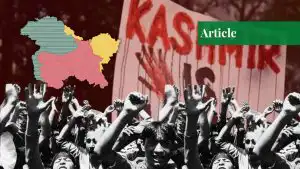
Ever since the partition, India and Pakistan have shared a history of rivalry, misunderstandings, and conflicts. The relationships in recent years have been redefined by the three wars of 1948, 1965, and 1971. Besides, the Kargil War in 1999, the 2001 attack on the Indian Parliament, the Mumbai Attacks of 2008, and the two terror incidents of Uri and Pathankot in 2016 reshaped the trajectory of Indo-Pak ties in the past few years. Most recently, a religious site in Kashmir, Pahalgam, has become a contention between the two states.
India’s Response to the Attack Near Pahalgam
In 1960, the Indus Water Treaty created a ray of hope for cooperation between both countries. India’s decision to unilaterally suspend it is a question mark for the role of the World Bank. Also, if stopped on water from the Indus, a lower riparian state, heavily dependent on water, can create an international backlash. However, I can smell a threat to water security.
Similarly, increasing the diplomatic personnel in Pakistan, which is aimed at deeper surveillance, implies India’s urge for dominance in the region. Moreover, more intelligence information can also help India strengthen its stance in the United Nations and G-20.
In addition, directly targeting Pakistan’s military is a direct indication from India that it accuses Pakistan of being responsible for the cross border terrorism. However, claiming such a thing without proof indicates the vicious intent of the former. This action can open up ways for misinformation and disinformation and will be a hit to the transparency of operations between the two states in the future.
Moreover, India has frozen regional connections and cooperation by canceling the visas granted to the member countries of SAARC. This puts a halt to the already dormant organization in South Asia. This not only reveals India’s desire to sideline Pakistan on diplomatic fronts but also shows the failure of regional stability.
Furthermore, India’s closure of the Wagha Attari border has halted the people-to-people connection between Islamabad and New Delhi through trade, tourism, and cultural exchange. Such a hardline stance from India can be fatal for people-to-people cooperation on both sides of the border.
Impact of the Terrorist Attack on Pakistan
The developments made by India will have long-lasting domestic and diplomatic rifts for Islamabad. Public sentiments are more likely to be inflammatory against India’s unilateral decisions on the Indus Water Treaty. Pakistan, which is already not in a very strong economic shape, will see a disruption in trade.
Moreover, the government and opposition will have a series of cross-talk on the issue of the response of the foreign office. Pakistan, a lower riparian state that already lacks adequate water resources, will face a great threat of water scarcity. This will weaken Pakistan internally because of the already ongoing water politics, and several climate issues could be expected in Pakistan in the long run.
Pakistan will have to face doubts over the counter-terrorism and anti-terrorism efforts made by the country in recent years. Most likely, as India’s lobbying is very strong in the Financial Action Task Force (FATF), Pakistan will have to face scrutiny over its efforts.
Challenges in the Region
There is a high chance that a strategic deadlock may prevail between the two states. A cross-border cease-fire may be lifted, which can increase security risks on both sides.
Abeyance of the Indus Water Treaty
Moreover, water, being used as a tool, can create multiple problems even at the international level because of the violation of the Indus Water Treaty, according to which no unilateral action could be taken by any party. Coupled with the security risks, a climate issue can prevail across the region.
What to Expect?
There is always a way to solve the issues when there is a will. So, how the issues can be resolved remains a big question here. An ideal way to deal with the issue could be back-channel diplomatic efforts by the other states to stop two nuclear-armed neighbors from further agitation. Moreover, track III diplomacy can work here for both parties.
However, the two countries are standing at a crossroads. The subcontinent will see economic, diplomatic, and regional fragmentation and isolation if the situation worsens. The need of the hour is to redesign a framework based on security that could indulge counter-terrorism, cooperation on water, and trade interdependence between both countries.
The recent attack has once again brought the fragile relations between India and Pakistan into the main focus. India’s unilateral decisions reflect her resolve, but they will have far-reaching impacts on the region. If the right steps are not taken at the right time, things often slip out of hand and can cause more damage. The two arch-rivals should be brought to the table to make things work bilaterally, thus ensuring regional peace.
If you want to submit your articles and/or research papers, please visit the Submissions page.
To stay updated with the latest jobs, CSS news, internships, scholarships, and current affairs articles, join our Community Forum!
The views and opinions expressed in this article/paper are the author’s own and do not necessarily reflect the editorial position of Paradigm Shift.

She is a clinical psychologist and author with over six years of experience in freelance writing, specializing in mental health, social issues, and global affairs. She co-authored L’Art de Vivre, a book on positive psychology, and contributed to flood relief efforts in 2022. She also qualified the CSS Special Competitive Examination in 2023. Through her work, she is committed to promoting resilience, raising public awareness, and fostering informed discourse by combining psychological insight with socio-political analysis.