Abstract
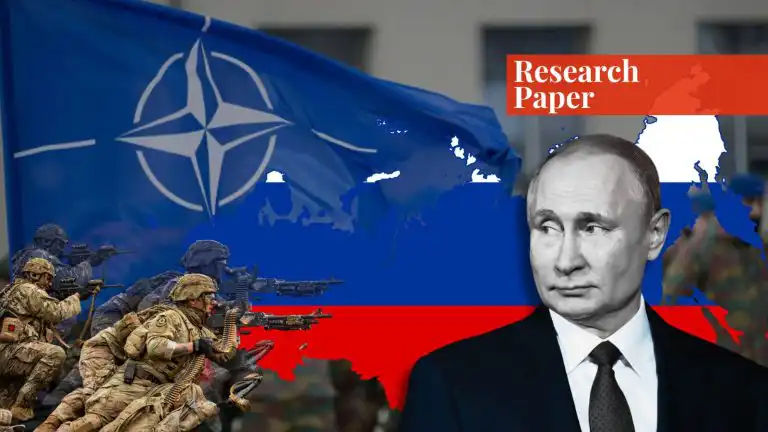
This paper examines why the eastward expansion of NATO triggered a Russian military response only in 2008 and beyond, and not in 1999, when the first round of expansion began. existing scholarship correctly identifies NATO expansion as the root cause of this crisis, but fails to elaborate on the timing gap, the central question this paper sets out to answer. This paper argues that this crisis was not inevitable, but required the alignment of multiple factors simultaneously. This paper draws on Kenneth Waltz’s three-level framework to support the argument. According to Waltz’s three-level framework, Russian aggression only became possible when individual, domestic, and international factors converged simultaneously. At the individual level, the transition from Yeltsin’s western-oriented leadership to Putin’s assertive foreign policy produced very different responses in the face of the same provocation. At the domestic level, Russia’s economic and political situation in the 1990s did not allow it to behave assertively, regardless of intention. At the international level, the shift from a unipolar world order to multipolarity provided Russia with the space and confidence to act. This paper concludes that the crisis was not inevitable and that a more accurate multi-level understanding is crucial to prevent such a crisis in the future.
Introduction
The liberal world was shaken when the Russian army crossed the Ukrainian border on February 24, 2022. The attack violated the sovereignty of Ukraine, but it was not an unprovoked aggression; rather, its roots go back to the first round of NATO’s expansion eastward in 1999. NATO’s expansion in Eastern Europe was justified by the West as part of a containment policy and a means to sustain stability in post-Cold War Europe (NATO, 2023). But Russia perceived it as a direct threat to its sphere of influence (Mearsheimer, 2014). The question then arises: why did Russia not respond to the first round of expansion in 1999, or even the second round in 2004? And why did it suddenly feel the need to respond militarily in 2008 and beyond?
To answer that question, this paper analyzes three factors: first, the role of leadership; second, the domestic conditions of Russia; and third, the changing world order. This paper draws on the three-level framework of Kenneth Waltz, which argues that any conflict can be understood at three levels: the individual, the domestic, and the international (Waltz, 1959).
Existing scholarship correctly identifies the root cause of this crisis as NATO’s expansion, but fails to answer the timing gap question. This article argues that the crisis was not inevitable, but the alignment of three factors: leadership change, domestic stabilization, and a shifting world order from unipolarity to multipolarity made it possible.
Therefore, understanding the timing of this longstanding crisis is as important as understanding its root cause. In order to resolve this crisis, policy failures must be recognized and addressed; otherwise, escalation will continue.
Literature Review
The existing research on NATO-Russia relations is largely divided into two camps: realists and liberals. According to realists like Mearsheimer, this crisis is the result of NATO’s eastward expansion, which created structural provocation and left Russia with no choice but to respond militarily (Mearsheimer, 2014). Mearsheimer’s argument is compelling but fails to address one critical question: if NATO’s expansion caused Russia’s aggressive response, why did Russia not respond to the first round of expansion in 1999 or the second round in 2004, and only did so in 2008 and beyond? This question will be answered systematically at three levels in this article.
Even within Western policy circles, early warnings were ignored. Kennan cautioned in 1997 that NATO’s eastward expansion was a fatal mistake and would inevitably lead to a crisis in Russia-West relations; a warning that proved prophetic yet was dismissed by the Clinton administration in pursuit of eastward expansion (Kennan, 1997).
On the other hand, liberals like Snyder believe that the root cause of this crisis lies in the ideological worldview of Putin; his imperial ambitions and anti-democratic vision of a reunified Russian sphere (Snyder, 2018). As per Snyder’s argument, NATO’s expansion is merely a convenient excuse rather than a genuine security threat. This analysis accounts for Putin’s role in the crisis but overlooks the structural circumstances that made this aggression possible in 2008 and beyond.
Within the liberal camp itself, scholars disagree on the root cause. While Snyder argues that Putin’s imperial ambitions drove the crisis, McFaul argues that Putin’s fear of losing his sphere of influence, particularly the spread of democratic movements from Ukraine into Russia, is the actual cause (McFaul, 2014). Despite their differences, both scholars agree that NATO’s expansion alone does not explain Russian aggression, and both locate the cause in Putin’s domestic political calculations.
While realists correctly identify the structural cause and liberals correctly highlight the role of leadership, neither camp fully explains why Russian aggression materialized when it did. This paper bridges that gap by drawing on Waltz’s three-level framework to show how structural provocation, leadership change, domestic recovery, and a shifting world order converged simultaneously to make 2008 the tipping point.
Individual Level: The Role of Leadership
The role of leadership is the first level of analysis in Waltz’s framework and is as important in understanding the cause and timing of the Russia-Ukraine crisis as the other two levels. In the 1990s, when Boris Yeltsin was the leader of Russia and NATO began to expand, there was no war or even a possibility of war, even when NATO bombed Yugoslavia in 1999 without the UN mandate (Mearsheimer, 2014). Yeltsin bowed to Western pressure despite having every reason to respond, in the hope of integrating into the Western-dominated global order and market (Kotkin, 2016). His Western tilt, coupled with the weakened economic and political conditions of post-Soviet Russia, left him no option except verbal protest.
Yeltsin resigned in 1999 and appointed Putin as acting president. In 2000, Putin officially became president and consolidated power. His policies were strikingly different from those of Yeltsin. He stood in Munich and openly criticized the unipolar world order and NATO’s expansion in front of the entire world, signaling that Russia’s era of quiet submission was over (Putin, 2007).
This assertive foreign policy was not just ideological but domestically necessary. When Putin took office, Russia was in political, economic, and social turmoil. There was a widespread feeling of humiliation among the Russian public and a desire to regain their lost status. Putin was aware of this and used it as the foundation of his political power (Kotkin, 2016).
This shift in policy was possible only due to Russia’s economic recovery as it integrated into global energy markets. Rising oil revenues gave Putin the resources and confidence that Yeltsin never had (Gaddy & Ickes, 2013).
Therefore, the timing gap is partially explained at the individual level: the same provocation produced two completely different responses from two different leaders. Yeltsin lacked both the will and the resources; Putin had both.
Domestic Level: Russia’s Internal Conditions
While the individual level partially explains the timing gap, it alone does not suffice. The domestic economic, political, and social conditions of Russia during the 1990s made military confrontation impossible, regardless of the leadership.
When the Soviet Union disintegrated, Russia inherited a broken economic model. Inflation was at a record high, with a 2,500% surge in prices in 1992 alone (Åslund, 2007). GDP contracted by 40–50% during 1991–1998, a decline worse than the Great Depression (World Bank, 1999). Unemployment was also at its peak, and together these factors led to severe economic turmoil. To mitigate these conditions, the government introduced radical economic reforms, commonly called “shock therapy,” but they backfired. Shock therapy especially impacted the military-industrial complex and heavy industries, leading to a 56% decline in industrial production by 1996 (Åslund, 2007). Faced with these conditions, major capital fled the country, further weakening the economy. The decade ended with the Russian financial crisis of 1998 (IMF, 1998).
Politically, there was an intense power struggle between Boris Yeltsin and the Russian parliament, culminating in the constitutional crisis of 1993 (Shevtsova, 1999). The rapid collapse of the Communist Party created a power vacuum that was later filled by organized crime, mafia extortion, and powerful business oligarchs. Together, these political and economic tensions made it impossible for Russia to confront an external threat like NATO.
International Level: From Unipolarity to Multipolarity
To fully understand the root cause and timing of the crisis, the third level of international system analysis is crucial. When the Soviet Union disintegrated in 1991, the world shifted from bipolarity to unipolarity, and the United States became the new unchallenged hegemon (Krauthammer, 1990). Russia had very limited room to maneuver as it was weakened, isolated, and actively seeking integration into the Western-dominated world order (Kotkin, 2016). Under such conditions, confrontation with NATO was simply not an option.
But the international arena soon began changing dramatically in the early 21st century. China’s rapid economic growth, the establishment of BRICS in 2006, and the rise of the G20 signaled the decline of unipolarity and American hegemonic dominance (Layne, 2012). Multipolarity began materializing from mere theory.
Russia benefited from this shift the most. Rising oil and gas revenues not only rebuilt Russian economic power but also gave Moscow real strategic leverage for the first time in the post-Cold War era, due to Europe’s dependence on Russian energy resources (Gaddy & Ickes, 2013). Putin understood and utilized this leverage effectively. His Munich speech of 2007 perfectly reflects both the shift in the world order and Russia’s international standing as a resurgent power (Putin, 2007).
The rise of multipolarity created room for resurgent powers to advocate for their interests, challenge the hegemon, and push back if threatened (Layne, 2012). Therefore, at the international level, the timing gap is explained by a simple reality: in 1999, Russia had no room to act, but by 2008, it did.
Discussion
Waltz’s three-level framework is most powerful when the levels are viewed together rather than separately (Waltz, 1959). Russian aggression in response to NATO expansion was not inevitable, but it became possible only in 2008, when, for the first time, Putin was firmly in power, Russia had economically recovered enough to act, and multipolarity was on the rise (Layne, 2012).
During the first round of NATO’s expansion in 1999, none of these conditions were in place. Boris Yeltsin was in power but had limited will and capacity to respond (Kotkin, 2016). The Russian economy and political system were deeply vulnerable, and the world was unipolar with the United States as sole hegemon (Krauthammer, 1990). NATO could expand without serious consequences because Russia was simply unable to respond. The crisis was therefore not inevitable, but it became possible only when individual, domestic, and international factors aligned simultaneously.
This convergence of factors fully explains not only why the crisis happened, but why it happened when it did; the central question this article set out to answer.
Conclusion
This article set out to answer a deceptively simple question: if NATO’s expansion caused Russia’s aggression, why did serious military confrontation not come until 2008, almost a decade after the first round of expansion in 1999?
The answer lies at three levels. At the individual level, the transition from Boris Yeltsin’s Western-oriented leadership to Putin’s assertive and nationalistic foreign policy fundamentally changed how Russia responded to the same structural provocation (Kotkin, 2016). At the domestic level, Russia’s catastrophic economic, political, and social conditions in the 1990s made military confrontation impossible regardless of intent (Åslund, 2007). At the international level, the rise of multipolarity and the decline of unipolarity gave Russia both the strategic space and the confidence to act (Layne, 2012).
None of these factors is sufficient alone to explain the timing and root cause of this crisis. Their simultaneous convergence in the mid-2000s explains why 2008 became the tipping point. The implications are clear. If policymakers continue to misdiagnose the crisis as either purely NATO’s fault or purely the result of Russian imperialism, escalation will continue (Mearsheimer, 2014). To resolve such conflicts and prevent future ones, policymakers must look beyond single-cause explanations and embrace the full picture: individual, domestic, and international.
Bibliography
Åslund, A. (2007). Russia’s capitalist revolution: Why market reform succeeded, and democracy failed. Peterson Institute for International Economics.
Gaddy, C. G., & Ickes, B. W. (2013). Russia’s dependence on resources. In M. Alexeev & S. Weber (Eds.), The Oxford handbook of the Russian economy. Oxford University Press.
IMF. (1998). Russia — Recent economic developments. International Monetary Fund. https://www.imf.org
Kennan, G. F. (1997, February 5). A fateful error. The New York Times. https://www.nytimes.com/1997/02/05/opinion/a-fateful-error.html
Kotkin, S. (2016). Russia’s perpetual geopolitics. Foreign Affairs, 95(3), 2–9.
Krauthammer, C. (1990). The unipolar moment. Foreign Affairs, 70(1), 23–33.
Layne, C. (2012). This time it’s real: The end of unipolarity and the Pax Americana. International Studies Quarterly, 56(1), 203–213.
McFaul, M. (2014). Moscow’s choice. Foreign Affairs, 93(6), 167–171.
Mearsheimer, J. J. (2014). Why the West is primarily responsible for the Ukrainian crisis. The Atlantic. https://www.theatlantic.com/international/archive/2014/09/john-mearsheimer-ukraine-crisis/380612/
NATO. (2023). Enlargement and Article 10. North Atlantic Treaty Organization. https://www.nato.int/cps/en/natohq/topics_49212.htm
Putin, V. (2007, February 10). Speech at the Munich Security Conference. President of Russia. http://en.kremlin.ru/events/president/transcripts/24034
Shevtsova, L. (1999). Yeltsin’s Russia: Myths and reality. Carnegie Endowment for International Peace.
Snyder, T. (2018). The road to unfreedom: Russia, Europe, America. Tim Duggan Books.
Waltz, K. N. (1959). Man, the state and war: A theoretical analysis. Columbia University Press.
World Bank. (1999). Russia: A turning point. The World Bank Group. https://www.worldbank.org
If you want to submit your articles and/or research papers, please visit the Submissions page.
To stay updated with the latest jobs, CSS news, internships, scholarships, and current affairs articles, join our Community Forum!
The views and opinions expressed in this article/paper are the author’s own and do not necessarily reflect the editorial position of Paradigm Shift.

Kiran Shabbir is a recent graduate of the Department of Politics and International Relations at the International Islamic University Islamabad, where she completed her BS in International Relations with a CGPA of 3.8.