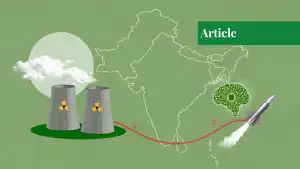

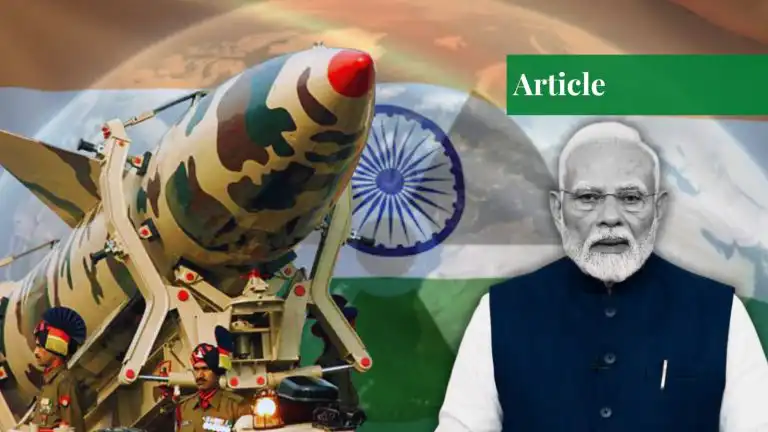
The world’s non-proliferation architecture has never been perfect, but for decades it retained credibility. The basis for the Nuclear Non-Proliferation Treaty (NPT) and the export control regimes that the NPT has spawned is that the states accept certain constraints in return for assurances. This credibility is now in jeopardy. The 2008 Nuclear Suppliers Group (NSG) waiver for India—a country that has never ratified the NPT, has tested nuclear weapons, and has deceived over civilian nuclear projects—is not just a legal exception in procedure but a structural break in the rules-based approach to nuclear order. Nowhere are the consequences of this shift more acute than in South Asia.

Informal groupings and export control regimes have been created to regulate the export of sensitive technologies and to stop their diversion to weapons programs and non-state entities, such as the Missile Technology Control Regime, the Wassenaar Arrangement, the Australia Group, and the NSG. They have become extremely significant in the post-Cold War era. The exposure of the A.Q. Khan proliferation network, the September 11 attacks, and unregulated shipping lines exposed the alarming lack of oversight and added the fear of terrorists/non-state actors obtaining weapons of mass destruction (WMDs). This led to the creation of the Proliferation Security Initiative (PSI), which focused on intelligence gathering and interdiction rather than binding legal frameworks. Obligations to prevent horizontal proliferation were also further institutionalized through the United Nations Security Council Resolution 1540.
Despite their limitations, these regimes have accomplished a great deal: they have organized and channelized the global arms trade, established transparency mechanisms, and significantly lowered the chances of non-state actors’ acquisition of nuclear technologies. However, legitimacy and efficacy remain in question whenever the structure is undermined through exceptional ventures of major powers for strategic gains.
The 2008 NSG Waiver and Strategic Exceptionalism
In 2005, the United States and India signed the US-India Civil Nuclear Agreement, followed by the NSG waiver in 2008, which enabled India to participate in international nuclear commerce without adhering to the Nuclear Non-Proliferation Treaty and disregarding its past of nuclear acquisition utilizing civilian nuclear material.
In 1974, the Smiling Buddha nuclear test conducted by India was based on the Canadian- and US-supplied CIRUS reactor, which was used for supposedly peaceful purposes, and India took the fuel from it. The 2008 waiver enabled India to keep a few civilian reactors outside the IAEA safeguards and thus free up domestic fissile material for military use. Over the past year, under the waiver, India has inked civil nuclear cooperation deals with 17 countries.
The NSG inclusion argument laid down, suggesting a ‘responsible and non-proliferating state,’ has failed to impress by large means. India has been continuing the modernization of its nuclear arsenal. Its number of nuclear warheads is estimated to have increased from 172 to 180 in 2025, according to SIPRI’s report. The issuance of a waiver on geopolitical calculations (balancing China) rather than nonproliferation grounds is quite astonishing. This pattern reflects profound bias and selectivity.

Despite having signed the Joint Comprehensive Plan of Action (JCPOA), a pact that the United States itself subsequently withdrew from, Iran is subject to harsh economic sanctions for its nuclear work, which is less advanced than India’s. Turkey has been hit by the CAATSA sanctions and has been removed from the F-35 program over its purchase of a Russian air defense system. India is also seeking a similar buy and has been granted a strategic waiver.
Deterrence Degradation and Regional Instability
The strategic implications of the waiver are most keenly felt in South Asia, where fragile deterrence exists between two states already close to conflict, both of which are nuclear-armed. The waiver has significantly put India on a fast track towards strategic progress, as it allows for the use of advanced nuclear technologies. This is not just a shift in the balance of capabilities but also an alarm for Pakistan to counter emerging threats to maintain its minimum credible deterrence.
Such developments have widened the security dilemma, narrowed the confidence-building, and resumed the regional arms race. The pressure on Pakistan’s deterrent posture increases as India brings in the latest technologies in nuclear weapons and perhaps comes up with the latest developments in artificial intelligence, hypersonic delivery systems, and ballistic missile defense to join the warheads. The lack of strong verification mechanisms adds to the risk.
Several Indian civilian reactors are operating without IAEA safeguards, and there is no certain way to determine the separation between civilian and military nuclear activities. This ambiguity is not a coincidence, as is suggested by the precedent set back in 1974. The NSG waiver sets an abnormal precedent in the nuclear nonproliferation architecture by incentivizing market access to states like India that fail to comply with the NPT and have used civilian nuclear technology for military purposes.

To strengthen ECRs and to manage proliferation risks, the ultimate objective lies in their implementation without any discrimination. To mitigate proliferation risks in South Asian hotspots, the international community should make India comply with global norms and principles. Placing Indian civilian nuclear facilities under comprehensive safeguards of the IAEA and reviewing their NSG grant. The world simply cannot afford any other strike to the credibility of the non-proliferation regime in the contemporary era of failing arms control agreements, lowering nuclear thresholds, and rising crisis instabilities.
The NSG waiver to India was not just a quirk of the process but a political decision based on geostrategic considerations. It is being paid for in South Asia, where security concerns between two nuclear-armed states have escalated, crisis stability has weakened, and the risk of miscalculations has increased. The consequences of nuclear confrontation in a volatile region would bear results that no region or superpower could endure. The globe needs to determine if the rules-based nuclear order is worth preserving, and if so, they need to respect those principles equally and without any discrimination.
If you want to submit your articles and/or research papers, please visit the Submissions page.
To stay updated with the latest jobs, CSS news, internships, scholarships, and current affairs articles, join our Community Forum!
The views and opinions expressed in this article/paper are the author’s own and do not necessarily reflect the editorial position of Paradigm Shift.

Khawaja TouQeer Ahmed is a final-year student of BS International Relations at Quaid-i-Azam University, Islamabad. He has a keen interest in the South Asian strategic calculus and regional integration models.