Introduction
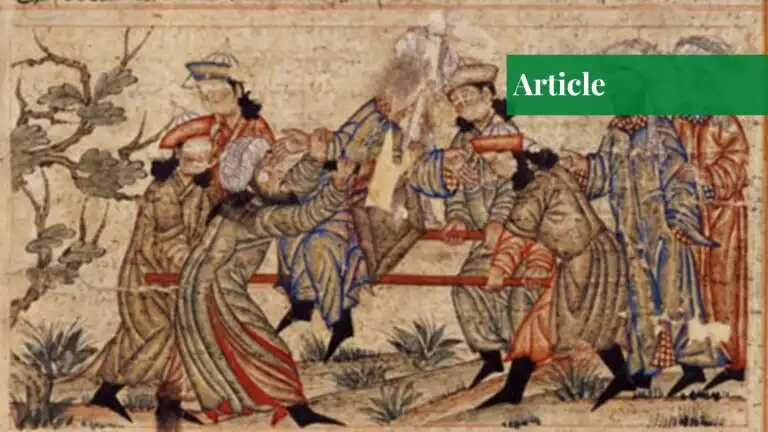
Once upon a time, the Islamic world had a dark and mysterious order. Known as the “Hashshashin,” or the “Order of Assassins” this group was not just a religious entity but also a political powerhouse. During the peak of religious incursions throughout the West and Middle East, the Hashshashin emerged from the shadows of the Persian territory. They honed skills of intellect and blades, using these to ascertain their survival through fear to germinate a statehood ultimately.
The Hashshashin rebellions are often romanticized and glorified in the entertainment industry, but the medieval history behind them was filled with bloodshed, deception, and fear. Occidentalists and Orientalists alike have harvested a plethora of literature to understand and explain the Hashshashin brotherhood in attempts to separate the myths and realities surrounding it.
With so many misconceptions and cracks in the legitimacy of the Hashshashin order, the task of exploring Muslims’ medieval adventures seems conspicuous for scholars worldwide. To the best of my abilities, I will explore the multitude of perspectives built around the identities and objectives of the Order of Assassins and the endurance of their legacy.
Origins and Historical Context
With the contestation for the succession of the Islamic Caliphate, the Muslim world fell into a frenzy of differing opinions and blatant opposition. This created friction and is now observed as the emergence of Shia and Sunni groups. These groups, within themselves, were divided into factions creating further divisions and ambiguities. Our focus will center on the Shia sect, particularly the Shia Nizari Ismaili, from whom the Hashshashin brotherhood emerged.
Soon after the Ummayads were defeated by the Abbasid caliphate (predominantly Shia), problems started emerging regarding succession. Al-Jafar, the Abbasid caliph, was in preparation for passing his throne to his son but the circumstances became grave when his son Ismail passed away due to deteriorating health. A succession crisis roared amongst the Shia upper echelon and the public of the dynasty.
This crisis led to the division of the Shia sect into two factions: the Twelvers (who believed in the succession of Musa as the next legitimate Imam) and the Ismailis (who believed in asserting Ismail’s legitimacy). Due to internal anguishes, the Abbasid dynasty fell victim to a tragic end, leading to the establishment of the Fatimid dynasty in its stead. The Fatimid Caliphate emerged from a series of sectarian revolutions led by Al-Mahdi Billah.
The succession crisis once again knocked on the doors of the Shia but this time it was the Fatimid Caliphates’ turn to answer. Upon Al-Mustansir’s (Head of the Fatimid Caliphate till 1094) passing, skirmishes arose among the public and the vizier regarding the protocols of inheritance. Abu Mansur Nizar, the rightful heir to the caliphate mission, was discounted by the selfish Al-Afdal vizier residing in the major cities of the empire.
Nizar was instantly replaced by his 20-year-old younger brother Al-Musta’li as successor in his stead. Nizar’s compromised position forced him to flee towards Alexandria where he sought refuge from the vizier’s forces. Following a series of unfortunate events, Nizar was besieged, imprisoned, and then executed in 1095.

The ambiguous succession was gradually accepted by the Ismailis in Egypt and Syria but suffered resistance from the Persian and other Eastern territories giving birth to the identities of independent Nizari Ismailis. The resistance was spearheaded by Hassan-i Sabah, a monumental figure who created the Order of Assassins.
Hassan-I Sabah and Alamut Castle
Representing the Nizari Ismaili branch, the Hashshashin, led by their leader Hassan-i Sabah, shook the Islamic world with cunning schemes and sharp assassinations. The tale of Hassan-i Sabah begins in the dusty streets of Qum. It was there, in the middle of the 11th century, that he was born in the warm lands of Iran. Hassan-i Sabah was raised in a legacy of intellectualism.
He spent his childhood immersed in philosophy, logic, and mathematics. But his greatest passion lay in the beliefs of the Ismaili sect and the concept of Imamate. Under the shadow of the great Seljuk Empire, the Islamic world was under the dominance of Sunni Islam. Hassan-i Sabah, however, was part of a minority that challenged this dominance. Yet his ambitions and aspirations did not allow him to remain just a member of this minority.
He was determined to fundamentally change the Islamic world. Thus, he and his loyal followers sought refuge in the Alamut Castle. The fortress became their headquarters, and from there, they aimed to rule over the entire Islamic World. Alamut was a symbol of their power and grandeur. However, this power was not only built on the crumbling walls of the castles but also on the daggers of the fearless assassins, whom the assassins called “Fidayeen.” The Order’s assassinations created an earthquake in the Islamic World. Their enemies trembled in fear and statesmen closed their eyes in terror. However, this terror was fueled by the intelligence and courage of the assassins’s powerful leader, Hassan-i Sabah.
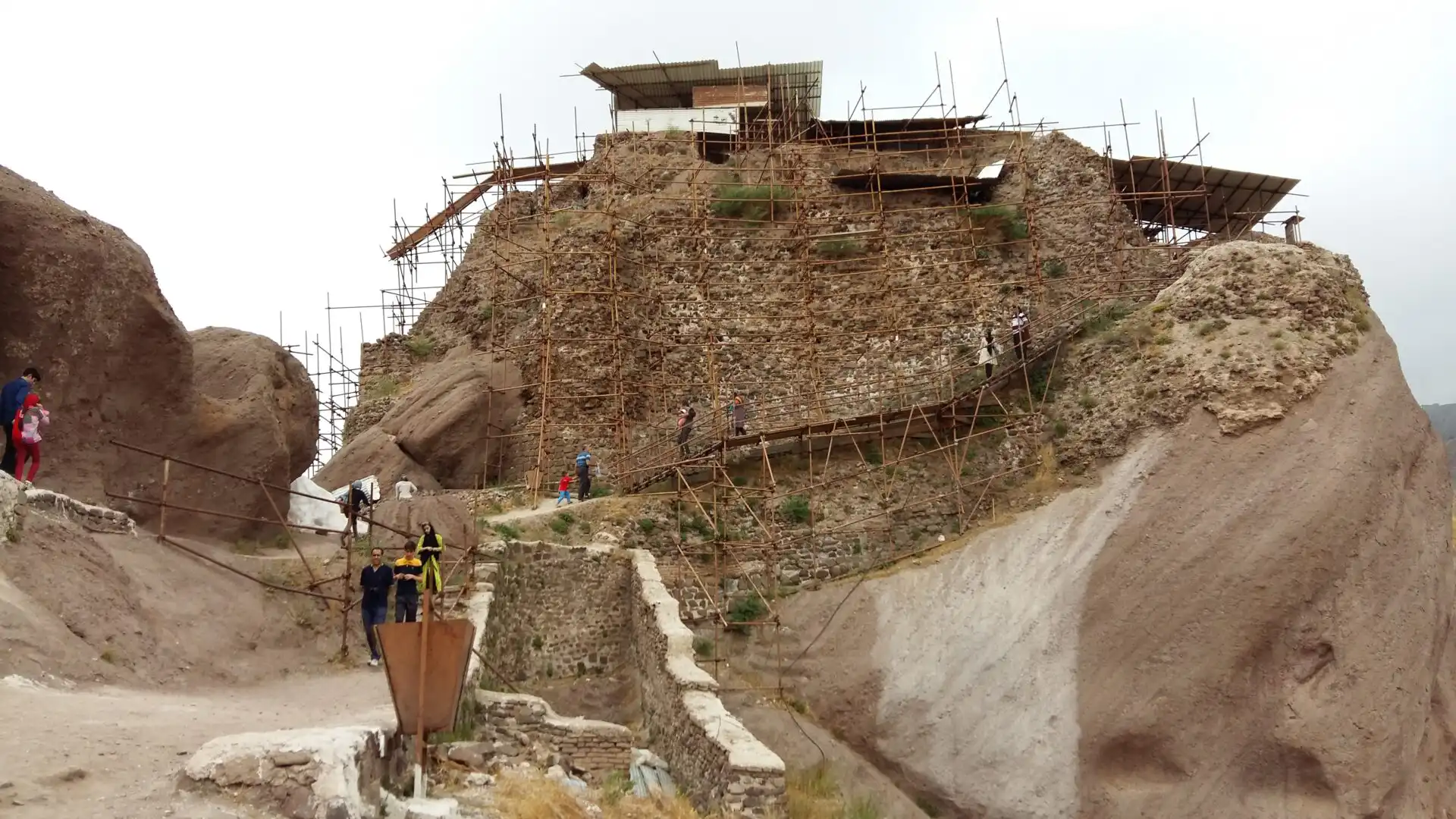
When Sabah breathed his last in Alamut Castle, the legends of the Hashshashin did not die with him. Those who followed in his footsteps continued to shake the Islamic World. However, despite its splendor, the end of the Order of Assassins was inevitable. Alamut Castle was captured by the Mongol Army and the influence of the Order of Assassins gradually faded away.
Yet, even years after Hassan-i Sabah’s death, the legend of the Hashshashin still echoes from tongue to tongue. Their courage and determination have become an unforgettable part of history. And perhaps, in secret, the spirit of the Hashshashin still roams in the dark corners of the Islamic World.
Order of Assassins: Tactics and Notoriety
Within the walls of Alamut, Sabah trained a select cadre of warriors known as “Fidayeen.” These elite assassins were handpicked for their unwavering loyalty and mastery of both blade and intellect. Under Sabah’s tutelage, they honed their skills in the arts of deception, infiltration, and when necessary, elimination. The Hashshashin’s reputation for swift and precise strikes soon spread far and wide.

From the courts of Baghdad to the palaces of Damascus, none were safe from their reach. Their most daring escapade often targeted key figures in the Sunni hierarchy, striking fear into the hearts of their adversaries. But as whispers of their deeds echoed through the lands, so did the rumors of their methods. The Order of Assassins employed psychological warfare, disguise, daggers, Janna, public executions, and hints. By leaving notes stuck with daggers or small blades onto the pillows of influential Sunni viziers, the assassins asserted dominance and instilled fear into their enemies.
Using disguise, they would perform public executions that would leave a lasting impression on both the political leadership and the public. The Order tried to eliminate Sala-Uddin Ayubi several times but kept failing. But on one occasion, they were able to get a hold of Ayubi’s location and left a chilling threat with a dagger thrust into the pillow on which Ayubi’s head rested. This was a common practice among the Hashshashin that depicted their mastery of disguise and stealth.
Conflict with the Crusaders and the Mongols
Firstly, we will delve into the complicated relationships between the Order of Assassins and Crusaders. During the 11th century, the former did not see the newly entering Crusaders as a threat. Still, as time passed and the Crusaders grew more imperialist in their endeavors, tensions arose among both parties.
It was in the 12th century when the Hashshashin and the Crusaders drew a tactical alliance to eliminate the common Sunni Seljuk enemy. Many instances of coordination and neutrality were recorded between the two entities in Syria where they were geographically closer as most Order strongholds were situated in Syria.
As time passed, the expansive goals of the Crusaders contested with the Hashshashin’s preservation of territory, and tensions bore but they never spiraled into full-blown war. The Order of Assassins exhibited pragmatic behavior by constantly shifting their political alliances according to the circumstances. Their non-ideological approach, methods of assassinations, and limited military engagement created an atmosphere of respect and fear among the Crusaders.
The assassin brotherhood’s relationship with the Crusaders was characterized by fluid alliances and hostilities. Their role in the broader context of the Crusades demonstrates their ability to navigate the complex political landscape of the medieval Middle East. Moving towards the interaction between the Order and the Mongols, their relationship was stained with utmost hostility. The Mongols, although not initially perceived as a threat, would be the demise of the Hashshashin stronghold, eventually leaving their legacy to dust.
The Mongols, ruthless in their methods crushed the fortress of Alamut with their nomadic spirit and the assistance of the Sunni Seljuks. When the Mongols launched a broader campaign of eliminating all political and military entities within the Middle East, the assassins’ brotherhood became a target. Since the Mongols sought to consolidate unchallenged control all over the region, they trampled over the Nizari Ismailis and the brotherhood. The leader of the brotherhood at the time, Rukn-Ud-Din Khurshah, surrendered and was killed by the Mongols. The Mongols carried out widespread massacres of Nizari populations, decimating their community and political power.
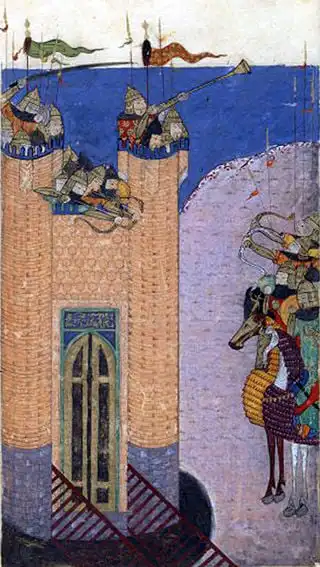
The Mongols’ defeat of the Order of Assassins signified the end of the Nizari Ismailis’ status as a prominent political and military power. This catastrophe also revealed the Mongols’ capacity to crush even the most tenacious and fearsome opponents. However, remnants of the Nizari Ismaili community persisted and grew into a more spiritual and dispersed sect under subsequent leadership.
Myth vs. Reality
Hassan-I Sabah and the Hashshashin brotherhood’s legacy is a blend of truth and fiction. A plethora of myths were constructed by scholars to describe the Order of Assassins but the extent of their truthfulness is still contested by many. After the brutal annihilation by the Mongols, all literature on the Hashshashin was wiped out. Now we rely on narrations carried through time to help us understand this mysterious yet monumental entity.
It is widely believed that Sabah constructed rewarding symbols such as a garden of paradise inside Alamut, where he trained his recruits, to motivate them to serve his cause when in fact his real tool was the promise of knowledge and loyalty to the cause. Some scholars believed that Sabah personally engaged in assassinations when in reality he rarely left the fortress and planned meticulously instead.
The narrations perceive that the Hashshashin were mere killers who aimed to spread terror everywhere but instead, they were respected for their discipline and the strategic elimination of tyranny. Another commonly accepted myth is that the assassins used brute force to achieve their objectives but on the contrary, they also mastered diplomacy and espionage, avoiding unnecessary violence.
One of the most prevailing beliefs is that the assassins used hashish (a kind of drug) before carrying out their assassinations but that would compromise the effectiveness of their planning and execution hence it is a myth constructed to negatively connote them and disregard their legacy as irrelevant and violent.
Legacy and Cultural Impact
Even after tragically waning, the legacy of the Hashshashin has persisted in various ways. They left a lasting impact on the political and military legacy as they pioneered the concept of political assassinations as a way to symbolize that small groups wield great strength through covert tactics. They tampered with the hierarchies by eliminating influential figures and instilled fear by utilizing asymmetric warfare.
When it comes to the literary and cultural legacy, the Crusaders and Western Chroniclers such as Marco Polo spread the narrative that the group used Hashish, hence naming themselves the Hashshashin but the lack of historical evidence disregards this legacy. Medieval literature often portrayed the Order as a mysterious power belonging to secret societies and other fictional groups. The Sunni scholarly works portray the brotherhood as rebels and heretics whose aim is to disrupt the system and spread chaos.
The Order of Assassins’s concepts of espionage and covert operations resonate in modern intelligence and military strategies even today and are widely used to train and comprehend military forces. Furthermore, their representation in pop culture and media is highly romanticized. Ubisoft’s franchise of “Assassins’ Creed” games draws inspiration from the predicted real-life events and actions of the Hashshashin and employs various cultural interpretations. They are often depicted as forces fighting against oppression that appeals to the public narrative and perceptions.
While historical accounts of their activities are often exaggerated or mythologized, their impact on political strategy, literature, and popular culture remains profound.
Conclusion
The rise and fall of Hassan-i Sabah, the Alamut Castle, and the Hashshashin is a story filled with mystique, curiosities, myths, fatalities, fear, and fascination. The lack of literature proves to be a hindrance in understanding the true nature of this entity but the winds of time carry their legacy along with them. The preservation of this particular legacy is a responsibility to all. Though the role of the Hashshashin wasn’t prominent in medieval Muslim history, the reflections from their blades illuminate a pathway of mystery and fright.
Today, their story reminds us of the enduring interplay between faith, politics, and the human capacity for ingenuity in the face of overwhelming odds. The Hashshashin may have vanished into history, but their name, echoing through literature, media, and the modern imagination, ensures that their legend lives on, a haunting specter of defiance against the tide of time.
If you want to submit your articles and/or research papers, please check the Submissions page.
The views and opinions expressed in this article/paper are the author’s own and do not necessarily reflect the editorial position of Paradigm Shift

Ms. Fatimah Naeem is pursuing her bachelor's in peace and conflict studies from National Defence University, Islamabad.