The history of world leaders’ assassinations has often altered the course of the past, leaving lasting political, social, and global repercussions. Today, they are some of the world’s most heavily guarded and protected individuals. Their protection is a pillar of national security. Yet, throughout history, we’ve seen leaders fall to the hands of assassins, a feat that often captures the public imagination and changes the world irrevocably.
Why Were World Leaders Assassinated?
Several assassination attempts have taken place in the sphere of politics over the years. This is because political violence is overarching and produces results. There is often a resounding impact of assassinations on world politics.
Most Shocking Leader Assassinations in History:
Archduke Franz Ferdinand
No attempted assassination on this list would have grave and immediate consequences like the assassination of Archduke Franz Ferdinand. The Archduke of the Austro-Hungarian Empire was assassinated in 1914 by Bosniak Serb terrorist Gavrilo Princip, an event that directly led to the First World War.
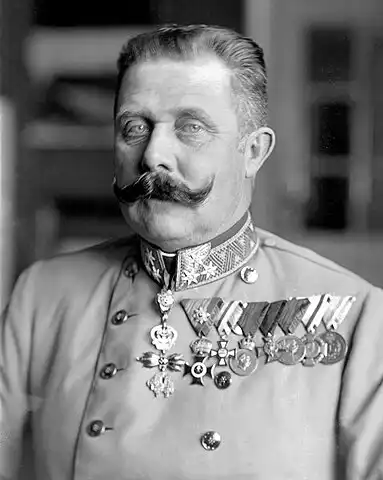
The attack was odd since it had failed initially and simply occurred due to sheer dumb luck. The assassins threw bombs at the Archduke but failed and hit the car trailing behind them. Instead of abandoning their trip to Sarajevo, the Archduke decided to visit the wounded hurt by the bombing. On their way back, the driver took a wrong turn and began a reverse, leading the motorcade to stall in front of one of the would-be assassins. Given another chance, he pulled his pistol and killed the Archduke and his wife.
History is simply taught as a particular event that happened leading to another event, which can be confusing without context. Essentially, the Austro-Hungarian empire had been expanding in the Balkans due to the weakening of Ottoman power, which wasn’t appreciated since the local ethnicities desired independence over a ruler switching hands.
One such discontent group was the Serbians, who desired unification with their Slavic brothers in the South and to create a unified state like Germany or Italy under the banner of Yugoslavia. Gavrilo Princip was once such a Serb who felt the Slavic lands in the South should be relinquished and unified to create Yugoslavia. Gavrilo Princip was part of ‘Young Bosnia,’ a loose group of separatists and revolutionaries who were primarily Bosniak Serbs dedicated to establishing a single Yugoslav state.
The assassination started the First World War because the Serbian Government was allegedly involved in the assassination, which caused the Austro-Hungarian empire to wage war on Serbia. Though it could’ve been an isolated event between the two nations, the intricate web of alliances and treaties forced every Great Power in Europe to fight. The German Empire had an alliance with the Austro-Hungarian Empire and gave them unconditional support, saying they would support an invasion of Serbia.
The Russian Empire had guaranteed the safety of Serbia, so it had to declare war on the Austro-Hungarians and the Germans. The Russians were in a military alliance with the French and British, so the French entered the war to squeeze the Germans in a two-front war. Though Britain prioritized the defense of France, it only joined the war when Germany invaded neutral Belgium to neutralize the French.
The First World War was the 6th deadliest human conflict in history, leading to the deaths of upwards of 20 million people. It led to the Russian Revolution, causing the government to go communist and cementing the creation of the Soviet Union, which would reshape the world as we know it. The partitioning of Ottoman territory in the Sykes-Picot agreement led to the creation of the modern Middle East and all of its current problems. The peace dictated at Versailles would sow the seeds of discontent and lead to the rise of the Nazis and become the precursor for WW2 the deadliest human conflict in history.
Mahatma Gandhi
Moving closer to the subcontinent, we analyze the assassination of India’s most venerable figure and the father of their nation, Mahatma Gandhi. Gandhi was the consequential leader who helped bring an end to British Rule in India through an inspiring movement of non-violence.
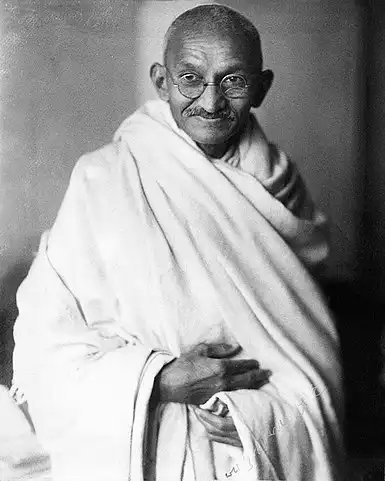
In contrast to Gandhi’s dedication to non-violence, his would-be assassin, Nathuram Godse, believed violent aggression required violent self-defense. As a member of the Rashtriya Swayamsevak Sangh (RSS), a right-wing Hindu paramilitary volunteer organization, he was a fanatical Hindu nationalist who deeply disapproved of Gandhi’s actions.
He was particularly unhappy with the communal violence and general chaos of the partition that led to widespread suffering through migrations and sporadic violence. Given his posturing towards Hindu Nationalism, he believed Gandhi’s non-violence wasn’t sufficient to stop the partition and that Gandhi was biased towards Muslims instead of safeguarding the rights of the Hindu populace., To Godse, India was not being run by the force of public opinion but by Gandhi’s whims.
These contentions met headfirst on the 30th of January 1948, when Gandhi was assassinated in New Delhi in a newly independent India. Gandhi emerged from Birla House after prayer and met with the crowd gathering around him. Nathuram Godse, shrouded in the crowd, stepped forward and drew a semi-automatic Beretta pistol. From point-blank range, he fired three shots into Gandhi’s chest and abdomen, killing him instantly.
Gandhi’s philosophy influenced civil rights movements around the world, and he was a buttress for leaders such as Martin Luther King and Nelson Mandela, who emboldened his non-violent form of resistance.
King Faisal bin Abdulaziz Al Saud
King Faisal bin Abdulaziz Al Saud was the leader of the Kingdom of Saudi Arabia from 1964 until he died in 1975. He stabilized the kingdom’s bureaucracy and was seen as a reformer. Steeped in tradition, some more dogmatic than others, the kings had the difficult task of modernizing while keeping their cultural and traditional values alive.

Under broad modernization, he developed infrastructure, educational facilities, and healthcare for all citizens, cementing his success despite his reforms facing some controversy. His notable achievement was the abolishment of slavery in the Kingdom, which was still pervasive in the more rural parts of the nation. It was a great social reform and a modern necessity.
Internationally, he was famous for his support for the 1973 oil embargo, which was an economic protest against the nation that supported Israel in the Yom Kippur War. This was broadly against Western powers and was seen as a form of solidarity for Palestine while emboldening pan-Islamic sentiments. His embargo led to the 1973 oil crisis, which led to the prices of oil rising by almost 300%, with prices in America being significantly higher than average. This was the first oil shock the world saw, preceded only by the second shock after the Iranian Revolution.
On March 25, 1975, his nephew, Prince Faisal bin Musaid, assassinated him. The reasons behind the killing remain unclear, with speculations ranging from personal conflicts to opposition to Faisal’s policies, including his close ties with the West. The assassination led to widespread speculation about potential external influences, particularly in light of Faisal’s firm stance during the oil embargo.
The King’s historic stand against the West would be a monument of his rule. Many Arab rulers have pointed out pan-Islamic dreams or false solidarity with Palestine, but Faisal made it a reality. This would also prove a turning point as no other ruler in the Kingdom would ever take such an aggressive stance against the West again,
John F. Kennedy (JFK)
Being an American President seems to be a historically dangerous job; there have been multiple Presidents falling to the hands of an assassin, but none are probably as famous or notable as John F Kennedy. The 35th president of the USA was a charismatic and popular figure. A staunch statesman, he proudly proclaimed, “Ask not what your country can do for you, ask what you can do for your country.”
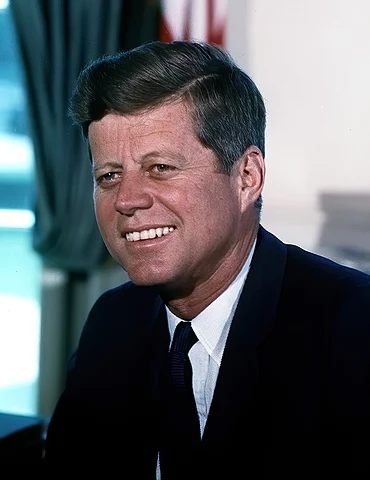
Kennedy’s major success came with his excellent handling of the Cuban Missile Crisis, where he was able to avert nuclear Armageddon through timely and firm diplomacy. The Cold War had many points where tensions flared up to extremely dangerous levels, and this was the peak. Through effective resolve, Kennedy was able to open a channel of communication with the Soviet Union and gain peace in their time. In times when leaders make harsh decisions, a calm and calculated move can be the difference between peace and war.
Tragically, though a lone gunman by the name of Lee Harvey Oswald was the one to take JFK’s life, many would suspect a soviet spy or a political hardliner, yet he was neither. His motives aren’t entirely clear since he was killed shortly after the assassination. But it was a deep desire for recognition and his admiration for Marxist idealism. Other theories discuss his failing marriage and other childhood grievances, but it’s ultimately unanswerable.
On the 22nd of November 1963, Kennedy was traveling in an open-top motorcade with First Lady Jacqueline Kennedy; as their vehicle passed through Dealey Plaza, shots rang out. Kennedy was struck by two bullets—one in the neck and the fatal shot in the head. They attempted to save his life by rushing him to Parkland Memorial Hospital, but he succumbed to his injuries.
His assassination brought an end to the broad optimism stemming from his popularity and led the way for increased political cynicism in the populace. His assassination was also the root of many conspiracy theories that linked the killing to the Mafia or other third parties, but those remain as speculations.
Abraham Lincoln
The second American President on this list is none other than Abraham Lincoln. He was the 16th President of the United States of America. Known as “Honest Abe,” he had a strong moral compass and enviable character. He was dedicated, self-taught, and able to persevere in a particularly divisive time in American history. Though he faced many political shortcomings, when he finally became president, it wasn’t an easy stint in office.

It was the eve of the American Civil War, and his whole nation had the opportunity to fracture before his very eyes. The Southern states had attempted to secede due to certain laws regarding slavery. Though it was a dispute of independence for the southern states, Lincoln reframed it as a grand struggle against slavery. This allowed the war to take on a new meaning and allowed people to take sides accordingly.
His strong leadership was paramount to withstanding the initial Confederate victories and emboldening the Union. His victory allowed him to issue the Emancipation Proclamation, declaring all enslaved people in Confederate-held territories free in 1863. His efforts led to the 13th Amendment, which abolished slavery for all people in the nation. It’s a landmark move in American political history and the start of many moves that would allow for more progressive reforms that would allow greater freedoms for African Americans.
Unfortunately, on April 14, 1865, Lincoln, accompanied by his wife, was attending a play of “Our American Cousin” at Ford’s Theatre in Washington, D.C. where John Wilkes Booth assassinated him.
Booth was a Confederate sympathizer who shot Lincoln in the back of the head with a Derringer pistol and leaped onto the stage, shouting “Sic semper tyrannis” (Thus always to tyrants). Lincoln succumbed to his wounds the following morning, leaving the nation in mourning.
His life is celebrated as a man who stood for freedom and liberty for all citizens in America. By abolishing slavery, he made a momentous step towards social and political change, uplifting countless African Americans. His strength during the American Civil War has made him American history’s most beloved figure.
If you want to submit your articles and/or research papers, please check the Submissions page.
The views and opinions expressed in this article/paper are the author’s own and do not necessarily reflect the editorial position of Paradigm Shift.
The author is studying Economics at the National University of Science and Technology (NUST) with a keen interest in financial affairs, international relations, and geo-politics.