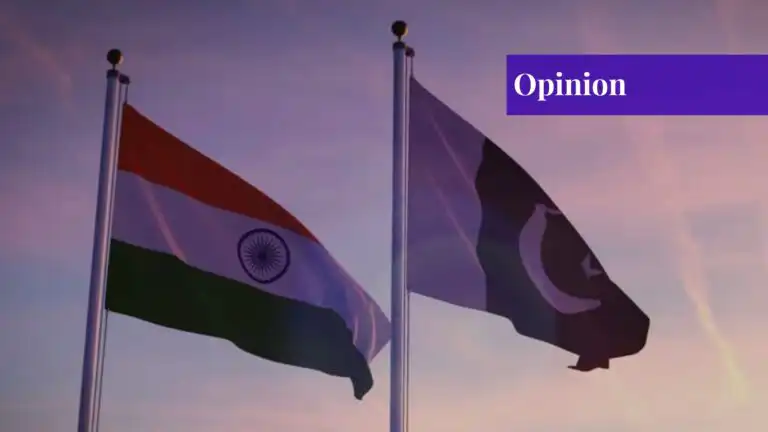

“India and Pakistan fighting over Kashmir are like two bald men fighting for a comb,” said a neighbor of mine several years ago when the Kargil conflict of 1999 was in the Western news cycle and I was trying to explain to him the underlying causes of the conflict. The Kashmir dispute is so old that most people have forgotten its true nature and instead have adopted the simplistic positions that the entire Kashmir belongs to their country and that the other side should give up the part of Kashmir they control at present. Getting into the intricacies of the Kashmir dispute is not the subject of this column, so I will not take a deep dive into this area. Nonetheless, the Kashmir issue remains the main sticking point in Pak-India relations, leading to multiple wars and skirmishes.
Pakistan has tried to keep the Kashmir issue alive on the international level during the last seven decades; however, in the absence of any flexibility by the two parties the interest of the international community has diminished and most now consider the seven-decade-old Line of Control dividing Kashmir into two parts, each separately controlled by India and Pakistan, as the de facto border.
For decades, the tension between the two countries has been a significant obstacle to progress on either side of the border. Instead of working together to make life better for their respective people, they redirected their scarce resources to the military budget and rejected any cross-border trade and investment.
India’s Rise & Pakistan’s Isolation
In the quarter century since Kargil, South Asia’s geopolitical and geoeconomic situation has changed drastically. India has made remarkable progress in economic growth and has drawn the attention of global investors to invest in India highlighting its stable democratic institutions, modernized infrastructure, a large youth population, and skilled workforce in science, engineering, and technology. On the other hand, Pakistan has been struggling to achieve political stability and its economy is in shambles, surviving on a series of IMF bailouts.
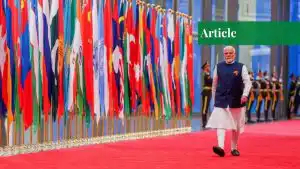
In recent years, the US and other Western nations have recognized India’s strategic importance as a counterweight to China’s growing influence in the region and have rolled out the red carpet for the Indian prime minister. India has been a member of important multinational blocs such as the G20 and BRICS, and now the US has formed another bloc called the QUAD to include India as its key member along with Australia and Japan to focus on security cooperation, economic collaboration, and regional stability in the Indo-Pacific region.
Pakistan, on the other hand, has been in diplomatic isolation since the US left Afghanistan in 2021. It is seen with suspicion by Western nations as a hotbed of militancy because of its role in the 20-year-long Afghan war. It has not been able to achieve even normal relations with its two other neighbors, Iran and Afghanistan.
It is clear that while India is making friends and forming new alliances, Pakistan is in diplomatic isolation and has become irrelevant in its strategic value to the US and other Western nations. In this context, the last thing it can afford is any conflict with India. Tense relations with India are only self-harming Pakistan. India has moved on after failed efforts to normalize relations with Pakistan. It now has very little incentive to make any significant concession to Pakistan to normalize the relations. To India, the status quo appears to be just fine. The ball is in Pakistan’s court to take the initiative to start a dialogue with India.
Indo-Pak Relations: A Ray of Hope?
Recently, PML-N supremo and former Prime Minister Nawaz Sharif met with a delegation of Indian journalists during the Shanghai Cooperation Organization (SCO) summit in Islamabad, where he expressed optimism about improved relations between the two neighbors. “If Pakistan-India relations improve, many things will get better,” he stated. One may have a different opinion on the performance of Nawaz’s past governments; however, on the question of starting a dialogue to normalize Pak-India relations, there cannot be any two views.
This is not the first time Nawaz has hoped for better relations with India. In 1999, he welcomed Indian Prime Minister Atal Bihari Vajpayee to a summit meeting in Lahore. This initiative did not go too far as later in the same year, the Kargil conflict ignited. Again in 2015, Nawaz hosted Indian Prime Minister Narendra Modi at his residence in Lahore. This initiative did not produce any meaningful results either. In both cases, there was opposition from the internal stakeholders in Pakistan as they saw Nawaz’s initiatives with suspicion.
Hopefully, lessons were learned from past failures. It is imperative to ensure that before embarking on yet another initiative, a broad consensus with key institutions is achieved internally. India will not respond positively unless it is certain that any political initiative has the backing of all power centers in Pakistan.
A couple of recent events provide a ray of hope. Though the Indian prime minister did not attend the recent SCO summit in Islamabad and could have chosen to send a lower-level delegation, he instead sent his top diplomat and Minister of External Affairs, Dr. Jaishankar. Separately, at the heels of the SCO meeting, the two countries concluded the renewal of their 5-year-old agreement to facilitate pilgrims via the Kartarpur Corridor for an additional five-year period.
The agreement will continue to offer visa-free access to pilgrims from India to visit the sacred site of Gurudwara Darbar Sahib Kartarpur in Pakistan. Additionally, India and China have reached a patrolling arrangement along their disputed frontier in the Himalayas that can lead to disengagement and resolution of a conflict that began in 2020. Though small steps, these events demonstrate that with goodwill and dialogue, disputes can be resolved peacefully.
Recommendations
How can the two countries break the ice and kickstart a dialogue? There are a couple of “low-hanging fruits” that provide an opportunity to move in the right direction. First, they can upgrade Pak-India diplomatic relations, which have been at the staff level for some time, back to the high commissioner level. This will open up communication channels at a higher level.
Second, India should send its cricket team to Pakistan for the Champions Trophy in February next year. Nothing excites the people of the two countries more than the friendly rivalry in cricket. This will go a long way in fostering goodwill between the two countries. Next, the two countries should work on resuming trade through the Wagah/Attari border, which was suspended in 2019.
Hardliners on both sides may cast doubts about restarting the dialogue but they should remember that the status quo of strained relations is not sustainable in the long term and is detrimental to progress. Better ties will bring regional security, peace, and economic benefits to both countries.
If you want to submit your articles and/or research papers, please check the Submissions page.
The views and opinions expressed in this article/paper are the author’s own and do not necessarily reflect the editorial position of Paradigm Shift.

Mr Zahid Hussain is a retired engineer, based in Canada.