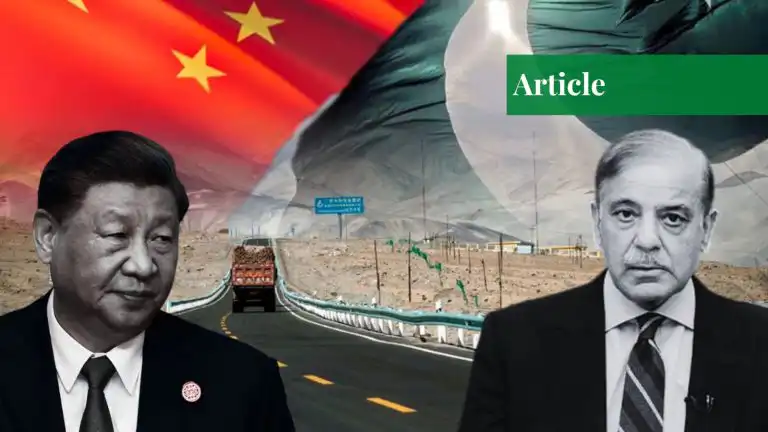
When Chinese President Xi Jinping landed in Islamabad in April 2015 and announced $46 billion in investment under the China-Pakistan Economic Corridor, Pakistani newspapers ran headlines and defined it as a game-changer. The dawn of a new era. Every television anchor had a new map of the subcontinent with a thick line running from Xinjiang to Gwadar, and in Balochistan, land that had been worth nothing suddenly had a price tag.
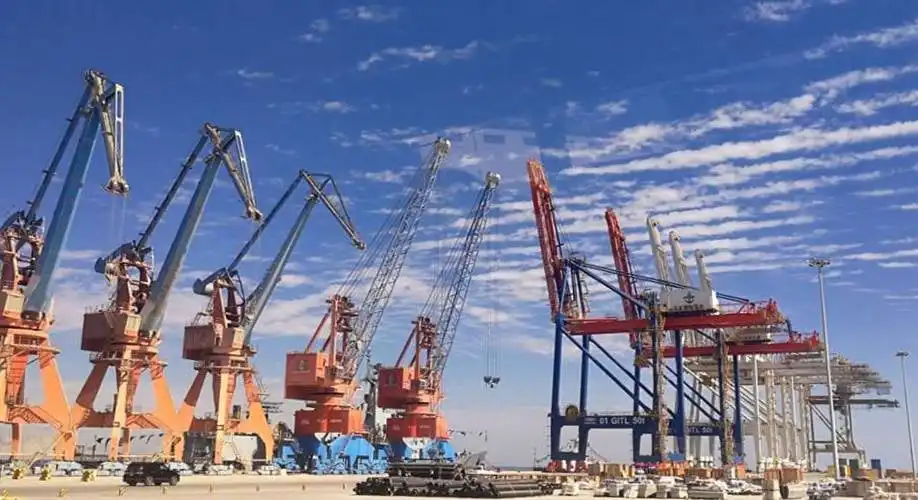
Eleven years later, 38 CPEC projects worth more than $25 billion have been completed. Power plants have been built, roads have been laid, and a port that once received fewer than 20 ships in an entire year processed 11,000 containers in a single month in April 2026. But the gap between what was promised and what has materialized, and who has paid the price, is a story that deserves telling
The Land Rush and the Fishing Community
In 2016 and 2017, as news of CPEC’s ambitions spread across Pakistan, something happened in and around Gwadar that the official narrative never even mentioned. Land prices in the district shot up overnight. Investors, speculators, and what can only be called organized land mafias descended on a city whose residents had lived on the same coastline for generations, largely unregistered, and therefore without legal protection.
The mechanics were simple. The very offices that existed to protect land ownership, the revenue departments of Gwadar, became the instrument of its theft. Officials tampered with original ownership documents, transferring plots that families had held for decades to outside investors. The settlement department was reportedly operating this as a business: for a fee, records could be altered. Locals who had farmed, fished, or simply lived on land for decades suddenly found themselves without legal standing to claim it.

For those who received offers they could not legally refuse, the prices seemed enormous in the moment; land that had been worth almost nothing in a remote coastal town was suddenly being purchased at prices that seemed too good. Many sold, thinking they had made the transaction of a lifetime, but within a year or two, those same plots were being resold at multiples. An estimated 290,000 acres were identified for acquisition to make way for CPEC-related development. Residents who refused to sell could have their land seized by the federal government, with forced resettlement the likely outcome. For locals whose families had lived in the inner city for generations, the promise of a gleaming new port city looked less like development and more like displacement with a Chinese name on it.
The fishing community, roughly 65 percent of Gwadar’s population, faced a separate assault on their livelihoods. Construction of the six-lane East Bay Driveway blocked 4.3 kilometers of access to the coastline, limiting fishing boats. In 2021, Pakistan granted fishing licenses to Chinese trawlers capable of large-scale deep-sea fishing. The locals’ traditional fishing grounds were being opened to vessels that could industrially harvest what the small-boat fishermen of Gwadar had sustained themselves on for centuries. When protests like Haq Do Tehreek (the Give Gwadar Its Rights Movement) erupted, the Pakistan Maritime Security Agency detained five Chinese trawlers, but the licenses were never revoked, and the trawlers returned.
The Power Story: The Nation That Forgot to Power Its Own Port
Pakistan in 2015 was facing 12 to 18 hours of load shedding per day across most of its territory. CPEC’s 14 power generation projects with a combined capacity of 9,504 MW were presented as the solution. Between 2015 and 2019, nine power plants were built. Load shedding fell, and this should be credited as such. But the design of how those power plants were built planted the seeds of the crisis that followed. CPEC energy projects were negotiated under Independent Power Producer (IPP) contracts that required the government to pay capacity charges on 85 percent of each plant’s total capacity, whether or not electricity was actually generated. Earlier IPP contracts were at 65 percent. The new contracts, which are more favorable to Chinese investors, locked Pakistan into paying for power it might not even use.
By the end of 2024, Pakistan’s installed generation capacity stood at 45,888 MW. Average utilization was approximately 34 percent. The country was paying, through electricity bills, for 66 percent of generation capacity that sat idle. Capacity payments surged to Rs1.9 trillion in 2024, a 46 percent increase in a single year. Outstanding liabilities to Chinese IPPs alone reached a record Rs493 billion in February 2024. The arithmetic works like this: plants are built, contracts are signed, capacity payments begin, electricity becomes expensive, industries and households stop using grid electricity and move to solar, grid demand falls, plants run even less, but capacity payments continue regardless. Every Pakistani’s electricity bill today contains 30 to 35 percent in charges that have nothing to do with the electricity they consumed; they are paying for inefficiency, unpaid debt, and idle plants that the government contracted to build but cannot afford to run at full capacity now.
Of the 14 completed CPEC energy projects, more than 70 percent are coal-fired, a decision made when Pakistan desperately needed fast power, and China was keen to export its coal plant construction capacity. The world was moving away from coal. Pakistan moved toward it, using technology that other countries were already phasing out, including subcritical technology at Thar coal plants that even Chinese domestic regulations were beginning to restrict.
Balochistan Generates the Power It Cannot Keep
Within this already distorted picture, Balochistan occupies a particular position. The province hosts two of the 21 CPEC energy projects: the 1,320 MW China Hub Coal Power Plant in Hub District and the 300 MW Gwadar Coal Power Plant. The Hub plant, Pakistan’s largest single baseload power source under CPEC, was built for $1.9 billion; it does not supply Balochistan. It is connected to the national transmission system, and its output flows north, to Punjab and Sindh, where the industrial base is.
Of the 13 electricity grid stations built under CPEC for 500 KV transmission lines, not one was allocated to Balochistan. Of the two major 500 kV transmission lines built under CPEC, each 1,000 kilometers long and worth $4 billion together, one runs from Matiari in Sindh to Lahore, and the other to Faisalabad. Not one connects to Balochistan. The province’s already-installed transmission infrastructure has a maximum capacity of around 500 MW; it receives far less. Balochistan’s minimum electricity requirement is approximately 1,600 MW. It receives between 200 and 300 MW. In rural areas, load shedding runs to 20 hours per day. In urban areas, it runs 8 to 10 hours. This is the province that houses the port at the center of the entire corridor, that hosts the plant supplying electricity to the rest of Pakistan, and that sits on 617 million tons of coal reserves.

The Gwadar situation is even worse because the city is not connected to Pakistan’s national grid at all. Gwadar’s electricity comes from Iran, or rather, came from Iran. Iran supplied approximately 100 MW through a cross-border line. When Iran suspended supply as it periodically did, whether over seasonal shortfalls in its own hydel generation or political tensions, residents and businesses fell back on diesel generators, paying some of the highest electricity costs in the country to keep lights on. The Balochistan government, meanwhile, kept borrowing power from a sanctioned neighbour, on terms Pakistan could not always meet, to run the port that was supposed to change everything
The 300 MW Gwadar coal power plant was supposed to fix this. It was announced as a CPEC priority project, with a tariff set by NEPRA in 2018 at Rs8.92 per unit. Then the delays began. The tariff was revised, then disputed, then revised again. By 2024, the tariff had risen to over Rs 22 per unit (9.08 cents per kWh), more than Pakistan’s average industrial tariff and among the highest in the CPEC portfolio. The project cost, originally estimated at $283 million, went up to $444 million. The Chinese firm, CHIC Pak Power Company, filed five separate petitions with NEPRA for tariff revisions and ultimately declared the project financially unviable under current terms. The company’s Letter of Support expired on December 31, 2024, and it requested an extension without paying the standard $150,000 extension fee.
In 2022, Pakistan announced it would abandon the coal plant entirely and replace it with a 300 MW solar project. No progress was made on the solar alternative either. The project’s new expected commercial operation date is December 2029, fourteen years after CPEC was announced and twelve years after Gwadar was promised power.
The Road That Was Already Built
The roads’ story of CPEC has a detail that rarely appears in official briefings but is cited by analysts, including Tilak Devasher: a significant portion of what was presented as CPEC road investment in Balochistan and Khyber Pakhtunkhwa was already being funded through pre-existing agreements with the Asian Development Bank and the United Kingdom’s Department for International Development and was subsequently rebranded as part of the corridor.
The clearest example involves the N-50 National Highway upgrade between Dera Ismail Khan in KP and Zhob in Balochistan, an 81-kilometer stretch between Zhob and Mughal Kot. This project is described as a key component of CPEC’s Western Alignment in official documentation. But its financing was secured under a 2014 ADB agreement that predates CPEC’s April 2015 launch, and a portion was funded by a UK Department for International Development grant. The projects existed. The timelines existed. The money existed. They were folded into the CPEC narrative and presented as part of the corridor’s contribution to Balochistan, when in fact they had been planned and financed independently.
This matters because the Western Alignment, the route presented as CPEC’s commitment to the underdeveloped provinces, was always intended partly to be funded by Pakistan itself, not by Chinese investment. A frank admission made during the 2016 route controversy confirmed this: official sources acknowledged that the Western Alignment would be built by Pakistan with its own resources and that China was not investing in road projects in any province. Chinese financing was directed overwhelmingly toward the Eastern Alignment, the route through Punjab and Sindh, where Pakistan’s industries are located and where Chinese investors could be most confident of commercial returns.
This is not just an abstract complaint about credit allocation. It goes to the heart of what was promised versus what was delivered. Balochistan and KP were told that CPEC would bring transformative road investment to their territories as part of a grand national connectivity project, but pre-existing, already-planned road upgrades funded by multilateral development banks were classified as CPEC projects, creating the appearance of Chinese-led investment but being just ADB financing with a CPEC label.
The Eastern Alignment, meanwhile, runs through Punjab, through cities and agricultural belts that already had road infrastructure, where population density made the economic case straightforward and was actually the federal government’s main prioritization. The question that the route controversy of 2015-2016 was really asking, and never received a completely honest answer to, was this: If CPEC’s purpose includes developing the underdeveloped, why does the route that serves the already developed receive priority investment, while the route that serves the regions that need it most relies on rebranded ADB loans and Pakistan’s own PSDP budget?
No Development Along the Eastern Route
The Eastern Alignment’s prioritization carries a further irony. The argument for building along the east was that it runs through the industrial heartland, connecting Pakistan’s existing economic activity to the corridor. But the special economic zones, the industrial parks that were supposed to create jobs and pull investment into Pakistan’s manufacturing base, have not materialized along any route. Of 9 SEZs originally planned under CPEC, only one (in Gwadar) was completed as a free zone, and that zone’s activity remains dependent on transit trade rather than domestic manufacturing.
Attempts to establish the other eight encountered delays and cancellations due to lack of investor interest, inadequate utility connections, and the failure to create the right conditions: reliable power, contract enforcement, and competitive energy costs that make an industrial zone viable. This is the paradox at CPEC’s core: the power plants were built for SEZs that were never built. The excess capacity that now drives circular debt and electricity bills was installed in anticipation of industrial demand that never even materialized. Pakistan is paying billions in annual capacity charges for electricity that factories are not consuming, because the factories were never constructed.
What a Decade of the Dream Actually Produced
An honest accounting requires stating both sides clearly.
What CPEC delivered: 9,504 MW of new generation capacity that reduced load shedding from 18 hours to near self-sufficiency nationally. Western Alignment roads through Balochistan that opened terrain previously cut off from national commerce. A new international airport in Gwadar. A Chinese-funded hospital that treated 43,000 patients in 2025. Gwadar Port processed 11,000 containers in April 2026, a real and measurable increase in activity.
What CPEC did not deliver: promised power for Balochistan, which remains at 200-300 MW against a need of 1,600 MW while hosting a plant that supplies the national grid; an industrial base in the Special Economic Zones. Gwadar’s own power plant, now delayed to 2029 after being promised in 2015. Jobs for local Baloch workers, of whom 7,313 were engaged across all CPEC projects, a number smaller than many single factories employ. Protection for the land and livelihoods of the people in whose name the corridor was built.
The giveaway figure is the one about Gwadar’s revenue. In November 2017, the then-federal minister for ports and shipping informed Pakistan’s Senate that for the next 40 years, 91 percent of revenues generated from Gwadar Port under CPEC arrangements would go to China, while the Gwadar Port Authority of Pakistan would receive 9 percent. A port built on Baloch land, staffed largely by non-Baloch technical experts, supplying revenues overwhelmingly to China, with electricity imported from Iran because the dedicated power plant has been delayed for a decade; this is the crown jewel.
The Pakistani dream of CPEC was real in the sense that it reflected genuine national aspirations: for connectivity, for energy security, and for a place in global trade routes. The question that should be put onto the table is not whether CPEC should have happened but who was dreaming, who was paying, and whether the people at the center of the map, the people of Balochistan, the fishermen of Gwadar, and the communities displaced for a port that does not yet power their homes were ever part of the dream at all or only ever part of the cost.
If you want to submit your articles and/or research papers, please visit the Submissions page.
To stay updated with the latest jobs, CSS news, internships, scholarships, and current affairs articles, join our Community Forum!
The views and opinions expressed in this article/paper are the author’s own and do not necessarily reflect the editorial position of Paradigm Shift.

Maham Yaseen is a law student, researcher, and writer from Turbat, Balochistan. She writes on human rights, gender justice, and legal developments in Pakistan.