

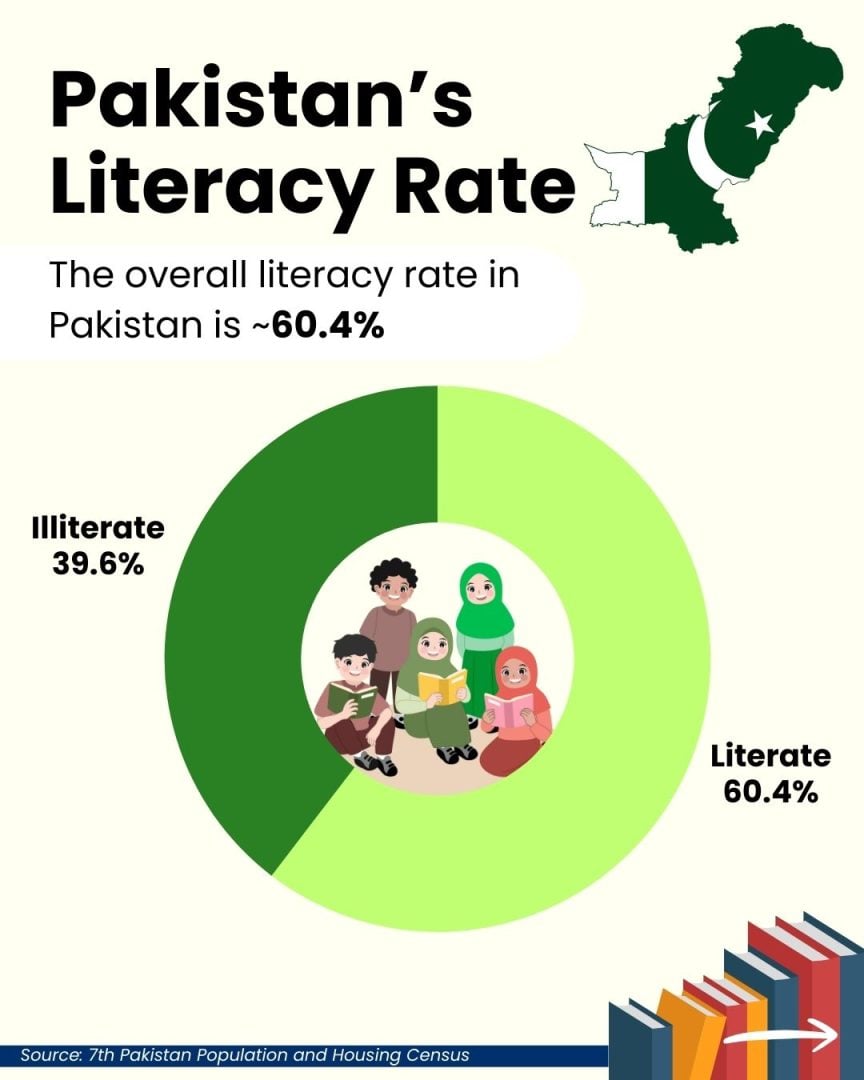
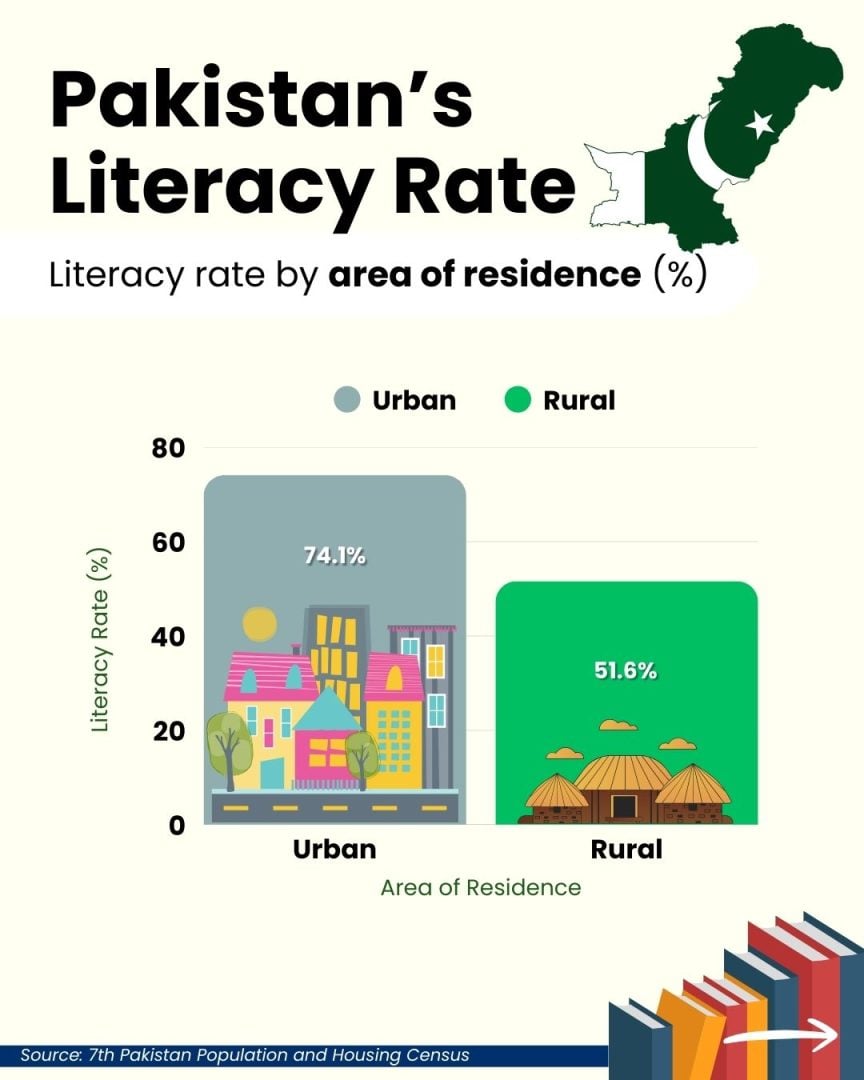
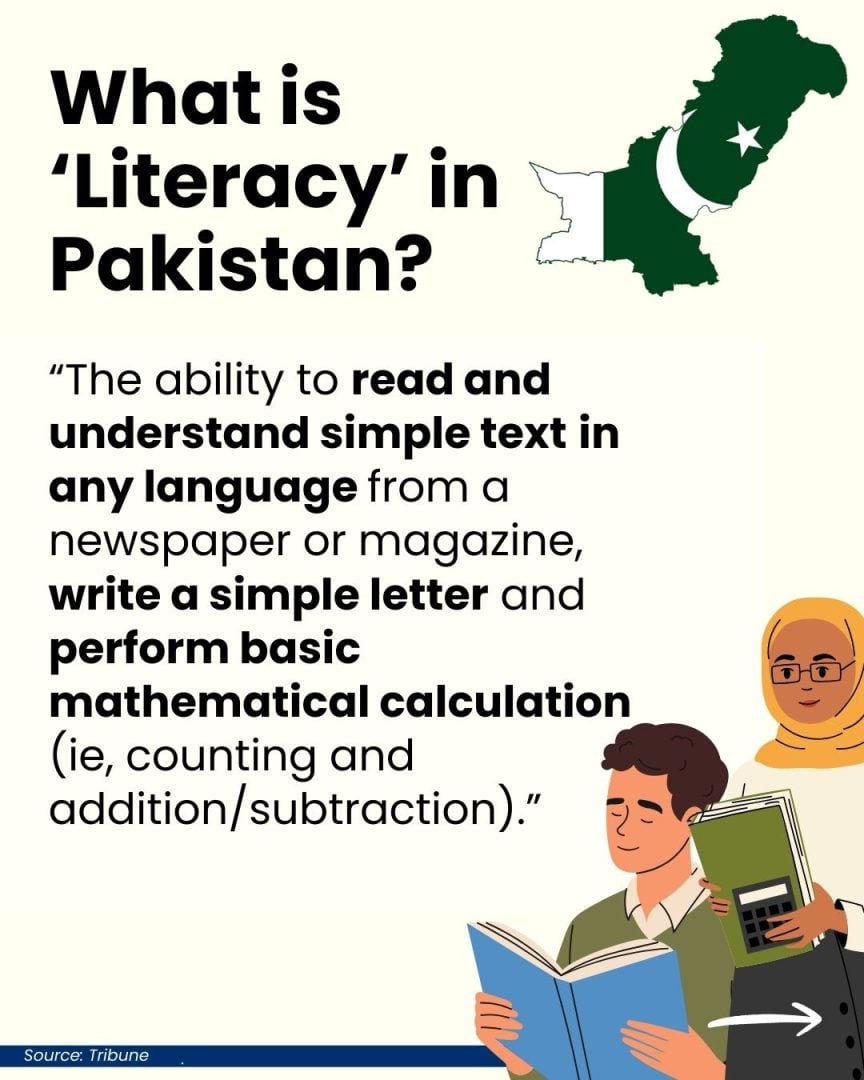
Pakistan’s literacy rate story is not just a statistic—it’s a reflection of unequal access to opportunity. With an overall literacy rate of around 60.4%, the country shows progress, but the remaining 39.6% illiterate population highlights how large sections of society are still excluded from basic educational empowerment. Literacy shapes everything from employability and economic mobility to health awareness and civic participation, meaning this gap is not only educational—it is social and developmental.
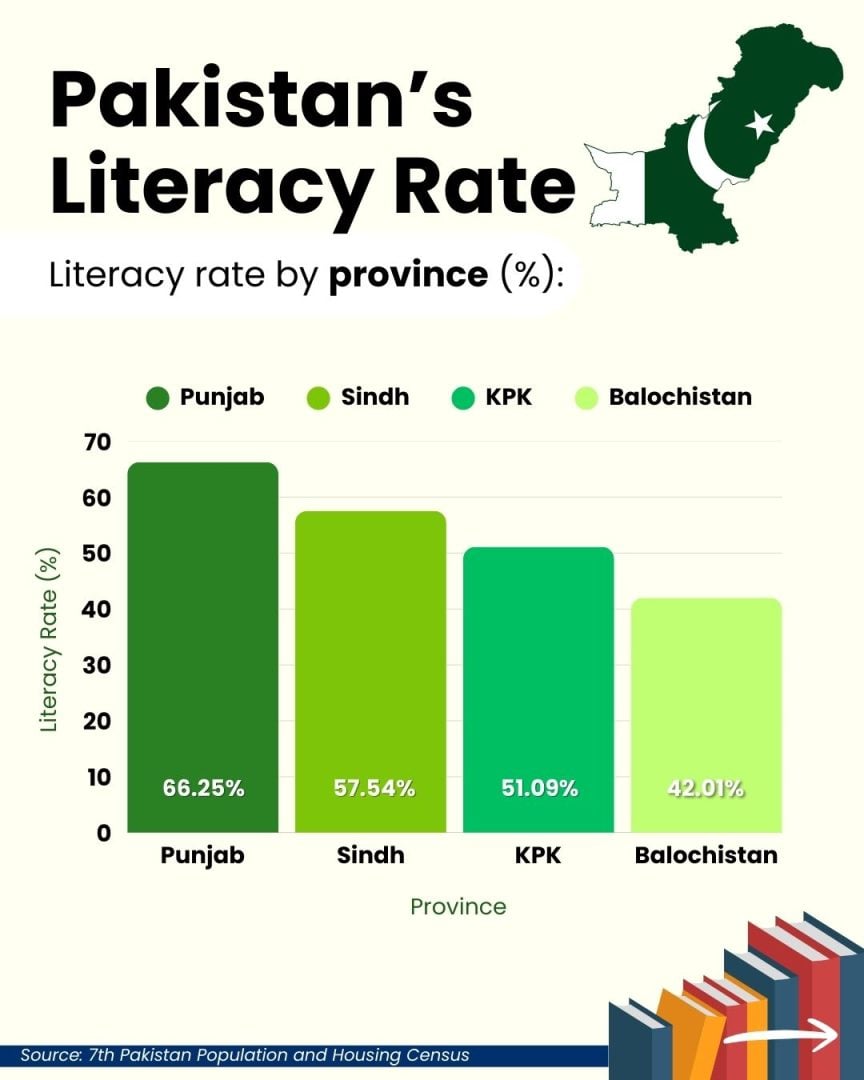
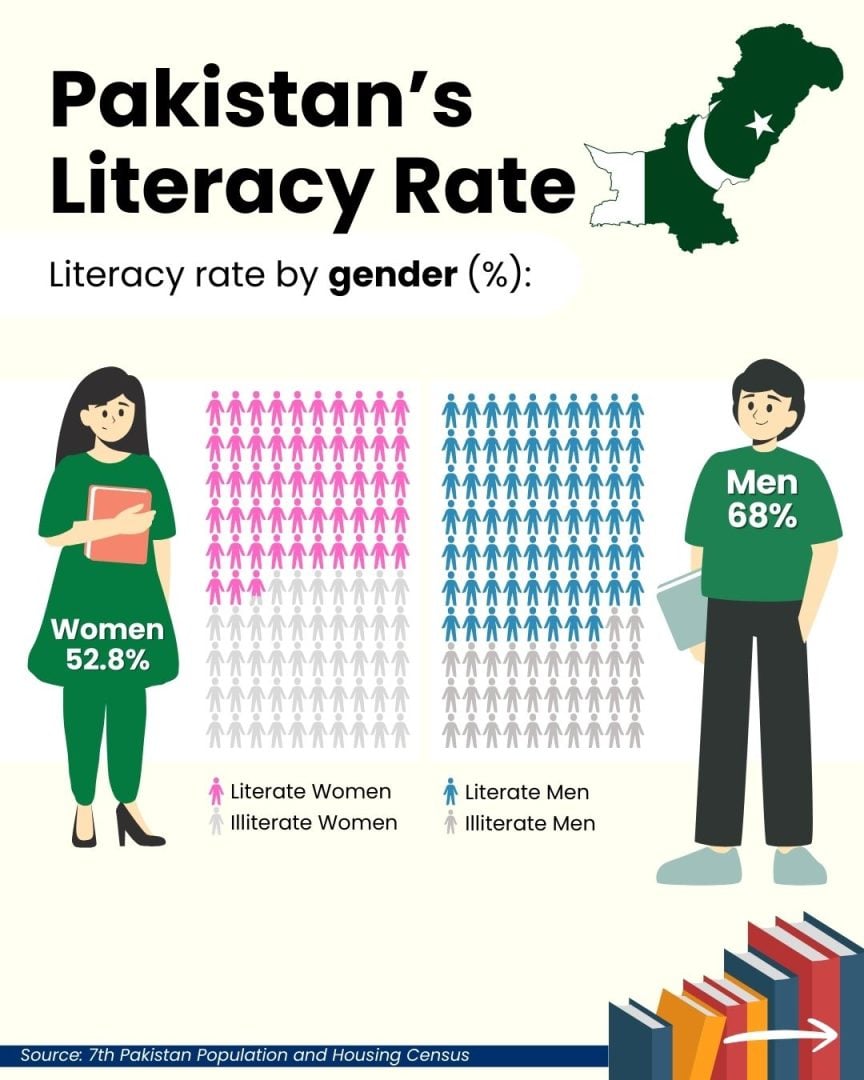
The provincial breakdown further shows that literacy in Pakistan is deeply shaped by geography, governance, and infrastructure. Provinces like Punjab lead with stronger access to schooling, while regions like Balochistan lag behind due to persistent challenges such as limited facilities, poverty, security constraints, and weaker public service delivery. This uneven distribution makes literacy a national issue that requires targeted, region-specific interventions rather than one-size-fits-all policies—because closing the literacy gap is ultimately about closing inequality itself.
If you want to submit your articles and/or research papers, please visit the Submissions page.
To stay updated with the latest jobs, CSS news, internships, scholarships, and current affairs articles, join our Community Forum!
Paradigm Shift is an official staff account.