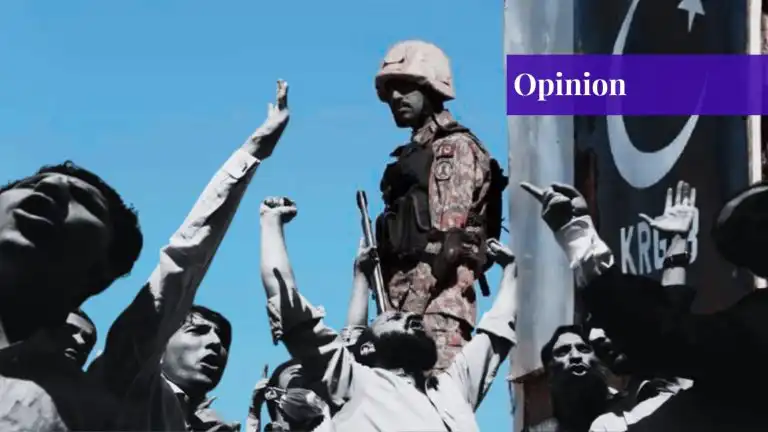
Pakistan’s Security Dilemma
Pakistan often presents itself as a security state, and in many ways, that claim is justified. It possesses one of the world’s most credible nuclear deterrents, a battle-tested military, and strategic capabilities robust enough to prevent any adversary from contemplating a full-scale invasion. Measured by conventional standards of state security, Pakistan is far from weak. It is difficult to coerce, expensive to attack, and nearly impossible to defeat outright.
So far, this strength conceals a deeper contradiction. A country that can deter war with a larger nuclear-armed neighbor still struggles to protect ordinary citizens in markets, mosques, schools, and on highways. The enlisted person guarding a stop in Balochistan, the shopkeeper in Quetta, and the worshipper attending Friday prayers often live under a level of insecurity that seems mutually exclusive with the image of a heavily securitized state. This falsehood reveals Pakistan’s real security crisis: the state has become highly capable at defending itself from external threats while remaining insufficiently capable at protecting people from internal violence.
The core problem is not a complete absence of security. It is a failure to define security correctly. For decades, Pakistan’s security doctrine has been shaped primarily by external threat perceptions. The unhealthiness of 1971, persistent hostility with India, and enduring conventional military imbalance pushed policymakers toward a strategic culture centered on deterrence. In that context, nuclear weapons, missile systems, and military modernisation were rational investments. They addressed an empirical problem: how to prevent a stronger mortal from imposing its will through force.
Since Pakistan became a declared nuclear power, no neighboring state has attempted a full-scale war aimed at dismantling Pakistani sovereignty. Even during severe military crises, the increase remained controlled. Deterrence imposed limits. It created caution. It raised the cost of war beyond acceptable thresholds. But rational motive solves only one kind of problem. A nuclear weapon cannot stop a suicide bomber. A ballistic missile cannot dismantle a sleeper cell. Air defense systems cannot detect ideological radicalization spreading through neglected communities. Strategic weapons can secure borders, but they cannot secure streets.
This distinction matters because modern insecurity increasingly comes not from conventional invasion but from fragmented, irregular, low-signature violence. Pakistan’s deadliest security threats in recent decades have often emerged not as armored divisions crossing borders but as insurgent networks, sectarian militants, extremist cells, and organized violent groups operating within or across porous frontiers.
That is a different battlefield entirely.
The tools required for this battlefield are not primarily missiles or fighter jets. They are intelligence integration, forensic capability, local policing, digitized border management, effective prosecution, judicial coordination, and governance capacity. These are less glamorous than weapons systems. They do not appear in military parades. They rarely generate symbolic prestige. But they determine whether citizens feel safe in daily life.
Pakistan’s Weakness
Too often, internal security remains reactive rather than preventive. Attacks happen, investigations begin, blame is allotted, and public attention eventually shifts elsewhere. Structural reform remains incomplete. Intelligence-sharing gaps persist. Prosecution rates remain inconsistent. Organisational vacuums continue to create space for violent actors. The result is a dangerous illusion: the state appears strong because its external deterrent is strong, while internal vulnerabilities remain unresolved. A useful scrutiny emerges from the Gulf states.
Countries like the UAE, Qatar, and Saudi Arabia represent the backward model. They have heavily invested in micro-level security infrastructure: biometric identity systems, advanced surveillance, dense CCTV networks, digital monitoring, and highly visible domestic policing. Public spaces are tightly regulated. Internal order is maintained with exceptional efficiency. Terrorism and mass casualty attacks inside these states remain rare.
But their strength comes with another weakness.
What Gulf States Lack
Most Gulf states lack fully independent strategic deterrence and depend heavily on external security guarantees, especially from the United States. Their cities may be secure from internal disorder, but their macro-security remains partially outsourced. If a major regional conflict escalates, they rely significantly on allies for protection. Pakistan and the Gulf therefore represent mirror images of the same dilemma. Pakistan is comparatively secure from major external aggression but vulnerable internally. The Gulf is comparatively secure internally but strategically dependent externally. One has built strong walls around the state. The other has built strong controls within the state. Neither model alone solves the full security equation.
Security Is Not Singular
There are at least two forms of security. The first protects sovereignty. The second protects daily life. A state may succeed in one while failing in the other. Pakistan’s mistake has been treating success in the first as information of success in both. That assumption is increasingly costly. When policymakers prioritize macro-security almost exclusively, they risk overlooking the fact that insecurity today often bleeds societies slowly rather than destroying them suddenly. Internal violence erodes trust, weakens economic confidence, discourages investment, fragments communities, and normalizes fear. Over time, chronic insecurity damages national resilience as surely as conventional war. The question, then, is not whether Pakistan should reduce investment in deterrence. That would be strategically unwise. External threats remain real, and deterrence continues to serve an essential function.
Pakistan needs an integrated security doctrine, one that preserves strategic deterrence while elevating human security to equal importance. Domestic protection must no longer be treated as secondary law enforcement. It should be recognized as a central national security..
Modern forensic systems must be expanded. Intelligence coordination between federal and provincial institutions must improve. Counterterrorism prosecution mechanisms need transmutation. Border digitizsecurity.ld reduce infiltration risks. Most importantly, governance vacuums in neglected regions must be addressed because violent actors thrive where the state is absent, distrusted, or weak. Security ultimately is not about weapons alone. It is about self-assurance, the confidence that citizens can move, work, worship, and live without constant fear. A nation’s true strength cannot be measured solely by the range of its missiles or the size of its arsenal.
It must also be measured by something far more human: whether ordinary people can expect to return home safely at the end of the day. Pakistan has largely solved one half of the security equation. It has made it hard to conquer from the outside. The unfinished task is solving the other half. Until the state protects citizens with the same seriousness with which it protects borders, Pakistan will remain trapped in a paradox strong enough to deter war, yet not safe enough to guarantee peace at home.
If you want to submit your articles and/or research papers, please visit the Submissions page.
To stay updated with the latest jobs, CSS news, internships, scholarships, and current affairs articles, join our Community Forum!
The views and opinions expressed in this article/paper are the author’s own and do not necessarily reflect the editorial position of Paradigm Shift.

Muhammad Umar is an IR scholar with expertise in security studies and policy-making.