India has progressed significantly in providing homemakers with the financial independence they truly deserve but are often denied. In 2021, 118 million women from 12 states across India began receiving cash stipends from state governments; what started as an election campaign manifesto became a small step towards a sense of independence for homemakers and an act of gratitude by the state for their unpaid work. As of now, 15 states in India are running this program.
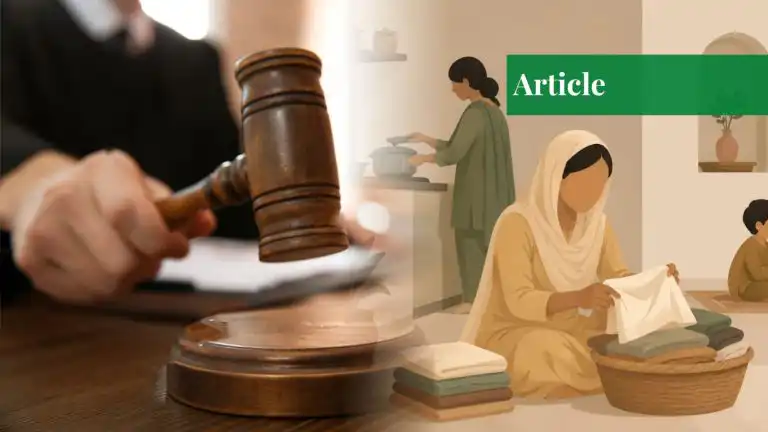
While these welfare initiatives by state authorities have had a lasting impact on state policies, the judiciary has equally contributed to providing legal protections and recognition to homemakers on a national level. Recently, in what many characterize as a landmark ruling, the Indian Supreme Court recognized the contributions of “homemakers” in domestic settings as possessing “independent economic value.”
Shishu Pal @ Shis Ram & Ors vs. Surjeet & Ors, a case that started as a regular road accident compensation case, ended up becoming one of India’s most celebrated judicial decisions of recent times. It restores the dignity and value that unpaid domestic workers, mostly women, have the right to as human beings and paves the way to mitigate the false stereotype that stay-at-home women are not socio-economic contributors. The Supreme Court’s ruling in this 20-year-long case also significantly reshaped the legal recognition and nature of contributions made by unpaid domestic caregivers.

What Exactly Does It Mean?
According to the United Nations, women across the world spend 16 billion hours doing unpaid domestic work and care, yet the value of this work remains structurally unrecognized in most parts of the world, and the social stereotype that they do not contribute to the economy often remains supported. The issue of low monetary compensation in cases involving the death of a “housewife,” or more generally, any individual who does not earn a wage but instead manages the household and cares for its members, was addressed in the judgment delivered in this case.
Previously, there had been multiple cases with similar facts; however, the courts rarely acknowledged the various non-pecuniary losses suffered by the surviving family members. Usually, the court merely determined and calculated the monetary loss to the family caused by the death of a caregiver or homemaker based on the expenses that would be incurred while hiring househelp to complete tasks that were otherwise taken care of by the deceased.
The Judicial Stance Taken by the Indian SC
To determine the compensation for Ms. Shanti Devi’s death, the court went above and beyond this time around, highlighting three main contributions that were previously neglected. Firstly, their contributions to the economy: it took into account the “Times Use Survey” of 2019, which suggested that the contribution of women’s unpaid domestic work was 15 to 17% of India’s GDP.
Secondly, it highlighted the role of mothers and caregivers in transmitting the core sense of community and fostering the sense of social bonding that later sustains individuals as they become a part of the wider society, thus preparing the future “human capital.” Lastly, it also emphasized the significant support homemakers provide to the family’s income-earning members, both emotionally and materially, by relieving them of household chores and everyday responsibilities, thereby enabling them to focus entirely on earning a living.
Thus, in light of these considerations, the Supreme Court of India held that the monthly compensation for the death of a homemaker would be 30,000 Indian rupees per month. This judgment not only creates a precedent to be followed to ensure fair compensation for a homemaker’s death, but it also achieves a much bigger milestone—that of elevating the social status of a non-earning homemaker by monetizing their contributions and by providing them with legal protections.
How Does It Legally Protect Unpaid Domestic Workers?
While the ruling adequately addresses and recognizes the value and contributions of women in the domestic sphere, the question is whether it truly provides any practical legal protection to them or not. On the surface, it seems like the ruling concerns itself more with the protection of legal entitlements that a deceased homemaker’s family should be provided with rather than with forming protections for the homemakers. However, that is not entirely true.
The ruling does protect these entitlement rights, but it also paves the way for easier access to compensation for women in divorce settlement cases, domestic abuse cases, and other domestic disputes. While not explicitly mentioned, the ruling has still skillfully addressed the issue of fair alimony by monetizing the worth of housework, providing a legal method for the courts to account for women’s unpaid domestic labor when determining alimony.
The Rest of the Subcontinent
This makes one wonder where Pakistan stands on such an issue, and what about other countries within the subcontinent? Bangladesh has stepped up in recent years to ensure the inclusion of homemakers in public financial systems by providing women from low-income households with stipends and other benefits.
On the other hand, Pakistan has barely ever acknowledged the need to bring structural change in the status of homemakers or provide them with legal protections. The Benazir Income Support Program and the Ehsas Program may seem like initiatives targeted towards this issue; however, they are not. BISP focuses on achieving the objective goal of providing financial assistance to low-income households rather than focusing on integrating unpaid domestic workers into the country’s economic structures.
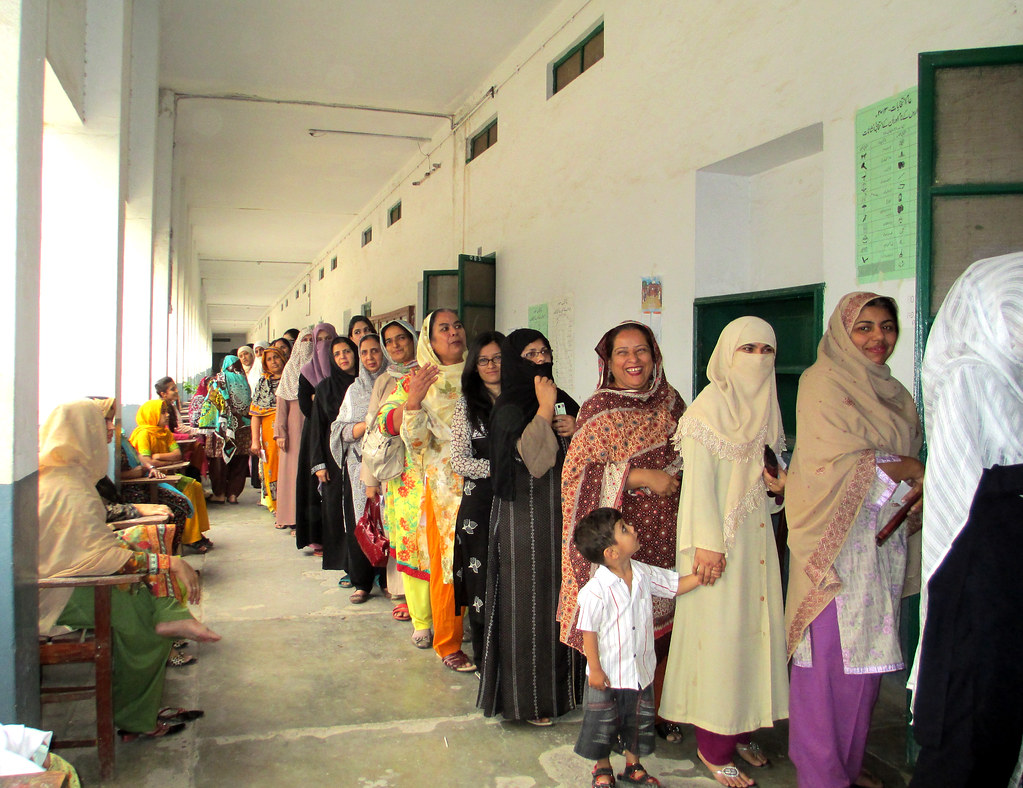
Additionally, the state provides no legal protection to women who perform unpaid domestic labor, and while such schemes work wonders for lower-income households by providing the financial support necessary for survival, they cannot be considered as initiating the socio-legal change that the society truly requires to reshape the recognition that unpaid work by homemakers receives.
What Stops Pakistan From Bringing Such Change?
According to the Pakistan Bureau of Statistics, 66.7 million women participate in unpaid domestic and care work throughout the country, yet why is it that, unlike India or Bangladesh, Pakistan fails to recognize and bring change to their circumstances? The answer to that is a multi-layered one, with problems that align one after another creating a structural barrier towards substantial change.
First and foremost, the state of economic instability that the country has been dealing with for the past decade or more prevents the government from focusing on social development; rather, the focus is heavily towards paying off national debts. The overall fiscal deficit that Pakistan was under in the year 2024-2025 was 5.4% of the GDP, which leads the country into a vicious cycle of taking loans to prevent sliding into a default state and then trying to pay them off; in the midst of this, social concerns regarding development and change are completely sidelined due to pressures and expectations of the loaning parties.
The IMF, for example, approved a total of 3.3 billion dollars in loans to Pakistan under the condition that government expenditure remains controlled. Such arrangements between the government and the IMF have time and time again limited the expenditure that is truly required to initiate and enforce cashback programs for unpaid domestic labor; the main fields of focus for government expenditure remain defense, business, and infrastructural development.
Furthermore, unlike India, civil cases in Pakistan make up 64% of the backlog in courts, which is more than half of the backlog, showing how the Pakistani judiciary’s focus remains far from civil law and its reform. Lately, Pakistani courts have had their hands full with political disputes and a devastating shift in intra-judicial power dynamics with the introduction of the Federal Constitutional Court and sudden constitutional amendments.
This has led to a rift in the upper floors of our judicial structure, destabilizing the institution as a whole. While it is a nation’s judiciary’s responsibility to ensure that it takes notice of disadvantaged communities in society and brings substantial change to better their condition, it would not be wrong to suggest that our judiciary remains focused elsewhere. It is evident that with the judiciary’s focus on political disputes and conflict within its own walls, it has no concern for problems faced on an individual level in society, let alone those faced by an invisible part of society that remains hidden behind four walls while contributing to the economy.
Thus, unlike neighboring countries, Pakistan remains miles behind in providing homemakers access to social and domestic protection mechanisms. Pakistan is yet to adopt comparable mechanisms that directly acknowledge and value homemakers’ work, and to do that, our legal and legislative structures would have to step up and take notice of unpaid domestic labor and its contributions in society. Bridging this gap will require targeted policy-making for legal reform and judicial interest by the courts in the lives of individuals.
If you want to submit your articles and/or research papers, please visit the Submissions page.
To stay updated with the latest jobs, CSS news, internships, scholarships, and current affairs articles, join our Community Forum!
The views and opinions expressed in this article/paper are the author’s own and do not necessarily reflect the editorial position of Paradigm Shift.