Every empire of the world has proved mortal.
Will Durant
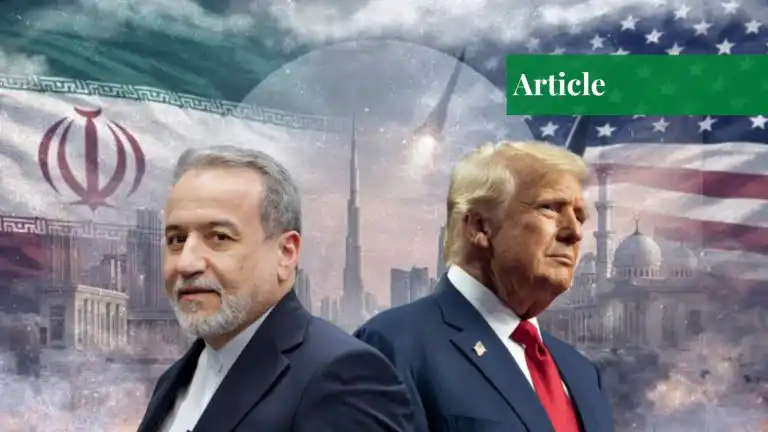
It’s been a while since I had enough substance to write about the Gulf Conflict. The US-Israel duo and Iran stared each other down in a stalemate that they called a ceasefire, but one which was occasionally disturbed by an odd bombing run. Negotiations are now underway with a 60-day time frame to work out a modus operandi on how to co-exist in relative peace. However, the question we come back to is why the US (Trump) started a war with Iran in the first place? It has since been described as a war of choice – one that could have been avoided. How it is seen by the US Senate is another proposition – they are calling it, first, illegal, and second, foolish, as quoted by Senator Tim Kaine in his presentation. Coming back to the question of why it was started in the first place?
One view is that Israel influenced US policy and manipulated the US President into getting to be part of the conflict. Israel, with its ‘Greater Israel ’ plans and, as stated by the US Ambassador to Israel, that Israel is from the River to the Sea, explains Israel’s interest, but what does the US get out of such a war? At the time, the idea sold to the US was that of trade corridors and China’s growing economic dominance. The so-called India-Middle East- Europe Corridor (IMEC) that included Israel was apparently conflicting with the Belt and Road Initiative that China was already executing. So as to make IMEC a reality, control of the Red Sea and the Arabian Peninsula was necessary, but Iran stood in the way. This was stated publicly by Netanyahu in the United Nations, where he presented his Global Corridor Plan, the IMEC, and how Iran was a disruptive element towards it.
To make Iran a compliant state, the whole conflict began with a regime change operation, first beginning with currency manipulation through the UAE, followed up by staged street protests and riots. When this did not meet expectations, the process escalated into massive bombing runs by the US and Israel to decapitate the leadership and provide the necessary fillip to a general protest by the people against the regime. It backfired, and Iran stood even more unified than it ever was. The basis of Iran’s successful handling of these massive attacks has been explained in their military and technical sense already in the Corridor-Wars series and as such need not be repeated here. The ultimate confrontation, which gradually involved all the Gulf States, the closure of the Hormuz Straits, and the invasion of Lebanon by Israel, eventually led to a series of negotiations.
Though in my own reckoning, I feel that the ceasefire, the MOU agreed to, and the 60 days allowed for working out the method to implement and enforce all that has been agreed to, is an encouraging step forward, but I have serious reservations. These reservations pertain to Israel not getting what it set out to do, i.e., destroy Iran and pave the way for a Greater Israel. Iran stands cohesive and much stronger than before, and as such, Israel feels the ceasefire is premature and much too soon. However, for Israel to continue this conflict till it realises some of its goals, it has to have the US as part of its integral plan. Israel’s military capacity is limited to air strikes and nothing more where Iran is concerned, and where they have used ground troops in South Lebanon, there are reports of serious attrition they can ill afford. Thus, US moral, physical, and financial assistance is a must.
For such assistance, Israel has substantial influence in the US Congress – 95% of the House. US Congressmen, now, cannot find it within themselves to publicly state that ‘US first ‘, and instead prefer to state Israel first’, in an unprecedented display of perfidy. It’s not entirely their fault and is
more a consequence of the US political process having evolved in this direction. In 2016, Trump and Hillary Clinton were presidential candidates. It was then widely believed that never before had US citizens been reduced to electing/selecting a President out of the two most hated people in history. The political system is broken, and Israel has taken full advantage of it, exploiting its greatest curse – funding-inspired lobbying campaigns for political benefits. Thus, we are where we are, in this curious case of the tail wagging the dog – the US supporting anything Israel does. It has resulted in $30 billion only in 2025, just to fund Israeli adventures in Gaza, Syria, Lebanon, and Iran by US taxpayers. A huge shift in US values as they support genocide in Gaza and chaos in Lebanon.
Trump has dragged the US into an unwinnable war, and one fails to find a cogent rationale that explains it. His foreign policy is projected by Jared Kushner and Steve Witkoff, two unelected individuals, one related to Trump and the other an old friend. Both Jews are seen to be highly prejudiced in favour of Israeli interests. Throughout this conflict, beginning on the 28th of February 2026, Trump has been suspected of manipulating the international stock market by making incoherent and self-contradictory statements, which amount to insider trading. With the conflict of interest staring the Trump administration in the face, the fact that he personally accumulated $1.5 billion while in office stands out as glaring evidence implicating him in unmitigated corruption. His erratic, spontaneous, and odd behaviour has caused the Congress to seriously consider invoking the 25th Amendment, Article 4, where a President is removed from office on account of not being able to perform the tasks assigned to him. Is this a case of cognitive failure? The Epstein files are another piece of damning but certified, historically documented evidence that can be used against President Trump at any time.
With such glaring failures, visible and confirmed, Trump, however, made one decision which is a remarkable feather in his cap – he committed himself to a ceasefire of sorts and, to his credit, tried to get America out of the quagmire he had put it into. This appears the repeat of the 1961 Bay of Pigs crisis, a failed invasion of Cuba by immigrants. John F Kennedy withdrew from the brink of war, suffering a huge embarrassment, when he realised that he had been trapped into a conflict that would need US boots on the ground to retrieve the situation – which was the original plan of the CIA. Kennedy refused to escalate and instead sacked the CIA Director of the time for trying to play him. Has Trump been played by Israel, has he been intimidated, blackmailed, and coerced into doing what he now knows is not a winnable situation? Many commentators comment on this crisis, and others are confused in assessing how this war has gone and do not know what to make of it. This crisis has now evolved into an MOU which both sides see as a tentative basis of future peace, that needs to be ratified into a formal agreement within 60 days following its signing. However, it must be compared to the Joint Comprehensive Plan of Action (JCPOA) – the old agreement, which Trump tore up and decided to go to war. He blamed Barack Obama for a weak deal, which he would improve upon substantially through pressure on Iran. That America would no longer be taken for a ride as framed in the JCPOA!!!
The JCPOA was signed in July 2015 and is defined as the ‘forever deal’ that brought Iran’s nuclear programme under international control, supervision and oversight. The MOU is not a forever deal, though, in all fairness, the MOU has yet to become a firm agreement. So here is a clear comparison:
- The JCPOA states, “Iran reaffirms that under no circumstances will Iran ever seek, develop or acquire any nuclear weapons”. The MOU states, “That Iran reaffirms that it shall not develop or procure nuclear weapons”. The wording of the JCPOA is obviously far more firm, precise, definitive, and exact.
- On another five crucial points:
- The JCPOA states a definite centrifuge limit, but the MOU is silent.
- The JCPOA addresses enrichment in no uncertain terms as a zero end-state; the MOU does not.
- The JCPOA limits nuclear research work – the MOU does not.
- JCPOA insists on the destruction of enriched uranium, while the MOU only mentions down-blending it – Trump inherited a 0 kg enriched uranium environment due to the JCPOA. Besides, any uranium that is down-blended can easily be upgraded back to weapon grade.
- JCPOA established the inspection regime through the IAEA and its specific protocols. The MOU is silent on the matter.
- Both the JCPOA and the MOU mention sanctions. These sanctions include those imposed by the US Congress, the Executive of the US President, and the United Nations in international sanctions. However, there are critical differences in the understanding as follows:
- The JCPOA relieves Iran of nuclear sanctions but reserves the right to snap them back in the event of any violation related to nuclear control.
- All other non-nuclear sanctions related to human rights, terrorism, proxy war, and ballistic missiles.
- The MOU has unilaterally terminated all sanctions and confirmed that there would be no further sanctions on Iran.
- What is common to both agreements, the JCPOA as well as the MOU, is that all Iranian assets, the world over, would be unfrozen and that Iran would be able to sell oil as a sovereign right.
- However, one great contradiction is that the JCPOA agrees to pay Iran $1.7 billion, but this was the debt the US owed Iran for weapons sold but never delivered. The JCPOA, on the other hand, commits to giving Iran $300 billion in reparations to repair the damage incurred to Iranian infrastructure by the US bombing.
- The JCPOA was a document ratified by the P-5 (permanent members of the UN Security Council – US, UK, France, China and Russia) with Germany as an additional country. The MOU has no other country standing with the US. Not even Israel!!! So a world power, member of NATO, AKUS, QUAD, etc., had to go it alone in a bilateral arrangement because no one else was willing to be part of this US-led and initiated war!!
- The last major difference in both agreements is about the Straits of Hormuz not being mentioned in the JCPOA, while in the MOU, they mention that they will be reopened, but controlled and managed jointly by Iran and Oman. They were not closed before this war in any case, and there was no need to mention control over navigating the straits for any international traffic in the JCPOA.
So if there is any documented damning evidence of who has lost this war so far, the MOU stands out as a glaring indictment of a massive US failure. The US has, in fact, conceded to every Iranian demand. The question is whether they are willing to adhere to their commitments. In my opinion, Trump was buying time to play to the political galleries, restore some semblance of global oil pricing, re-establish the
supply chain and ensure the US’s own reserves remain at some respectable level. Whereas he may want to walk away from this conflict, which is the only solution to immediate peace, he cannot. Hardliners in his government and Israel, both, will not allow him this relief. Thus, it is expected that as we near the 60-day ceasefire period and maybe even before, matters will escalate. Since the US tried the air campaign and failed, they may have someone foolish enough to dare a ground invasion. For that to happen, the assembly and concentration of troops of at least 300,000 or so would be needed. Such activity is not yet on the horizon.
There are limited approaches, but the US may try island hopping as a confidence measure and a more measured and committed intrusion from the Iraqi border. The Iraqi border is uneven terrain, difficult transportability and has limited infrastructure where operations would be slow, phased, and deliberate; all the while exposed to Iran’s arsenal of missiles. The island-hopping scheme is unsustainable from the very beginning, though capturing some Islands would be quick, easy and spectacular – allowing the US an opportunity to declare a military victory. Nevertheless, Trump may be compelled to travel down the path that John F Kennedy refused to take in 1961 – the Bay of Pigs and instead do a Lyndon Johnson, all over again, reliving the agonies of Vietnam. Trump may be hostage to his own environment – hardliners, Israeli influence, Epstein-files blackmail and his own larger-than-life ego.
How things unfold will be determined after the funeral rites of the martyred Supreme Leader, Ali Khamenei of Iran, which will conclude on the 9th of July. So far, more than a hundred countries have shown solidarity with Iran while the US sulks – licking its wounds in isolation. Another indicator as to who really has the upper hand. Israel, hostage to habit, may try to disrupt these funeral rites, but Iran must have taken all necessary precautions. Yet, the US may like to try its hand, physically and militarily, to get a better MOU in the near future as the 60 days of the ceasefire come to a close. That is what Israel would want. Israel’s Lebanon adventure is turning sour and may even be its ultimate downfall. The US-Israeli attempt at stirring up a civil war in Lebanon has failed since the Lebanese Army, 60, 000 strong, is no match for the 200,000 Hezbollah, and besides, a substantial part of the Lebanese Army is Muslim Shias. The Trump plan to incite an invasion of Lebanon from Syria by the Julani forces is not realistic and, if implemented, would denude Syria of forces to contain the internal situation. Julani, an erstwhile recognised leader of Al Qaida but now a diehard and respected ally of the US, already has his hands full in trying to stabilise Syria. In the meantime, Israel has lost 50% of its tanks to fibre-optic guided munitions and has no answers for the crisis. Escalating to genocide is not an option, since Iran has warned of its response, and a ground-alone invasion points towards an imminent Israeli defeat.
Pakistan has done well for itself in this crisis and has managed to rekindle a dying reputation. Some say Pakistan orchestrated the US-Iran ceasefire, but others say that Pakistan may be left standing on the wayside, irrelevant and forgotten as matters worsen and escalate into another shooting war. In the latter, Pakistan’s distractors would have a lot to criticise and even more to complain about. Nevertheless, the region is in flux – waxing and waning and offers Pakistan multiple opportunities. The first is the Saudi rapprochement with Iran – Pakistan must remain more visible in facilitating this. Pakistan must also try to bring the Houthis and the Saudis together as partners rather than enemies – there are many common interests compared to the few disagreements. The common interests lie in the Red Sea, Bab al Mandab and the Yemeni coastline – the differences are petty ideological arguments. The post-US Gulf will need a Chinese intervention in the technical and moral sense – Pakistan is in a position to do that. Pakistan must facilitate a meeting of the minds for a regional security paradigm where the identifiable threat remains only Israel and, by association, maybe the US. This would involve Saudi Arabia, Iran, Turkey, and Pakistan as the core stakeholders, protecting oil, gas, and trade through the Gulf. The security paradigm must also be
expanded to then bring in peripheral states such as Somalia, Sudan and Egypt to secure the Red Sea a global supply chain route. Chinese BRI would benefit extensively, and as such, there would be a Chinese stake, just as Russia may also want to have a presence in the region after it has effectively resolved the Ukrainian issue.
However, for Pakistan to really stand out as a winner under these circumstances, it would have to bring its people on board and resolve the political contradictions in the country, where people feel disenfranchised. Pakistan would also have to address its economic situation on a war footing. Without financial sovereignty and ownership by the people, the government will be reduced to oscillating in its own limited orbit, influenced and coerced by outside powers catering more to their interests than to Pakistan’s own critical issues.
The strong do what they can, and the weak suffer what they must.
Thucydides
If you want to submit your articles and/or research papers, please visit the Submissions page.
To stay updated with the latest jobs, CSS news, internships, scholarships, and current affairs articles, join our Community Forum!
The views and opinions expressed in this article/paper are the author’s own and do not necessarily reflect the editorial position of Paradigm Shift.