
Introduction
After the state of emergency (1975-1977), India successfully preserved the democratic structure and did not fall back into authoritarian rule. This emergency period, during the rule of Indira Gandhi, is a well-documented part of India’s history and it serves as a strong reminder of the strength of India’s democracy. Populism in India has now become a common theme of concern in its political landscape and its leaders are relying upon the support of the public.
Populist leaders often pledge to bring major reforms and deliver immediate gains to the people, thus gaining the support of the masses. This has led to a situation where various parties are in power at both the national and subnational levels, contributing to a dynamic but sometimes charged political environment. This division can lead to the existence of different interests and approaches towards political activism.
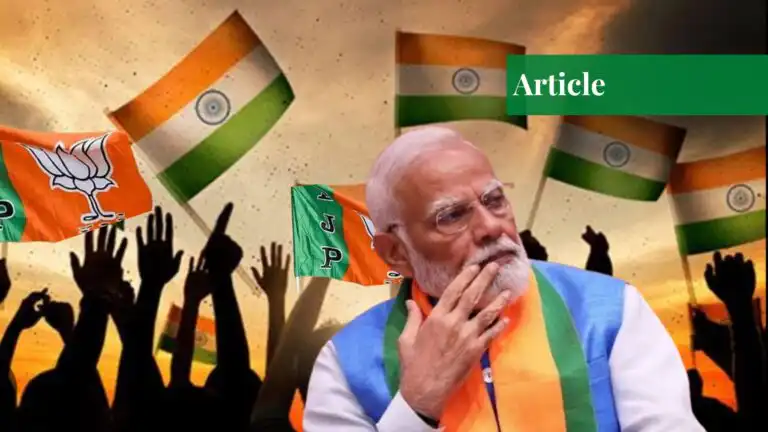
The example of the BJP under Narendra Modi in the 2014 elections shows how populist mobilization can be effective. Modi appealed on the grounds of economic growth, fighting corruption, and leadership. This direct access to voters across states was another strategic advantage for the BJP, which otherwise had to deal with the highly fragmented nature of Indian political patronage systems. It is expected that the struggle between the positions of the coalition-based political system and populist trends will remain one of the defining factors of the political life of India.
Understanding Populism
Populism is a political approach that forges the idea of dividing society into two antagonistic groups: the moral and integrated “people” against the immoral and self-interested “elite.“ This is a “thin-centered” notion, which means it is not a political project but a way of reading or interpreting political and social events. Populist leaders and movements resonate with the ones who have the mandate of the people.
Thus, populism is defined by its simplicity and the focus on its direct appeal to the audience, completely disregarding any intricate policy measures. This strategy can be divided into the right-wing and the left-wing, with the right-wing populism emphasizing nationalism and anti-immigration policies while the left-wing populism emphasizes inequality and injustice.
Although their goals are different, both forms have the same approach of targeting supporters and avoiding media and institutions to stress division and undermine democracy. The increase of populism in different countries demonstrates that populism is popular and that it creates contradictions in democratic states as it challenges the effectiveness and authority of the existing political systems.
Populism in Pre-Colonial India
Populist movements in India have mainly relied upon nationalism, language, and caste and these have been far more influential than religion in determining populist appeals. Multi-ethnic nationalism in India aimed at bringing people of different ethnicities together into one group with the motive of uniting them against colonial rule. The middle and low caste movements, on the other hand, aimed at motivating the lower castes to stand up against socioeconomic exploitations and link their fights to the nationalist forces.
In the pre-colonial social economy, Gandhi’s populist vision was to build an Indian society that existed before colonization, where the people were self-sufficient and had no dependence on other regions or groups. This vision had some apparent populist characteristics, such as independence, simplicity, and local control. This showcases that Gandhi’s approach was effective in mobilizing artisans, peasants, and people from diverse classes and castes to join the anti-colonial fight. Gandhi used two sorts of approaches: the first was non-violent civil disobedience and the second was constructive work, which had the purpose of reconstructing the villages and their social life.
Populism in Post-colonial India
The Congress Party that came into power in the 1950s and 1960s then began to pursue a policy that was based on state-led industrialization and state formation. This period witnessed the growth of democracy even though the political activity among the public remained passive. From 1960 onwards, increased participation was witnessed and significant representation was seen amongst the middle and lower strata. This change was prominent because of the famous trends circulating with the intention of overthrowing the Congress Party.
The major parties that were involved in populist ideologies were the Janata Dal, Samajwadi Party, Rashtriya Janata Dal, the Bahujan Samaj Party (BSP), and the Dravida Munnetra Kazhagam. All of these parties aimed at promoting Hindu nationalism within their region along with inclusive political structures. Following the success of the Dravidian parties, other ethno-political parties emerged with the same motive as the others.
The Rise of Bharatiya Janata Party (BJP) and the Hindutva Ideology
The Bharatiya Janata Party (BJP) emerged from the Bharatiya Jana Sangh Party which was quite active in the 1970s. One of the leaders, Atal Bihari Vajpayee, led the Jana Sangh to unite with other political parties to form the Janata Party. This party governed India for a short period of time but was disintegrated in 1979 due to factionalization and other internal conflicts. Although the Janata Party collapsed, the leaders, particularly Vajpayee, Murli Manohar Joshi, and Lal Krishna Advani, reconstituted a new political party called the Bharatiya Janata Party in 1980.
Following the rise of the BJP, a specific form of Hindu nationalism known as Hindutva became the core ideology of this party. Hindutva’s strategy focused sharply on promoting values and culture present within Hinduism and it opposed the secular ideology of the Indian National Congress. Moreover, Hindutva was highly engraved in populist ideologies upon which the BJP based its aims and goals. The populist ideology focuses particularly on the portrayal of the BJP as the protector of the Hindu culture and values while defending the Hindus from any threat coming from secular approaches and religious minorities within the nation.
The BJP portrayed India as a Hindu nation and its policies were deeply rooted in anti-secular sentiments declining any form of diversity in religion and culture. Under this ideology, the BJP focused on majoritarian rule where it supported those Hindus who aligned with the Hindutva and populism which led to the marginalization of minorities.
Populism in Narendra Modi’s Era
Narendra Modi, the leader of BJP, has used this populist ideology to propose a division between “true citizens” which are the Hindus, and “courtesy citizens” which are the minorities. Because of this division, Modi, along with BJP is fostering an anti-minority sentiment that has helped this political party gain the consolidation of the Hindu nationals and attain populist votes. This populist political strategy adopted by the BJP has led it to gain electoral success, promoting the reshaping of politics in India.
Narendra Modi is aiming to serve for a third term following the Indian General Elections 2024. Modi’s electoral campaigns have mainly focused on religious narratives. He has depicted the BJP’s Hindu nationalist agenda in many instances, such as leading the consecration of a Hindu Temple, in Ayodhya in January 2022. Moreover, the Hindu nationalist ideology was initiated by the Rashtriya Swayamsevak Sangh (RSS) formed in 1925. The creation of the temple is considered to be the fulfillment of a long-standing goal of the RSS. The BJP’s opposition condemned the event in Ayodhya, indicating division in Indian politics.
It is quite apparent that India is now drifting towards authoritarianism backed by religious overtones because of the governmental control of the judiciary, the election commission, and the media. This scenario has caused serious implications for India’s ranking in the World Press Freedom Index, indicating a sharp decline in India’s democratic rankings. Under his regime, Modi has significantly made use of religious ceremonies to uplift his political agenda—as showcased during the inauguration of the new parliament building and his participation in various Hindu rituals.
The Indian media has portrayed Modi’s image as a divine figure in the Indian politics. A revisionist historical narrative is being depicted by the BJP, which includes the victimization of the Hindus and the marginalization of the minorities in India. Furthermore, the demolition of the Babri Masjid and the creation of the Hindu temple are the most significant events showcasing Hindu nationalist politics along with communal disputes.
Conclusion
Indian politics has mainly circulated on Hindu nationalist ideologies. Populism has been the key strategy of political parties to gain influence and electoral success. Currently, the BJP’s efforts to make Modi prime minister for the third time illustrate populist narratives. Populism may reach new heights in India and this can have significant implications for regional security, particularly for India’s neighbors, including Pakistan. This can be said because Modi continues to attribute the Islamic religion to terrorism, provoking Hindu nationalist sentiments.
If you want to submit your articles and/or research papers, please check the Submissions page.
The views and opinions expressed in this article/paper are the author’s own and do not necessarily reflect the editorial position of Paradigm Shift.

Minahil Khalid is a student of M.Phil International Relations at Kinnaird College for Women University, Lahore. Her research interests revolve around global political issues and security studies.