
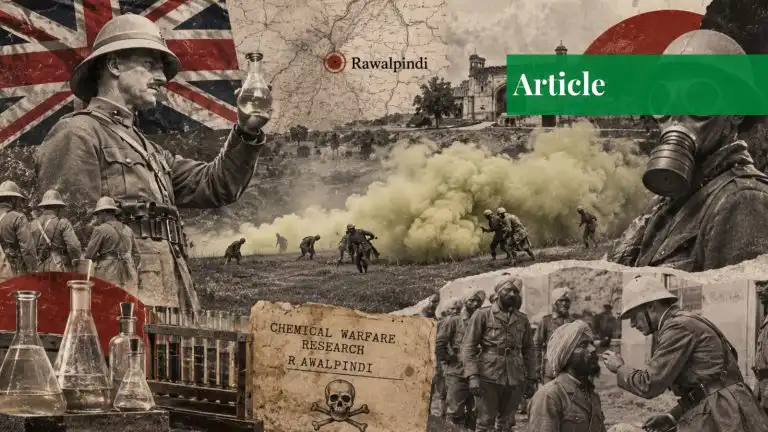
Between 1929 and the 1940s, British military scientists turned the garrison at Rawalpindi into a site for testing mustard gas on human beings and then left without looking back.
The use of chemical warfare as a means of fighting dates back as far as 600 BCE, when the Athenian army poisoned the water supply of the besieged city of Kirrha by adding toxic plants. Throughout the centuries, various states took measures to curb toxic weapons through pacts like the 1675 Strasbourg Agreement—in which French and Holy Roman leaders outlawed poisoned bullets—setting an early precedent that later shaped the 1899 Hague Declaration and the 1925 Geneva Protocol.
Nevertheless, industrial-scale gas warfare first broke out in April 1915 at Ypres, where German troops dug thousands of steel cylinders filled with asphyxiating chlorine gas into the front line, suffocating Allied soldiers and sparking mass panic. These attacks had a psychological as well as a physical impact, and before long, rival armies on both sides were firing millions of gas shells across Europe. Instead of ending the threat, the close of the First World War only pushed the British Empire to increase the secrecy of its research into chemical warfare.
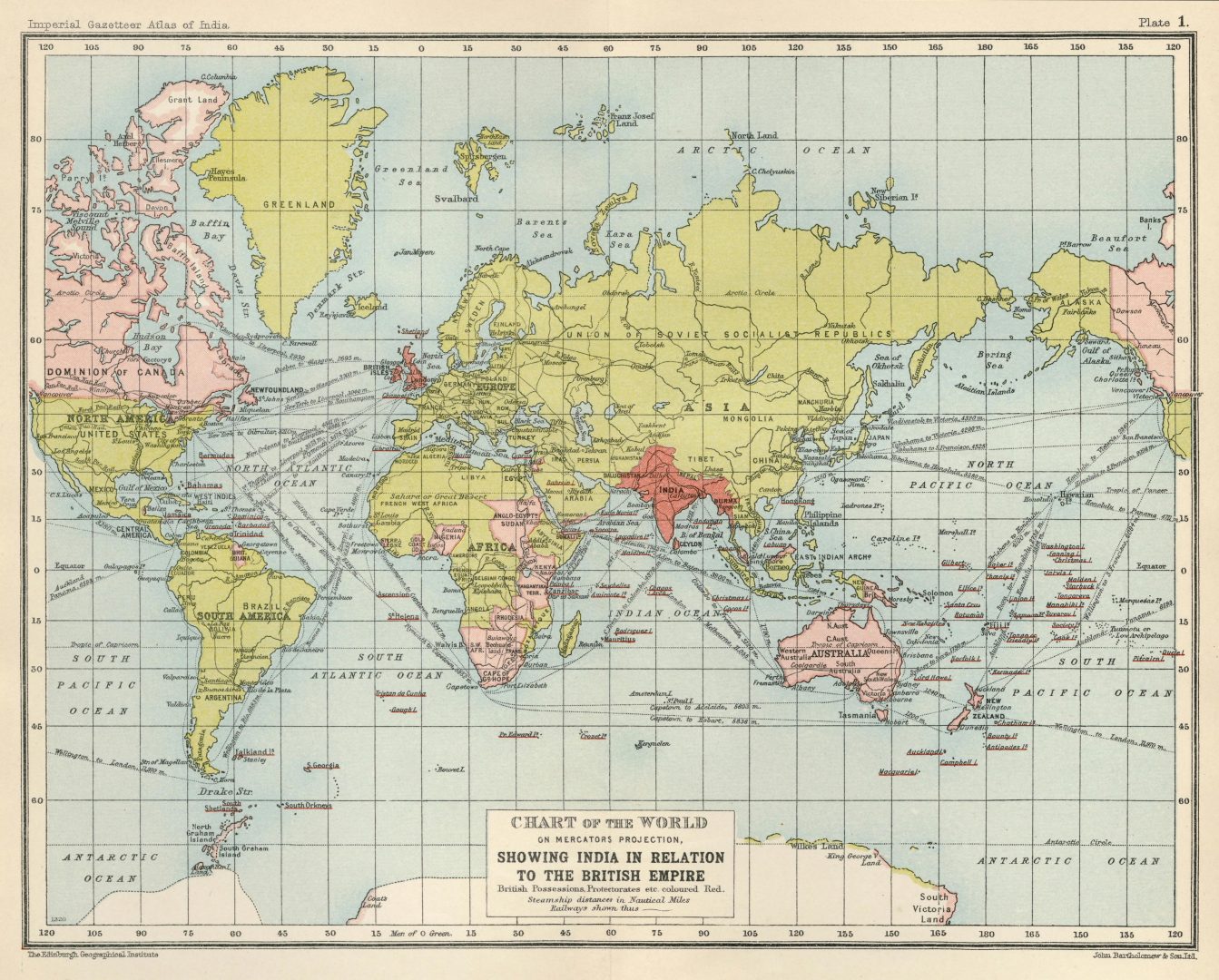
We are still coming across the grim realities of British colonial rule across South Asia—such as the enforcement of severe laws like the Frontier Crimes Regulation (FCR), which suppressed the inhabitants of Pakistan’s former tribal regions, and policies that led to engineered famines and starvation in Bengal. Yet, remarkably little is known in Pakistan regarding the human chemical experiments that occurred right in the center of Rawalpindi for well over a decade.
Historical Background: Outsourcing Porton Down to India
In 1916, Britain set up its main research center for chemical weapons at Porton Down in Wiltshire. After the war had ended, though, the place came under severe public criticism and pressure from Parliament regarding its budget, even while British diplomats were publicly preaching disarmament in Geneva. Behind closed doors in May 1920, Whitehall approved the Holland Committee’s findings, which warned that imperial security must never be gambled with and that offensive gas work was inseparable from defensive preparation.
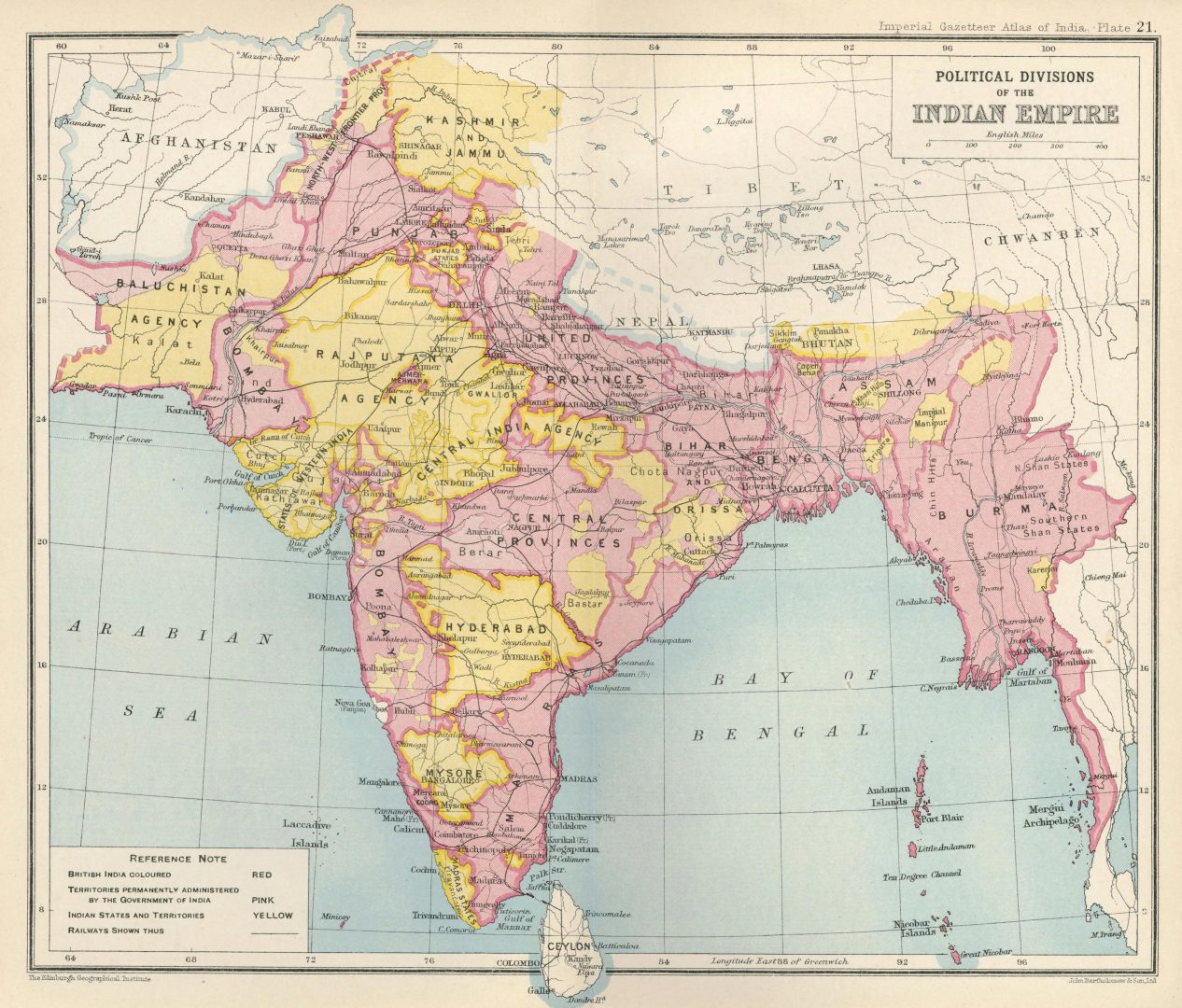
To prevent a public scandal in London during the international disarmament negotiations going on in Geneva, Britain entrusted the vital aspects of its chemical weapons testing to colonial India. According to declassified War Office records (File WO 188/802), colonial planners built a three-part network across the Raj. First, between 1921 and 1924, a military chemistry lab operated in the hill station of Dehra Dun to run high-altitude smoke tests and design respirators that could seal properly over the beards of Sikh troops.
Second, Porton Down dispatched its own physiologists and officers to Belgaum to train colonial forces at the army’s chemical warfare school. Finally, in 1929, colonial officials opened a dedicated chemical research station inside the Rawalpindi cantonment in Punjab, bringing in military officers and chemists straight from Wiltshire to run it.
Drill Shorts in the Gas Chambers
Beginning in the early 1930s and continuing into World War II, the scientists at Porton Down’s outpost in Rawalpindi shifted their work from smoke trials to exposing hundreds of Indian sepoys under British command to mustard gas. The aims were cold and calculated: they wished to find out if mustard gas caused more severe damage to South Asian skin than to British skin, to establish the exact quantity of gas required to cause a casualty in a battlefield situation, and to prepare chemical weapons for jungle fighting against Japanese forces.
The conditions in the Rawalpindi facility were harsh. The Indian sepoys were made to go into the gas chambers while wearing only drill shorts, open-necked khaki cotton shirts, and simple respirators. Since mustard gas can easily pass through thin cotton and affects moist skin, the soldiers developed painful blisters and serious burns all over their bodies, including their groin and genitals. In some instances, the soldiers were sent into the chambers to find out how much damage mustard vapor did to the eyes. In one case on record, an Indian sepoy’s gas mask slipped during a test, and as a result, he suffered severe burns on his face and eyes.
A large number of the test subjects were injured to such a degree that they had to be admitted to the Indian Military Hospital in Rawalpindi for several weeks. The scientists at Porton Down could not ignore the suffering they had caused, as a 1942 report found in the UK National Archives stated that “severely burned patients are often very miserable and depressed and in considerable discomfort, which must be experienced to be properly realised.”
Colonial Power and the Myth of Consent
Why was Rawalpindi chosen for these trials, and did the soldiers genuinely agree to take part as human guinea pigs? As Helen Tilley, a historian who has carried out research into colonial human experimentation, points out, large-scale medical testing within the empire was most easily carried out in cases where the subjects were under complete institutional control—that is, among prisoners and soldiers. Rawalpindi stood as Punjab’s main military garrison, and after 1857, British recruitment there relied heavily on the colonial idea of the “martial race.’
As Sanaullah Khan demonstrates in his examination of colonial military medicine in India, the British military doctors regularly classified Punjabi and Pathan recruits according to their race and at the same time treated injured Indian soldiers with great suspicion. When sepoys expressed physical pain or psychological distress, the military authorities often dismissed their complaints as “malingering”—that is, as an attempt to fake illness to avoid duty—and regarded their complaints as insubordination. Since in the strict colonial hierarchy it was the village elders who recruited whole kinship networks and since disobedience towards a British officer resulted in a court-martial and family shame, an Indian sepoy had no real means of saying no.
At the same time, British officials mainly employed the idea of “consent” in order to guard the state against legal action. As historian Ulf Schmidt shows in his work on informed consent at Porton Down, the British Treasury Solicitor told the government that obtaining a subject’s consent would serve as a “complete answer to any claim for damages.” However, as the experienced lawyer Alan Care later remarked in connection with the Rawalpindi trials, it is impossible to think that the Indian soldiers who were under colonial rule would have given genuine consent, since nobody would have agreed if they had been told in advance what the gas chambers would do to their bodies.
What’s Next? Recovering a Neglected History
The program, which included the Rawalpindi trials, also involved more than 20,000 servicemen being exposed to mustard gas, nerve agents, and sarin at Porton Down from 1916 until 1989. In Britain, the death of airman Ronald Maddison as a result of a sarin test in 1953 eventually led to a major police investigation. This 2004 High Court inquest found the death to be unlawful, and financial compensation was paid to British veterans. However, when it came to the hundreds of South Asian soldiers who were burnt in Rawalpindi, the British military never carried out any medical follow-ups after sending them home, even though it is now known that mustard gas is highly carcinogenic.
Just as the legal effects of the FCR remained in our tribal areas for decades after 1947, so too does the silence concerning the Rawalpindi gas experiments show how quickly colonial injustices disappear from public memory when we don’t ourselves record them. It is not merely about righting a minor point in the history of World War II to raise awareness of what took place in the gas chambers in Rawalpindi—it is about recognizing the human suffering endured by the colonial soldiers whose bodies were treated as disposable laboratories of the empire.
If you want to submit your articles and/or research papers, please visit the Submissions page.
To stay updated with the latest jobs, CSS news, internships, scholarships, and current affairs articles, join our Community Forum!
Find our FREE quizzes and MCQs here!
The views and opinions expressed in this article/paper are the author’s own and do not necessarily reflect the editorial position of Paradigm Shift.

Abdul Rehman is an independent researcher and writer based in Peshawar, focusing on South Asian colonial history, governance in Pakistan's former tribal districts, and the geopolitics of the Middle East. His work has appeared in the Regional Studies Journal and the Pakistan Humanitarian Observatory.