
The Economic Revival
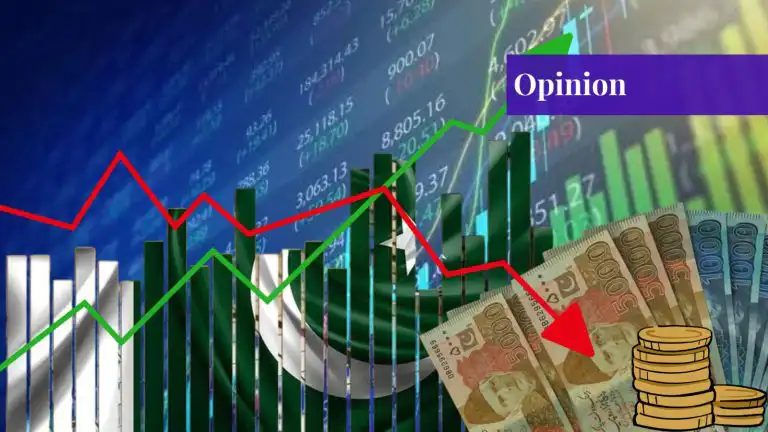
Pakistan’s external economy is beginning to show signs of life—but the improvement isn’t quite what it’s cracked up to be. Remittances by workers in the country have increased, foreign investment has increased, and foreign exchange receipts have improved. However, imports are increasing nearly twice as quickly as exports. The real issue is that Pakistan is creating a sustainable posture on the outside or simply stacking up short-term financial buffers that might come undone if external financing conditions shift.
According to the Finance Division’s Monthly Economic Update and Outlook for October 2026, Pakistan’s external sector recorded a mixed performance during the first quarter of FY2027. Remittances of workers rose by 14 percent to US$ 10.9 billion in July–September, which was a significant avenue of foreign-exchange receipts. Exports of goods were also up by 7.7 percent, at US$ 8.5 billion. But, simultaneously, imports of goods rose 14.3 percent to US$ 17.8 billion, well outperforming the growth in exports. The current account thus showed a deficit of US$ 874 million.
Additional support was furnished by foreign investment. Foreign direct investment (FDI) grew 19.9 percent to US$720 million; in the meantime, portfolio investment saw a net inflow of about US$2.93 billion. The overall balance of payments was a surplus of approximately US$ 3.1 billion. Sovereign Euro Bonds of US$3 billion were also a boost to this improvement. On the fiscal front, tax collection with the Federal Board of Revenue (FBR) hit Rs 3.086 trillion, surpassing the target by Rs 33.2 billion for the quarter. These numbers reflect a better financial situation, but the nature of external inflows will be crucial in determining whether these are sustainable.
The Problem With the Numbers
For me, the most important difference is between recurrent foreign exchange earnings and debt- or market-based financing. Remittances are relatively stable external receipts, bolstered by overseas employment and transfers by households. Productive investment in FDI can boost domestic productive capacity, create employment, and increase future export potential. However, portfolio investment is more responsive to interest rate differentials, exchange rate expectations, and investor sentiment. In the same way, sovereign borrowing is a source of immediate liquidity but imposes future repayment requirements.
This is important because a balance of payments surplus is not necessarily a reflection of underlying economic competitiveness. It can also signal temporary access to international capital markets and debt-financed inflows. Pakistan’s Euro Bond, for example, makes money available now but does not create the same amount of money to earn from exports or create the same number of productive assets. The external position must be judged not only by the quantity of inflows but also by their quality, durability, and contribution to economic capacity.
Structural Issues
There are three structural issues that warrant consideration. First, the gap between the growth of imports and exports, which has been observed, indicates that Pakistan’s exports are not that responsive. Part of the increase in imports may well be due to some catch-up economic activity, but further increases in domestic demand can easily escalate into increased external pressure if there is no commensurate increase in export capacity.
Second, if international capital is to translate into increased long-term productive investment, it is important to note that the level of FDI inflow is relatively low compared to portfolio investment. Third, the increasing dependence on external financing and inflows of funds into the financial markets creates refinancing risks and sensitivity to shifts in foreign financial conditions.
Policy measures should therefore go further than regulating foreign-exchange liquidity to bolster the underlying basis of the external account.
Achieving Sustainable Growth
The first step would be to encourage export diversification and value addition by the Ministry of Commerce, Board of Investment, and other industrial institutions. The nation should boost engineering goods, pharmaceuticals, processed food, and information technology and higher-value manufacturing to come out of its narrow export focus. The necessary industrial upgrading should be targeted, and the improvement of industrial logistics and trade policies should be predictable, not indiscriminate.
Second, the Board of Investment and provincial governments should concentrate on getting the investment promises from the banks to financial closures and project implementation. Facilitating investment requires solving issues around availability of land, regulatory uncertainty, energy costs, and contract enforcement. The significance of combining foreign investment, domestic supplier networks, and manufacturing capabilities is highlighted by the experiences of other countries, such as Vietnam’s export-oriented industrial development.
Thirdly, to enhance the external-risk management of the State Bank of Pakistan, the SBP should keep a close watch on the nature and maturity of capital inflows, maturing external debt, and external foreign exchange liquidity needs. Portfolio inflows should reinforce and not supplant sustainable export receipts and productive investments.
Fourth, there needs to be a more systematic approach for the government to channel the remittances into formal financial systems and productive investments in the country. A fraction of these transfers could be directed toward long-term economic activity without compromising their primary household-support function through lower transaction costs and diaspora investment instruments and vehicles that are transparent with regard to the source of funding and infrastructure.
The need of the day is to consolidate macroeconomic stability by taking advantage of the improvement of external indicators in Pakistan. But remittance-driven growth and reliance on sovereign borrowing and portfolio inflows are still fragile. The true measure will be the ability to transform these financial resources into productive investments and export diversification and value addition within the country. Pakistan is not simply looking for more foreign exchange inflows; it requires an economy that can generate foreign exchange on a regular basis. External stability will be achieved in the end by increased production and export—not increased borrowing and import—of goods and services.
If you want to submit your articles and/or research papers, please visit the Submissions page.
To stay updated with the latest jobs, CSS news, internships, scholarships, and current affairs articles, join our Community Forum!
Find our FREE quizzes and MCQs here!
The views and opinions expressed in this article/paper are the author’s own and do not necessarily reflect the editorial position of Paradigm Shift.

Dr. Ghulam Mohey-ud-din is an urban economist from Pakistan, currently based in the Middle East. He holds a PhD in economics and writes on urban economic development, macroeconomic policy, and strategic planning.