
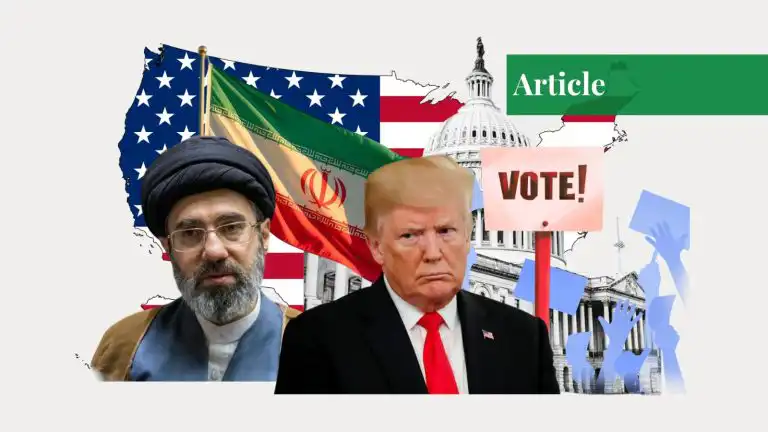
Tomorrow is the day of reckoning. Trump will lose clout but will remain in office till November 2028, unless he is impeached for his omissions and commissions. His war on Iran has not fared well, and he has been struggling to come to some sort of accommodation with Iran since September. It was not to be. Did Trump not understand that US power projection was totally aligned with their capacity to protect and sustain global trade, prices and supply chains – the burdens of global leadership? Was he unaware that geography has a great bearing on warfare but wars are fought in the realm of manoeuvres and battle – the offensive and defensive? That strategic attitude to adopt is always determined by the weapon systems: with new technologies enhancing stand-off distance, lethality, accuracy and target acquisition capabilities, the pendulum had turned towards defensive war. There was a time when mobility and protection swiftness produced the shock and awe as it did in the Gulf War of 1991, but the world learnt, changed and adapted – asymmetric stand-offs produced cheap solutions to expensive intrusions.
Trump has threatened to teach Iran a lesson. What stopped him from doing it before the midterms? Was it because there was no option available or did he fear the consequences? Before the midterms, there was a political consequence: losing in bathhouses. Yet Trump, a man of experience, though with dubious intelligence and serious cognitive limitations, would have known that the damage was already done. The global collapse of the economies, the European chaos in the streets, the prices of oil in the US as well as inflation, are matters that cannot be ignored by any reasonable person. Thus, the political consequences will have the same impact and not be any different if the US attacked before or after the midterms.
Waiting for Israel’s elections is another plausible reason to delay any strikes on Iran, in a wait-and-watch phase. Now that Netanyahu has lost his majority as well, that too is no longer an equation. A reliable partner can no longer guarantee its participation now, nor can it ensure the manipulation of AIPAC within US domestic politics. On the other hand, Iran has promised a response as never witnessed before, so what could that possibly entail?
Iran has already demonstrated its redundancy, and as such, that is nothing new; its capability to reach Europe is now well established. Launching hypersonic ballistic missiles is another feat that has been widely acknowledged. A long–standing standoff affecting Diego Garcia was demonstrated earlier — so what’s new? There are only two capabilities that could overwhelm the US will to fight and the Israeli means to survive. First, showcasing a new ICBM with 11000 Kms range; a possibility with Russian and Chinese assistance. This would threaten mainland USA. The second would be to have a nuclear warhead to respond with if attacked by tactical nukes. This would probably be courtesy of North Korea.
Agharchi’s public speech was aggressive and had a touch of finality about it. It appears that space for further negotiations has ended. In light of these projected capabilities, would the US risk attacking Iran after the midterms and to what avail? First, the US may put in some kind of attack and occupation of a few islands, develop a narrative declaring victory, and withdraw from the region. How Iran would respond to this can be anyone’s guess – it complicates the environment and leaves no space for a negotiated settlement. Iran would probably focus on Israel and concentrate the best of what it has on Israel, forcing them to announce a surrender of sorts or getting the US to try and negotiate Israel’s survival. What would satiate Iran now: control of the Hormuz, unfreezing Iranian assets, lifting of
sanctions, reparations, and probably the right to pursue a nuclear warfighting capability. Israel may become the US Achilles’ heel in trying to run away from battle by structuring clever notions and narratives. Israel may well be the reason that the US cannot walk away.
On the other hand, with Trump having nothing to lose, he may try one spectacular attack on Iran, hoping to convince them to negotiate on US terms. The Iranian response is very obvious. The first thrust of missiles may decimate everything west of the Gulf, barring Qatar and Oman. The House of Saud would most likely collapse to Houthi interventions. Kuwait and Bahrain would likely be occupied by Iraq. Diego Garcia, the only surviving base in the region, servicing three commands, i.e., CENTCOM, PACOM, and AFCOM, would be obliterated. Jordan would suffer huge strikes. Dimona Nuclear Plant would be taken out, creating nuclear dust and rain over Israel. If one throws in the ICBM factor or a nuclear capacity to this, the signs are ominous.
With such a threat perception, would the US actually go for an all-out attack on Iran? The world sits in anticipation, speculating, wondering, and guessing as to how this conflict will end. The US cannot win, Iran will not stand down – can the US negotiate its retreat and turn it into a victory or will it be compelled to escalate to the extent that the impact changes the shape of the region all told.
If you want to submit your articles and/or research papers, please visit the Submissions page.
To stay updated with the latest jobs, CSS news, internships, scholarships, and current affairs articles, join our Community Forum!
Find our FREE quizzes and MCQs here!
The views and opinions expressed in this article/paper are the author’s own and do not necessarily reflect the editorial position of Paradigm Shift.