The Media Strategy to Weaken Resolve
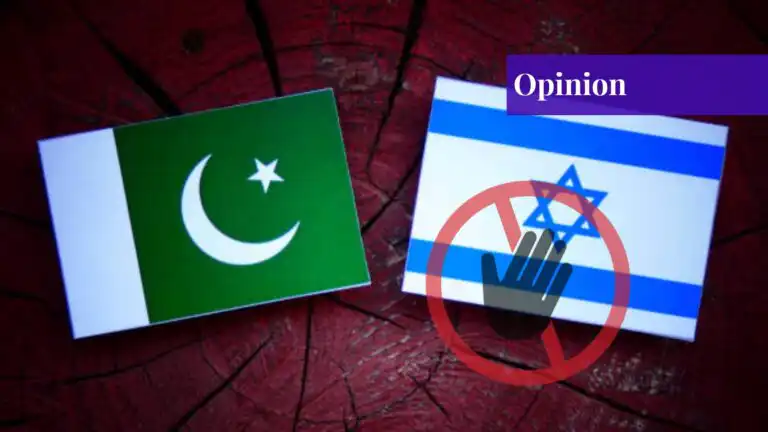
While it’s true that no matter how rational a decision appears on paper, if it lacks public trust, it will not yield results. Likewise, the country’s strategic direction and foreign policy cannot be dictated by street politics. The government, hence, needs to be vigilant about the narratives being fed to the public through the media by hostile elements. Whereas there is no formal shift in Pakistan’s foreign policy, no official recognition under discussion, and no declared intent to reconsider the state’s longstanding position on Israel, yet there appears to be a deliberate attempt to initiate a debate at the societal level, to insert the question into public consciousness, and to normalize its discussion.
This time around, a subtle yet powerful strategy to shift public opinion on Israel’s recognition appears to be employed by deliberately initiating a countering debate. Public figures on social media and some anchors at TV channels are discussing the Abraham Accords and how Pakistan would respond if asked by the US to sign it. The idea behind generating such debates is that, over time, repeated exposure weakens resistance, softens public memory, and creates a false sense of consensus, making eventual acceptance feel organic, even inevitable. The sudden appearance of this topic in media conversations is not coincidental but rather reflects a deliberate attempt.
The Debate on Israel’s Recognition
There appear to be two groups of people on the topic: one that advocates normalizing relations with Israel and signing the Abraham Accords, and others who boycott the Abraham Accords, even when there is no actual effort being made to accept or reject the said accords. Those who argue to sign the accords consider recognition of Israel as a pragmatic step in light of shifting geopolitics, growing Arab-Israeli normalization, and potential economic gains through tech and trade cooperation. They claim that aligning with Israel could strengthen Pakistan’s ties with the US and offer strategic advantages against regional rivals. However, this will amount to a betrayal of the Palestinian cause and legitimization of occupation anywhere in the world, including IIOJK.
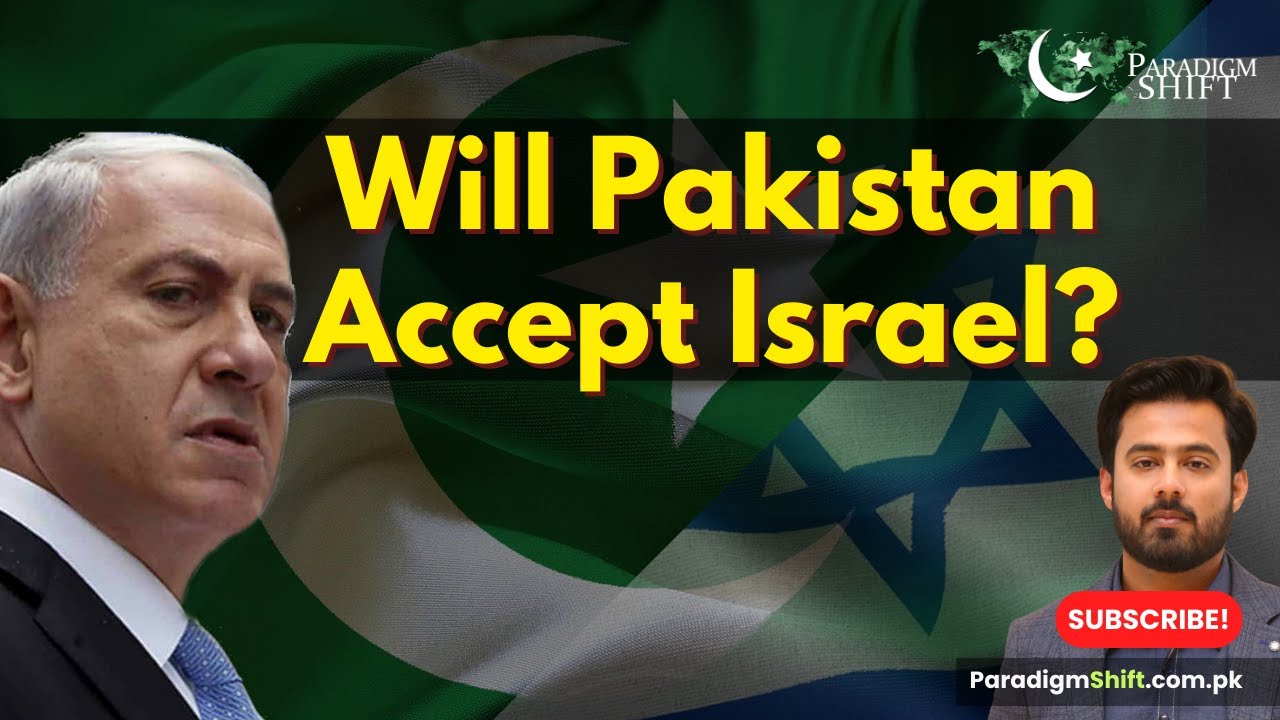
Whereas, in truth, Pakistan’s challenges have never been about its foreign policy positions. They are rooted in its internal fiascos related to governance issues, which cannot be fixed by altering diplomatic symbols. Recognition of Israel will not improve governance or economic management, nor will it address issues of corruption, nepotism, a lack of rule of law, tax collection, or reforming public institutions. Nonetheless, the fact that the country is facing economic strain, political instability, and deep institutional fatigue makes the ground fertile for shaping public opinion through pressure disguised as pragmatism. A tired public is more easily persuaded. A population that has been told it is helpless, broken, and poor becomes more willing to accept ideological compromises as necessary for survival. But a nation’s values cannot be traded for temporary relief.
Here, it is noteworthy to mention that the countries that have recognized Israel have not benefited as expected. It has only benefited Israel in its geopolitical pursuits while offering negligible benefits to recognizing states. Thus, recognition of Israel offers no tangible benefits to Pakistan as well. At the very best, it could result in a bit of ease in pressures from the IMF and FATF, but only if Pakistan continues to serve Israeli interests. It can safely be said that recognition of Israel will only benefit Israel at the cost of our own sovereignty and autonomy.
Why Recognition Is Not an Option
Over the past 77 years, Israel has consistently pursued the policy of regional dominance through terrorism and aggression aimed at establishing “Greater Israel,” thus destabilizing the whole Middle East. With repeated violations of international laws, Israel has acted with impunity against innocent civilians of the subjected countries. This enabling of lawlessness has resulted in the relentless destruction of Gaza since October 2023, along with the ruthless genocide of Palestinians, military strikes against Syria and Lebanon, aggression against Iran, and providing moral and material support to India in its unprovoked aggression against Pakistan.
Furthermore, Pakistan’s stance is deeply rooted in the strategic guidance of its founding fathers. On 12 October 1945, Quaid-e-Azam Muhammad Ali Jinnah said:
“Every man and woman of the Muslim world will die before Jewry seizes Jerusalem. I hope the Jews will not succeed in their nefarious designs, and I wish Britain and America should keep their hands off, and then I will see how the Jews conquer Jerusalem. The Jews, over half a million, have already been accommodated in Jerusalem against the wishes of the people. May I know which other country has accommodated them? If domination and exploitation are carried on now, there will be no peace and end to wars.”
Syed Sharifuddin Pirzada in Pakistan Horizon (Vo. 29, No. 4, 1976)
Finally, this is not about Israel as a state. It is about the terms under which Pakistan makes its sovereign decisions. If its foreign policy is reshaped not through national interest but through emotional exhaustion and economic fear, then the state will become reactive rather than strategic. Consent will become manufactured, and policy will become a response to pressure, not a reflection of principle.
Nevertheless, by the law of nature, no power, however entrenched, can escape reaping the fruits of its oppression, and justice is always served. Pakistan, through its Objectives Resolution, affirmed its foundational commitment to uphold justice and oppose tyranny anywhere in the world. Thus, Pakistan’s choice must be grounded in long-term vision, rooted in its religion, constitution, the founding fathers’ vision, consensus, and be driven by a genuine sense of national interest, not a sense of so-called inevitability.
If you want to submit your articles and/or research papers, please visit the Submissions page.
To stay updated with the latest jobs, CSS news, internships, scholarships, and current affairs articles, join our Community Forum!
The views and opinions expressed in this article/paper are the author’s own and do not necessarily reflect the editorial position of Paradigm Shift.