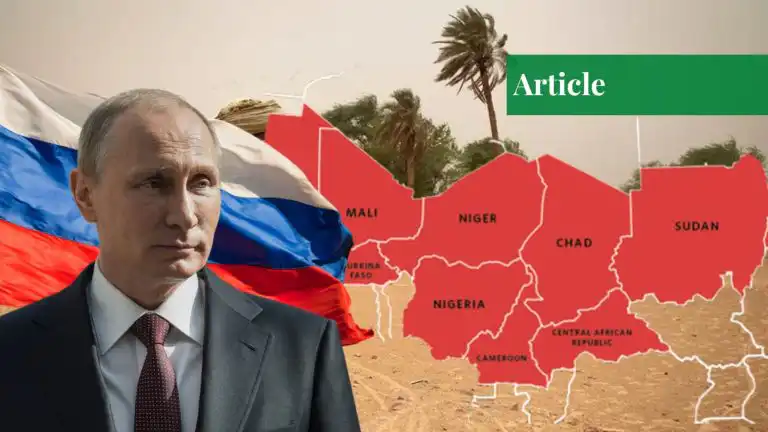
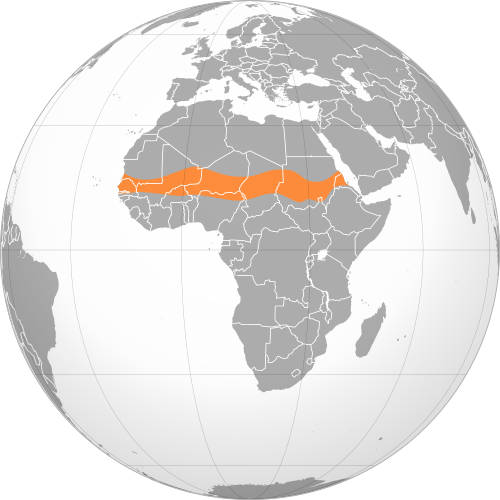
There is a pattern in the Sahel that does not fit clearly into either a success or failure story for Russia. Security has gotten worse since Moscow stepped in, yet Russian influence has only deepened. Violence is up, territory has been lost, and jihadist groups are stronger than ever. And still, the juntas of Mali, Burkina Faso, and Niger keep signing more deals, inviting more personnel, and drifting further from any alternative. That contradiction is worth taking seriously.
How Russia Entered The Sahel
To understand Russia’s current position, we first need to understand the collapse of the French Barkhane mission. Operation Barkhane was launched in 2014 and involved 5,000 French soldiers deployed in five Sahel nations. However, it formally ended in November 2022, not because France chose to leave, but because the juntas that seized power in Mali (2020–21), Burkina Faso (2022), and Niger (2023) made its continued stay impossible.
These were very legitimate complaints that needed to be addressed. However, ten years of military involvement from France had not stopped the jihadists. The feeling of Françafrique: the perceived neocolonial economic and political relationship between France and its former colonies, had caused a great deal of distrust towards France in these countries because of its supposed neocolonialist nature. As anti-France sentiment was at its highest, the military leaders understood how they could use the sentiments for their own benefit.
Into that vacuum stepped the Wagner Group, which arrived in Mali at the end of 2021. Wagner’s model was familiar from the Central African Republic: small advisory teams embedded with national armies, paired with extractive concessions in gold and natural resources. It offered something Western partners had increasingly withheld: security assistance with no governance strings attached.
After Prigozhin died in 2023, Wagner’s Sahel operations began transitioning to the Africa Corps, a Kremlin-controlled successor entity under Russia’s Ministry of Defence. Africa Corps arrived in Burkina Faso and Niger in early 2024. The institutional model carried over; what changed was the chain of command. Russia’s engagement was no longer deniable.
The Security Balance Sheet
The data on security outcomes since Russian engagement is, to put it carefully, discouraging. At present, the Sahel region contributes more than 50% of the total militant Islamist violence reported in Africa. The death toll has almost tripled from 2020, reaching an estimated 11,000 deaths in 2024. Niger experienced the largest one-year spike in terrorist deaths globally in 2024.
These figures are especially shocking considering that both the African Corps and the Sahel security personnel have been causing more civilian casualties than the jihadists who were the initial target of their operations. Incidents of attacks against civilians by security forces have risen dramatically over the last two years to over 400 cases annually. The number of civilian casualties at the hands of the junta-supported forces stood at 2,430 in 2024, while those of militant Islamists amounted to 2,050. According to Ryan Bauer, a RAND analyst, civilians are becoming more frightened of being killed by Russians than by jihadists.
The attack on Tinzaouaten carried out in July 2024 by a joint force of Tuareg insurgents and jihadists, which led to the deaths of scores of Russian mercenaries and almost 50 Malian soldiers, marks the most lethal day of combat involving Russian troops in Africa. This means that Russia’s Africa Corps is losing the battle amid the expanding influence of the jihadists.
In fact, the realistic view is not that Russia has not succeeded, but that the linkages between militaries and their security effects are very poorly understood, and that makes a huge difference to how we assess the nature of this alliance.
Beyond Combat: Russia’s Institutional Embedding
If success on the battlefield was the main criterion, it would not have been easy to maintain this alliance. However, security contracting seems to be just one part of the Russian project.
For military-to-military cooperation, the Africa Corps is embedded in the national armies of those nations in the capacity of instructors and consultants. Such structural dependencies will remain beyond the lifespan of any single mission. The western-educated officers have been eliminated or marginalized from the armed forces of all three nations, thereby limiting the options that the military institutions had available to them.
The resource dependence makes this even harder to escape. Mali has made deals with Russian firms to develop gold refineries, geological exploration services, and civil nuclear cooperation. Mali has been using money from taxing its gold mines directly to pay for Wagner and Africa Corps soldiers, thereby establishing an arrangement whereby resource extraction helps fund the security partnership securing the resource extraction. Nuclear energy cooperation has been considered by Rosatom with all three countries. In September 2024, all three signed an agreement with Roscosmos on surveillance satellites and secure communication technology.
The information ecosystem is also being remodeled. RT Africa works throughout the continent, and collaboration with regional media outlets has ensured that favorable Russian perspectives are echoed, while Western media coverage has either been curtailed or denied entirely. For the junta, Russian media does more than serve as a propaganda machine; it functions as an apparatus for legitimizing their rule.
The foreign ministers from Mali, Burkina Faso, and Niger came to Moscow together in April 2025. During their visit, Foreign Minister Lavrov stated that Russia would sponsor a joint military force for the new Alliance of Sahel States. This indicates that Russia sees all three nations together rather than having individual interactions with each country.
The Irreplaceability Question
Why do the juntas continue deepening ties despite mixed security outcomes? The answer probably has less to do with Russian military effectiveness and more to do with the alternatives or their absence.
Security cooperation with the West had its demands: governance criteria, election schedules, human rights monitoring, and press freedoms. These demands were seen by the junta leaders not as checks on their authority but as sources of power. They could be used against the junta at any time to undermine its control over the country. Russian involvement is fundamentally different in nature. Russia raises fewer questions about the state’s governance.
Such structural dependence might well be becoming irreparable. The purge of Western-educated military leaders deprived the state of expertise. The closing down of Western military bases took away other security providers from the equation. Withdrawal from ECOWAS in January 2024 diminished any regional organizational pressure on the junta. Each move by itself was probably intended to signal sovereignty. But in combination, they have severely constrained choice.
In any case, there are two ways of interpreting this development, and both are worthy of consideration. The first is that this is a voluntary strategic shift; that is, a deliberate decision by the governments of Mali, Burkina Faso, and Niger to act rationally, based on their understandable frustration with Western conditionalism and a genuine preference for a partnership arrangement that recognizes the importance of sovereignty. On the other hand, one can say that the regimes find themselves trapped in an ever-deepening dependency relationship, such that the more they institutionalize their relationship with Russia, the more difficult it will be to disengage from it.
The Implications for the Great Power
French involvement in the area is now negligible, and by December 2024, French troops had withdrawn from Mali, Burkina Faso, and Niger, leaving behind only a limited contingent in Chad. France later withdrew after Chad instructed France to leave in late December 2024. In September 2024, the U.S. withdrew from Niger, relinquishing its use of important intelligence and drone bases that had facilitated anti-terrorism activities in the region.
The space being created is not one where Russia stands alone. China has steadily increased its presence in the defence market in the Sahel. Turkey has supplied Mali with drone technology and seeks greater influence in the region. Iran has participated in talks concerning security and technology cooperation. As the Soufan Center points out, Mali is pursuing diversification in its security relations, which in itself indicates an understanding within the junta that over-reliance on any single partner carries its own risks.
More broadly, the question that analysts and policy-makers should consider is whether this Russian model of influence can be replicated elsewhere on the continent. It has been successful because of the existence of many of the same circumstances that made Russia’s African success possible: deep hostility towards the West, lack of alternative institutions, and dictatorial juntas ready to sacrifice good governance for their own survival.
Conclusion
The involvement of Russia in the Sahel is not properly classified as a military strategy. In terms of security considerations, there are no conclusive or even negative outcomes for the civilian population that is supposed to be protected by such measures. Instead, what can be identified as the strategy used by Russia in this region is an institutional buildup that makes it impossible for Russia to remove itself from this area of the world.
Three things here are hard to ignore regarding Russia’s presence in the region. First of all, it is clear that Russia’s involvement has become more than a mere transaction for providing security; rather, it has become institutionalized into the way these countries operate, communicate, and fund their actions. Second, it is true that the outcome is still being disputed; the claim that deterioration is caused exclusively by Russia’s intervention is an exaggeration, just like the claim that success was achieved.
The real question now is whether any of this is reversible and, if so, how? While the military regimes of the Sahel may not have been simply passive actors in this drama, they did make decisions based on logic and rationale appropriate to their situation. The more critical question is how many of those choices remain open to them now.
If you want to submit your articles and/or research papers, please visit the Submissions page.
To stay updated with the latest jobs, CSS news, internships, scholarships, and current affairs articles, join our Community Forum!
The views and opinions expressed in this article/paper are the author’s own and do not necessarily reflect the editorial position of Paradigm Shift.
Kainat Farooq is a passionate International Relations student with a strong interest in diplomacy, policy, and global affairs. She is dedicated to contributing thoughtful analysis and research on international issues.