The Immediate Aftermath of US-Israeli Airstrikes
5 weeks ago, when the US and Israel launched their war against Iran, US President Donald Trump publicly called for the Iranians to rise up against the regime. Hours after the launch of Operation Epic Fury, Trump said this to the Iranian people: “Finally, to the great, proud people of Iran, I say tonight that the hour of your freedom is at hand. Stay sheltered; don’t leave your home; it’s very dangerous outside. Bombs will be dropping everywhere. When we are finished, take over your government; it will be yours to take. This will be your only chance for generations.”
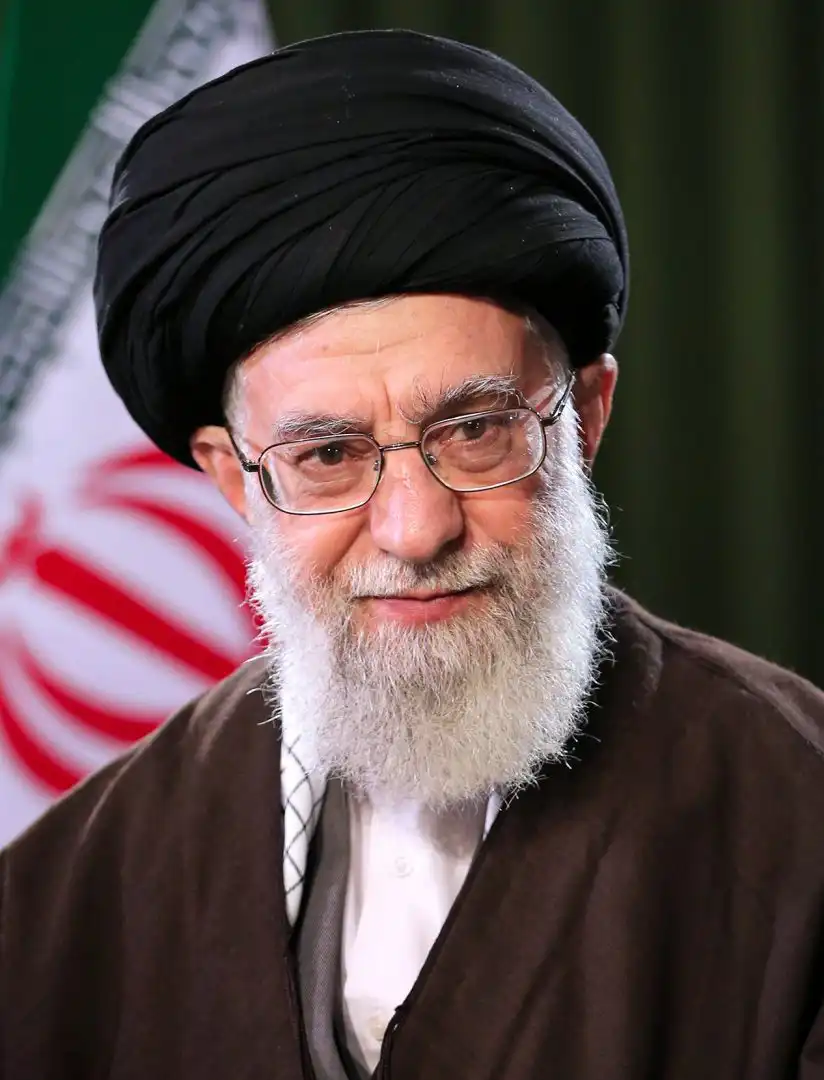
It’s clear that the US hoped that some sort of civilian-led mass uprising would follow the strikes on Iran’s leadership, which killed Supreme Leader Ayatollah Ali Khamenei along with other senior regime officials. However, this much-awaited uprising hasn’t happened, and instead the Iranian regime has prevailed, becoming fractured between the surviving members of the religious leadership in Tehran and the increasingly powerful Islamic Revolutionary Guard Corps, or IRGC. Furthermore, there is increasing speculation regarding the whereabouts of Iran’s newly appointed Supreme Leader, Mojtaba Khamenei, and whether he is even alive.
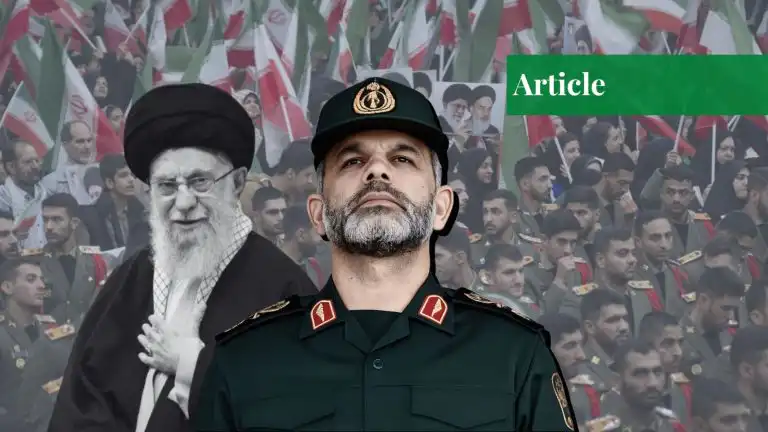
Unlike the pyramidal structure of dictatorships in places like Russia, the Iranian regime is more like a series of pillars. The Supreme Leader acts as the main decision-making authority. The IRGC is responsible for the regime’s survival militarily as well as controlling a significant part of the economy and suppressing dissent. The judiciary and the Basij militia, a volunteer force within the IRGC, are responsible for enforcing Islamic law and promoting ideological conformity, and the so-called axis of resistance, including Hamas, the Houthis, and Hezbollah, protects Iranian interests in the wider region.
In February, US-Israeli strikes on Tehran killed Iran’s longtime supreme leader, Ayatollah Ali Khamenei, along with various family members and seven other senior Iranian leaders. Iran then appointed an interim leadership council, a three-person committee consisting of the elected president, Masoud Pezeshkian, the chief justice, and Ayatollah Alireza Arafi to lead Iran until Khamenei’s successor was appointed. On the 8th of March, Khamenei’s son, Mojtaba Khamenei, was announced as the new supreme leader, a clear continuity candidate and a symbol of the Iranian regime. However, since then, Iran has faced various leadership problems. Firstly, the IRGC, the Iranian regime’s 190,000-strong military force, has taken an increasingly powerful role in running the country, limiting the interim council’s influence.
The Iranian Leadership Crisis and the IRGC Mosaic Defense Structure
Secondly, there have been many speculations regarding the condition of Mojtaba Khamenei. The speculation was that he had taken refuge in Moscow; however, according to the Russian ambassador to Tehran, Khamenei was in Iran and not in Moscow, while some speculated that he may be either in a coma or even dead. In order to provide more context, it must be mentioned that due to these attacks, which resulted in the death of the Ayatollah, Mojtaba Khamenei has been missing, and whether or not he can survive such an attack is questionable. Some sources claimed that Mojtaba was injured but survived because he took a walk in the garden minutes before the strike. However, Mojtaba only issued two official statements, one of which was apparently riddled with typos after being dictated; according to the BBC, a photo of him posted by the Ayatollah’s X account was actually manipulated by AI, fueling rumors about his state.

The third problem facing Iran is the potential assassination of yet more regime officials. Last week, Trump refused to tell reporters the name of an Iranian figure the US claimed it was negotiating with, saying, “It’s a little tough. We’ve wiped out everybody, and adding, “I don’t want them to be killed.” Some commentators suggest that this is a sign that Israel was assassinating any Iranian figures with whom the US might be negotiating.
Although it’s also possible that Trump was being factious, especially as Iran has denied that any negotiations with the US were taking place. Anyway, all of this means that as the US reportedly prepares for weeks of ground operations in Iran, Iran looks somewhat leaderless, with the IRGC apparently taking control of both the war and the state. So, this brings us to the big question. Who’s actually running Iran? Well, as it has been mentioned, the IRGC seems to be consolidating power in Iran, shifting the system from a theocracy to something more like a military junta.
One source speaking to the economist said that this war for the IRGC was a blessing, adding that it had sealed their place at the helm. For the US and Israel, this is bad news. A fractured leadership structure means a more unpredictable and chaotic adversary, and decentralized IRGC cells could also form a guerrilla force like the Houthis that could keep the Strait of Hormuz closed indefinitely. Specifically, the IRGC uses what’s known as a mosaic defense structure. The theory was formulated by Muhammad Ali Jaffrey, a former commander of the IRGC, who headed the organization between 2007 and 2019. This breaks the IRGC into several dozen regions and semi-autonomous units, totaling 31 sub-regions, to be more precise, instead of consolidating control under one chain of command.
From Theocracy to IRGC Control
The idea is that this prevents the IRGC from being paralyzed by any decapitation strike, like the ones that took out Iran’s senior leaders in late February, and ensures Iran can continue fighting even under heavy attack, as units can operate independently even if the senior leadership is destroyed. When Iran began its retaliatory strikes against the Gulf States, these strikes seemed somewhat random and uncoordinated because local IRGC commanders were launching drones and missiles at different targets with relative autonomy. In a possible sign of tensions with the interim council in early March, Iran’s president, Masoud Pezeshkian, actually apologized to neighboring countries for the IRGC’s attacks against them, suggesting the attacks were carried out under fire-at-will instructions following the US-Israeli decapitation strikes.
According to a senior journalist at BBC Persian, Pezeshkian might also have been trying to signal to the rest of the world that Iran didn’t want to escalate the war into a broader regional conflict. While the interim council system should, in theory, increase the influence of figures like Pezeshkian, who had less power under the Supreme Leader, in practice, the council has limited ability to control IRGC commanders who seem to be making their own decisions independently.
Ultimately, as Iran’s strongest armed actor, the IRGC can impose its rule on Iranians through brute force and military power. We saw this recently in January when Iran’s paramilitary Basiji militia, a branch of the IRGC, and other security forces massacred perhaps 30,000 Iranian civilians protesting against the regime.
If you want to submit your articles and/or research papers, please visit the Submissions page.
To stay updated with the latest jobs, CSS news, internships, scholarships, and current affairs articles, join our Community Forum!
The views and opinions expressed in this article/paper are the author’s own and do not necessarily reflect the editorial position of Paradigm Shift.

Muhammad Haseeb Sulehria is a student of Defense and Strategic Studies at Quaid-i-Azam University, and a former internee at Pakistan’s Ministry of Defense. With a keen interest in national and international affairs, he actively explores issues of security, strategy, and global politics, aspiring to contribute to policymaking and peacebuilding.