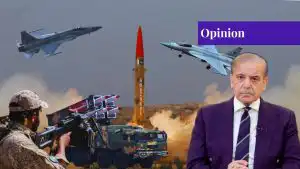


The persistent on-off relationship between India and Pakistan characterizes the security crisis of South Asia. The confusion in their relationship is compounded by a host of state and non-state actors (NSA), whose actions and reactions disturb the fragile equilibrium, setting off a series of knee-jerk responses to the mercurial developments in defining and changing moments, such as that of Pahalgam.
Even before the 22nd April, Pahalgam Terrorist Attack (PTA), the relationship between the two South Asian traditional belligerents could be best described as adversarial and intermittently cooperative with an uneasy peace, characterized by deadlocks and occasional handshakes. Often in the past when the much hyped peace processes viz, the Lahore Declaration, the Agra Summit, and the Composite Dialogues were about to come of age, the recurring crises like that of Kargil, Indian Parliament attack 2001, Mumbai 2008, hijacked and dumped the peace processes with dashed hopes of South Asian’ teeming millions and the dividends that these might have accrued.
It may appear a utopian wish; nonetheless, there was this forlorn hope that some positives might have come out. A decade later, Uri 2016 and Pulwama 2019 further doused any semblance of stability and peace. The unfortunate brutality at Pahalgam, which took the lives of 26 tourists, was a corollary and a grim echo of the same forsaken litany – the repeated cycle of terror, temporary outrage, and strategic stasis.
The fundamental question, therefore, remains, “Who stands to benefit from PTA”? Pakistan (state/non-state actors), India (state/non-state actors), or the US/Israel (CIA/Mossad) et al. The hypotheses and their effects ought to be seen from the context of why (the purpose), when (timings), by whom, and to what intended effects.
Pakistan (State/Non-state Actors) – Scenario I
State-sponsored
Is sponsoring/abetting such cheap shenanigans in our national interest? The answer may be a yes and a no. It’s a yes, because a divisive, politically and ethnically fragmented India mired with its internal squabbles and disturbances may not pose a real, credible threat. Ala hardliner’s theory of letting India bleed internally and implode under its weight, i.e., make her look inwards, because a resurgent strong big brother, yearning for world power status, more often than not, had been more intrusive and troublesome to its smaller neighbours.
Yes, as a possible befitting rejoinder to the baneful Jaffar Express train tragedy of 11th March (a RAW handiwork) – seen within the India-Pakistan proxy conflict framework. A long-drawn seething insurgency in Balochistan and the endemic unrest in KPK are perceived to be nurtured and abetted by RAW as part of the “Doval Doctrine” of disrupting the adversary’s strategic depth.
Yes, to prop up the flailing army’s image, which is at its lowest ebb in decades. Such a bravado could well have been planned to use the consequential war hype and the famed India card as a tool to restore the defaced image of the praetorian guards and their chief, inducing much-needed solidarity with the armed forces and drawing attention away from the internal political upheaval.
But, emphatically no, since Pakistan has much to lose than gain. At a time when we are beset with a multitude of home-grown problems, we can ill afford such a misadventure, knowing fully well its consequences – the least being ostracized again and becoming an international pariah. Therefore, Islamabad’s complicity in the Pahalgam terror is highly doubtful, as it would unsettle the uneasy peace and risk a costly conflict, especially when it is in dire economic straits, with a weak internal front and dithering governance, and therefore highly detrimental to undertake such suicidal adventures. Conversely, Delhi may see this as an opportunity and find it too irresistible to let go.
The Non-state Actors
Lashkar-e-Tayyaba (LeT) and its affiliate, “The Resistance Front,” are alleged to be involved, according to initial claims. The ludicrous part, however, is that the LeT has always been pegged for anything sinister happening in India at the drop of a coin. The defunct LeT (banned in 2002 and later relocated to J&K), much like other Jihadi outfits that emerged during the Afghan jihad, ironically lost their state patronage and support. Consequently, they transformed into Frankenstein’s monsters, pursuing their own agenda/objectives, including:
- To humiliate, wound, and outrage India, emerging as a rising economic power.
- To inspire/win over the restive Indian Islamic youth/organisations to remedy social injustices.
- To give inspiration/encouragement to other festering secessionist movements.
- To scuttle the uneasy peace and calm, provoking crises/war to destabilize the region and driving Pakistani forces away from tribal areas to meet the emerging challenge in the East, thus giving much-needed breathing space to the Taliban/Kharji terrorists.
Notwithstanding the accrued benefits of such a misadventure, whether such an outlandish operation could be mounted by a handful of heavily armed militants/terrorists on their own, penetrating 250 kms deep into a high security region and that too unnoticed from the prying eyes of Indian security and carrying out a targeted massacre of Hindu tourists is certainly inexplicable and mind boggling. Doesn’t it smell rats? Perhaps and indeed, since such a meticulously choreographed operation could not have been planned without the complicity of either Indian state agencies/or local organisations/outfits.
India (State/Non-state Actors) – Scenario II
State-sponsored
The Indians perhaps saw it opportune in using a coercive strategy to plan and orchestrate a despicable event, ghastly and condemnable, enacting a casus belli credible enough to be accepted internationally to implicate Islamabad and demand extrication of the wanted alleged terrorists and taking out of organizations: LeT and JeM. The absurdity with which the whole episode was enacted left a false flag (FF) signature.
How else is to possible to register an FIR naming the perpetrators’ group within ten minutes after the attack. The Indian jingoistic media pointed fingers at Pakistan within five minutes of the incident; Modi cut short his Saudi Arabia visit. Rather than prioritising a visit to the attack site or meeting the victims’ families, he dashed to Bihar on electoral campaigning to make threats. Using the incident, his cabal also joined the chorus, possibly to:
- Showcase Pakistan yet again as a jihadi factory with no control over the military/ISI and frame Pakistan as part of the problem of terrorism.
- Get the spotlight on Pakistan as a weak state besieged by a militant, exclusivist mindset, espoused by its army chief in a recent tirade against India.
- Taking a leaf out of erstwhile Obama’s strategy and mirroring Israel’s Gaza tactic, strike inside and lay claim on POK when and if the situation warranted, as amplified by its defence minister Rajnath in his oft-vitriolic pronouncements. Seize the moment to walk away from IWT accord – a latent desire that New Delhi has been harbouring for some time, in the same vein as revoking article 370 in August 2019, in the wake of Pulwama incident – and in doing so escalating a historically technical dispute into a political strategic crises as part of water war.
- Knowing that the assured reaction to such a brutality would be a severe Hindu backlash that would stir anti-Muslim outrage, which could then be used to snub the widespread opposition to the Waqf Amendment Bill intended at reshaping the country’s sociopolitical landscape.
Non-state Actors (NSAs)
The Indians whiplashed Pakistan-based groups for the Pahalgam dastardly act with oblique reference to Pakistan’s deep state, more to create a smoke screen to possibly divert the attention away from the Indian NSAs i.e. the extremist Hindutva cartel and secessionist movements of which there are aplenty and even the Muslim fundamentalist movements (IM et al). Each has their axe to grind to resort to such grisly retaliation.
While the former are bent upon carrying out ethnic cleansing through anti-Muslim/Christian pogroms, the latter struggle for a separate homeland, wanting to settle scores with the Hindu majority for their persecution and social deprivation and injustices within the Indian polity. India’s obsession with the “foreign hand,” however, obscures the fact that the roots of some of the violence lie in its decades-long traumatic political and economic change, particularly the rise of Hindu nationalism, and the related apartheid towards those ethnic minorities left behind by India’s expanding economy.
US/Israel (CIA/Mossad) – Scenario III
While it may appear far-fetched but there certainly might be a US/Israeli acquiescence in this gory incident with the intended purpose of fanning anti-Muslim hatred, instigating Hindu-Muslim strife, radicalizing the Muslims, stirring up Islamophobia, and dragging India further into the Zionist and imperialists’ orbit. This is critical for global strategic competition. Some of the intended objectives of this could be:
- While the US may itself be constrained to take military action against LeT within Pakistani territory so as not to embarrass its close ally, it might insinuate its strategic partner to do the bidding as part of the policy of counter terrorism and containment of Islamic extremism.
- To check China’s assertive footprint, induce “constructive chaos” in the key sensitive region of Kashmir to impede infrastructure development and hamper the progress of CPEC.
Where Do We Stand?
India
After the initial threatening overtures by the Indian government and an insipid rebuttal by Pakistani political leadership that appeared more appeasing than sagacious, there ensued a war of words and scampering calls of diplomats from the US/EU to preclude, if any, the possibility of an all-out conflict. Appropriately, some notions also need to be considered:
- Modi factor needs to be weighed in, whose impulsive, jingoistic nature impels him to jump on every disturbing sign, rather than take a longer, contextual view of things.
- Empirical evidence suggests that there is a four times greater likelihood of resort to lethal violence by governments against a group when it attacks civilians as compared to military targets.
- The remake of a full-blown Pulwama or even Operation Parakaram would therefore be an exercise in futility and a nonstarter, and hence a hybrid facesaving retaliatory tactical action and coercive diplomacy involving international mechanisms and regimes is expected/experienced.
Options Considered/Eventuated
- Minimalist Option
- Apart from a host of coercive actions ranging from suspension of IWT, the deployment of INS Vikrant, diplomatic scale down, closing of borders, and promises of retribution, etc., pressurised Islamabad to yield to the demand of taking action against the terrorists/organisations.
- Through a multilateral effort, force Islamabad to accept an intrusive monitoring mechanism (like UN inspectors in Iraq, North Korea, Iran), which will not only oversee the prosecution and proscription of leaders and cadres of terrorist groups, but also report back to the Security Council on all such efforts made by Pakistan.
- Precipitate crises to unleash additional non-kinetic options in the economic realm to get the IMF deal scuttled and get Pakistan back on the FATF grey list.
- Maximalist Option
Though efforts to galvanise international opinion in isolating Pakistan have been received with measured silence, however, New Delhi doubled efforts to elicit support to undertake retaliatory kinetic actions to eliminate alleged terrorist hideouts and safe havens inside Pakistani territory, if Islamabad fails to make good on its undertakings/commitments.
The crises precipitated into initiation of hostilities, as Indian missile/air strikes (numbering 24) inside not only POK, but across the international border on nine sites at Muzaffarabad, Kotli, Sialkot, Muridke, and Ahmedpur East, specifically on mosques, costing lives of 31 civilians (including women and children). “Operation Sindoor,” the name given to the Indian military campaign, may have been necessitated given:
- New Delhi’s compulsion to take a retaliatory action, necessitated by war hysteria, which could not have been scaled down without undertaking a face-saving military response to avenge Pahalgam.
- US tacit nod to New Delhi to initiate a calculated retaliatory strike, as evidenced by statements of the US vice president, and the secretaries of state and defence.
- An opportune time to strike to dent Pakistan’s inner front.
We must therefore, alongside, expect further intensification of indirect methods of unrest and turmoil, particularly in restive areas of Balochistan / Tribal areas, to make Pakistan fight on the reverse front.
Pakistan
The core of Pakistan’s symbolic response has been its appealing resonating narrative, grounded in firm denial cum non-involvement, backed by offer of an impartial investigation, inviolable regional support and effective politico-military measures, enabling her to not only effectively checkmate Indian haughtiness, but trapping her between escalation and inaction in pre-Sindoor phase.
A swift matching military rejoinder targeting exclusively the military targets in IIOJK and a befitting engagement by PAF taking down 5/6 Indian’s jets (3 Rafale, SU-30, Mig-31 & a military drone). o Attributing the strikes as “acts of war,” PM Shahbaz Sharif authorized the military to take corresponding actions, opening the way for a tit-for-tat escalation.
Potential Suspects
The tell-tale signs remotely suggest that an attack having an ISIS signature or by indigenous militant organisations (IM), either inspired by ISIS ideology or abetted by Indian state agencies (RSS, etc.), is imminent. India has perpetrated such incidents since the 90s, notably: the Babri Masjid in 1992, the Gujarat massacre in 2002, Samjotha Express in 2007, the Malegaon explosions (2006, 2008), and Patna Rally Blasts 2013, among others.
The Resultant Effect
The Pahalgam attack didn’t just kill innocent civilians, it wounded the South Asian strategic equilibrium. PTA dealt a significant blow to the already fragile strategic stability in South Asia. The resultant victim undoubtedly has been the uneasy peace, which has tenuously held the region post-2019, but now has been put on hold. Unless responsibly managed, the region may slip into a renewed cycle of retaliation, proxy escalation, and diplomatic breakdown.
Nonetheless, it also brings to the fore the sticking Kashmir issue, given India’s propensity to club it with Pakistan or its proxies. Paradoxically, PTA might even prove to be a flip towards normalcy, resuscitating the frozen peace process and impelling for an earnest immediacy by the stake holders cum facilitators (US) to ensure that it is put on tracks to preclude any such misadventures.
India’s uncompromising stance on Kashmir and its inability to control its festering insurgencies has become too high, imperiling its economy as well as its security.
Outcomes and Implications
A considered analysis lends credence to the actualization of the minimalist option of staying the hand initially, graduating into a calibrated up-scaling of conflict, but within the limits of the nuclear threshold and international tolerance, owing to the following:
- Global war-weariness, geopolitical fatigue, China’s firm support to Pakistan, and hectic overt diplomacy yielding little have left Delhi hesitant, calculating, and uncertain, yet harbored plans for retaliatory actions and simultaneously expecting allies’ intervention for seeking de-escalation.
- India’s profile and stature as a de facto regional power have been considerably dented, as it failed to interpret the instant crises. The dictates of projecting strength exposed her intrinsic vulnerabilities, viz: military ineptness, leadership’s intransigence, and strategic miscalculation. Her leadership disposition thus shaped into a burly reactive minion.
- A fortnight of inactivity and insipid momentum after initial war mongering by Indians, promising the harshest response, turned out to be a strategic misadventure and loss of face, considering the senseless targeting of civilians and mosques, purportedly hitting at the terrorist infrastructure. The notion that war is no longer an option in South Asian strategic calculus has been negated, encouraging the aggressor yet again to undertake a limited conflict, regardless of nuclear capability. A muted international response to “Operation Sindoor” is also indicative of growing tolerance for New Delhi’s calibrated reprisal within counter-terrorism discourse and not an act of aggression – a paradigm shift in security parlance. The accusatorial charade of implicating Pakistan in terror, putting her in the dock for endangering regional stability, and beyond, to camouflage her internal ethnic mayhem.
- Terrorism in all its forms and manifestations is detestable and a threat to world peace. In line with UNSCR 1373, it needs to be relentlessly pursued. Delhi also has a recourse to seek a remedy for the Pahalgam case.
Caveat
Paradoxically, terrorism remains a policy tool in the hands of haves and have-nots for remedying the injustices and the imperialists for their ambitious aggrandizement, respectively.
The Attendant Fallout
Pakistan may risk international censure if linked to Pahalgam attackers, and its sincerity in the war against terrorism may be in question, notwithstanding its relentless anti-terror campaign, and therefore needs to showcase the implementation of its effective counter terrorism strategy.
Indians targeting of alleged LeTs/JUD’ infrastructure in Ahmedpur East and Muridke signals a dangerous trend of widening arc of WOT to the heartland of Pakistan (Punjab).
An increased domestic pressure on Pakistan’s military, if its actions are perceived to have fallen short of redeeming the nation’s prestige via a befitting retaliatory response, and an ensuing civil-military blame game, if the political leadership is sidelined or contradicted.
A sustained military escalation may well inhibit investment, disrupt capital inflows, invite IMF anxiety, besides renew calls to dismantle terror networks.
What Needs to be Done?
Undeniably, the threat of terrorism haunts the World, and Pakistan alone can testify to this, being affected by it more than any other country. The strategy, therefore, needs to be introspective in character, reformative in essence, rejuvenative in content, accommodative in dispensation, and apt in response. The response ought to be modeled on the 6-D “Pakistan First” strategy:
- Determined Resolve to Stand Up to the Challenges
In the face of Delhi’s vitriolic charade, coercive diplomacy, and military strikes, there is a need to show more resolve that we will not be cowed down and will take on any challenge resolutely, zealously guarding our national sovereignty.
- Public Diplomacy
Considering that the people are the strongest elements of national power, there’s a need to take them on board through an intensive information sharing campaign and debate for rallying them for the national security cause – a challenge nonetheless, given the massive highhandedness and maltreatment meted out to them by an unrepresentative political dispensation.
- Detox the Political System
Political inclusivity is not idealism rather strategic prudence. A divided nation cannot project deterrence and resist hybrid threats, therefore, mainstreaming major political party and estranged regional entities (Balochs and Pashtuns) is an absolute necessity to demonstrate unified national resolve against external aggression and prevent internal destabilization and insurgent opportunity during external crises.
- Diminishing the Underlying Causes
At the core of the 6-D Strategy lies the important facet of addressing the underlying causes of violence, radicalism, and militancy to take out the threat effectively. In broadest terms, these measures include settling of the festering regional issues, economic stabilization, poverty alleviation, good governance, rule of law, and establishing writ through effective law enforcement.
- Diplomacy instead of Confrontation
War by proxy for furtherance of national security objectives through intrusive involvement in other countries and the propensity to use force rather than diplomacy is out of currency and needs to be put on hold. Diplomacy requires taking the lead role to regain the international space filled by Indians. It requires:
- An earnest exterior manoeuvre to avert international isolation and prevent the escalation ladder.
- Invoke OIC special session to put forward Pakistan’s case and showcase India as a fascist Hindutva state that perpetuates hatred and terror, giving rise to secessionist movements behind the façade of a shining, rising secular India.
- Multiparty delegations to various world capitals highlighting Indian paradox, i.e., her aspirations and the convoluted image with gross human rights violations involving minorities’ pogroms and identification of Indian hand in supporting and abetting terrorism in Balochistan and tribal areas.
- Dispute Resolution
The persuasive notion that the road to stability in South Asia goes through Kashmir is once again realized. Trump’s abhorrence of wars and his earlier determination to work with Pakistan and India to try and resolve the Kashmir crisis as a critical task for his administration – a tough call, but perhaps the only hope for lasting peace and stability in South Asia.
Final Word
Pahalgam terror is not the cause, but the effect of deeper instability in South Asia, hyphenated with the unresolved Kashmir dispute. Incidents like Pahalgam are symptomatic of a festering disease which needs a lasting cure and resolution, else they would continue to recur, perpetuating a cycle of violence, turmoil, and strategic drift – imperiling the regional structural stability. It is at an inflection point requiring a shift in the regional and international approach: from Reaction to Resolution, from military management to political engagement.
If you want to submit your articles and/or research papers, please visit the Submissions page.
To stay updated with the latest jobs, CSS news, internships, scholarships, and current affairs articles, join our Community Forum!
The views and opinions expressed in this article/paper are the author’s own and do not necessarily reflect the editorial position of Paradigm Shift.

Brigadier Syed Mushtaq Ahmed (Retd) has extensive experience in areas of national security, intelligence and strategic issues. He has worked as a senior research analyst in a strategic organisation and has a niche for writing research articles and analytical assessments, specializing in counterintelligence, counter-terrorism and nuclear security.