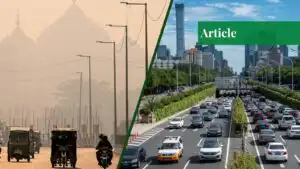
A thick miasma of pollutants has ensnared itself to the atmosphere, as citizens of Lahore and other urban cities attempt to brave the opaque scenery. Smog is an environmental disease, a plague that metastasizes with unbridled urban sprawl. Lahore remains its most affected patient with its ailments, as smog in Lahore would now be visible from the frigid corners of space.
According to the air quality Index (AQI), Lahore’s air quality has consistently remained hazardous since the 5th of November 2024, peaking at a worrisome 1110 on the 14th of November. To compare, the average range considered healthy is between 0-100, and anything above 300 is considered hazardous, where stringent safety precautions must be upheld. Not to be outdone, Multan has reached similar levels of toxicity, with a dangerous high of 1571 on the 8th of November.
Smog-hit districts in Punjab have witnessed a barrage of patients rising to almost 1.8 million, suffering from respiratory diseases and more such as burning eyes, shortness of breath, chest tightness/pain, aggravated asthma, conjunctivitis, heart disease, etc.
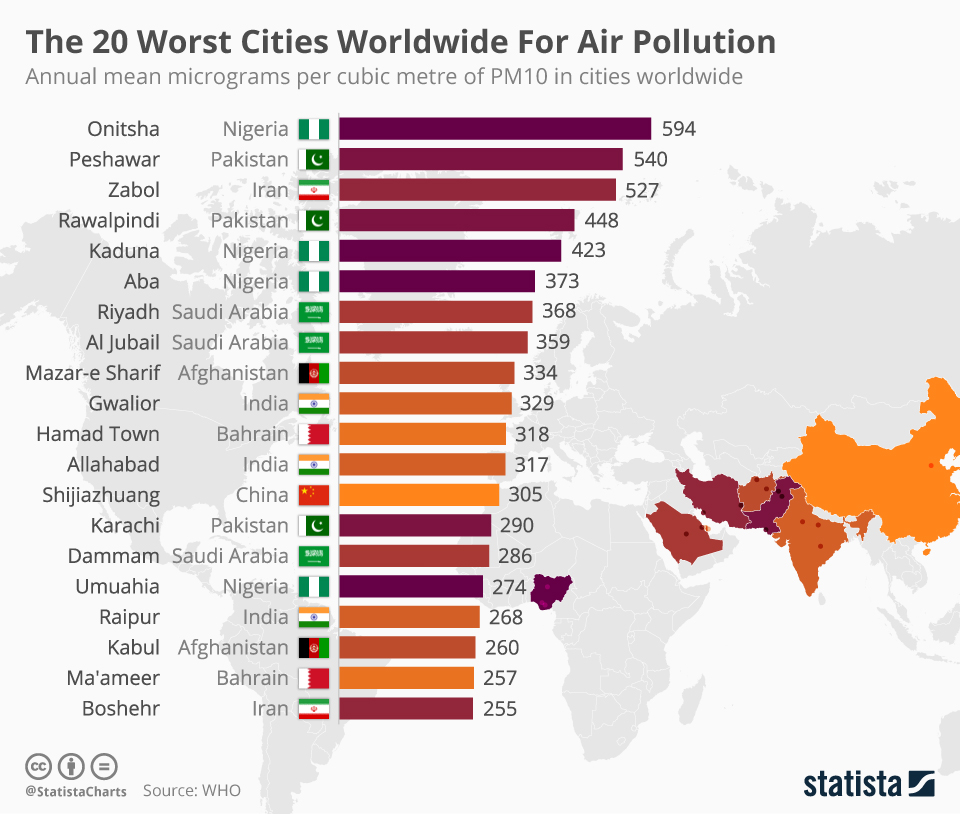
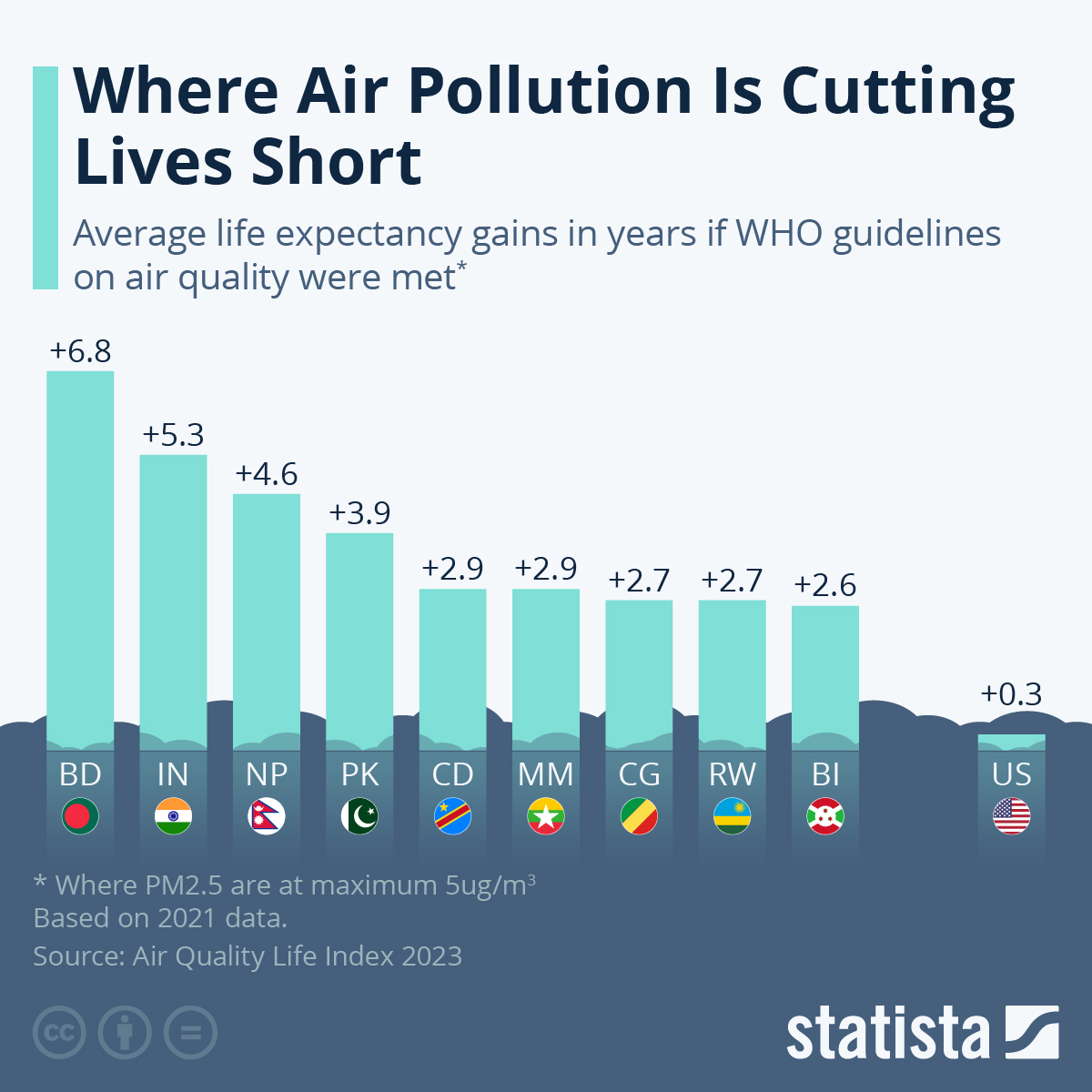
Smog is made up primarily of fine particulate matter (PM2.5) and other toxic gases, which prove harmful for human inhalation. These pollutants can infiltrate the bloodstream and travel deep into lung tissue. Common sources include the combustion of fossil fuels, dust storms, and wildfires, and have been linked to asthma, heart and lung disease, cancer, respiratory illnesses, as well as cognitive impairment in children. The current PM2.5 concentration in Lahore is 41.5 times the World Health Organization’s (WHO) annual air quality guideline value.
 You will find more infographics at Statista
To pour more fuel on the fire, Lahore’s pollution levels often peak further in late November and December with this apocalyptic smog being a precursor to an even worse health hazard.
What is Smog?
Many may imagine a clutter of industrialist factories, pumping dark ash into the sky, reminiscent of an old environmental safety cartoon. This idea may hold some truth, smog is essentially produced when sunlight reacts with nitrogen oxides and at least one volatile organic compound.
 You will find more infographics at Statista
In Lahore, nitrogen oxides are primarily emitted by vehicle exhausts, brick kilns, and smoke from nearby industrial zones. This smog is then further insulated by the cooler temperature that tends to trap the pollutants and extenuate its potency according to a meteorological phenomenon known as thermal inversion.
Air Quality in Pakistan
In Pakistan’s case, the cause is split between a destructive farming technique and industrial emissions. Firstly, both Pakistan and India have a problem of stubble burning which is the cost-efficient method of clearing residuals of rice and wheat after they have been harvested. It’s essentially setting fire to the waste products of harvesting to ready the land for the next planting season. Burning stubble emits toxic gases such as Carbon Monoxide (CO), Methane (CH4), Polycyclic Aromatic Hydrocarbons (PAH), and Volatile Organic Compounds (VOC). Notably, the Food and Agriculture Organization’s (FAO) comprehensive source apportionment study identified crop burning as responsible for 20% of air pollutant emissions in Pakistan. Stubble burning is illegal in both countries, but garners limited enforceability as this year, NASA estimates it will count “between 15,500 and 18,500 fires,” according to Hiren Jethva, a senior research scientist at NASA’s Goddard Space Flight Center.
Air Quality Index (AQI) in Lahore
On the side of industrial emissions, the rapid increase in vehicles, coupled with poor maintenance and lack of strict emission controls, significantly contributes to pollution. The air quality in Lahore specifically is abysmal.
Lahore, home to over 6.2 million vehicles and 4.2 million motorbikes, alongside 19.6 million vehicles across Punjab, has seen its air quality deteriorate severely due to weak regulatory oversight. As a result, the city now ranks as the second most polluted globally, just behind Delhi. Despite limited air quality data in Pakistan, various analyses indicate that around 45% of year-round pollution originates from vehicle emissions, including cars, trucks, rickshaws, and motorbikes—a problem worsened by the poor-quality fuel prevalent in the transport sector. Industrial activities and power generation contribute an additional 40% of the pollution.
Remedies for the Air Pollution
Given the limits of national boundaries, Pakistan can’t be expected to solve crop fires and air pollution that wafts in from India. This presents the chance for “climate diplomacy” or collaboration with India to jointly reduce their pollution for their mutual benefit.
 You will find more infographics at Statista
Domestic policies that can provide relief are relatively straightforward but require myopic governance to focus on long-term sustainability. Stubble burning can be countered by a multi-lateral approach; enforcing limits by force has reaped little success for the Indians. Since burning is an economic decision for farmers, the government needs to step in, higher taxes can be placed on farmers engaging in that act, or subsidies can be given to bridge the cost of alternative methods.
An innovative solution for stubble burning presents itself in the form of a bio-enzyme called the PUSA Decomposer. Within 20-25 days this enzyme decomposes the stubble, turning it into manure, further improving the soil quality. The implementation and broadening of its availability will be tough, but given adequate governmental support, Pakistan can provide this bio-enzyme to its farmers. If provided with significant support, developments can be made for the domestic production of the enzyme either through reverse engineering or independent research.
Another potential solution involves the use of the Happy Seeder, an innovative tractor-mounted machine designed to efficiently mulch and incorporate the residual stubble left after crop harvesting. This device reduces the need for harmful stubble burning and also retains valuable organic matter in the soil, for the amelioration of soil fertility.
Industrial emissions mostly augur from loosely regulated brick kilns, factories, power plants, and the immense size of vehicular pollution. This requires broader policies that supplant ceilings to emissions and monetary repercussions for passing them, policies should incentivize greener alternatives over traditional production that use high-emission fuels such as coal, oil, fossil fuels, etc. The introduction of stricter vehicle emissions standards, coupled with initiatives to promote the adoption of cleaner fuel technologies and the enforcement of vehicle inspection and maintenance programs will be key to reducing vehicular emissions.
Emergency Measures by the Punjab Provincial Government
These remain more long-term, given the more immediate persistence of smog, Punjab Senior Minister Marriyum Aurangzeb has announced an appropriate series of emergency measures:
- From November 16 to November 24, all brick kilns and furnace-based factories in Lahore and Multan have been ordered to cease operations to reduce emissions.
- Heavy traffic will be completely restricted from entering both cities. If air quality does not improve by Wednesday, November 20, a full lockdown will be implemented.
- Dine-in services at restaurants will be allowed only until 4 p.m., after which only takeaway services will be permitted.
- All restaurants must close entirely by 8 p.m.
- School, college, and university holidays across Punjab have been extended until November 24, except in Murree, with institutions instructed to transition to online classes.
- Construction activities in Lahore and Multan are suspended from Friday, except for national-level projects, which are exempt.
- Holidays for doctors, nurses, and paramedical staff have been canceled, and hospital OPDs will now remain open until 8 p.m.
- Plans for e-bikes and EAQ oil projects are underway, and, in response to the environmental crisis, electric buses are set to be introduced in Lahore.
These policies provide more immediate relief and should be reviewed regularly as the situation develops.
Conclusion
The smog crisis doesn’t remain isolated in the discourse pertaining to the ill-governance of Pakistan, major issues fester and grow like tumors, with due recourse only implemented under dire circumstances. Until the situation has worsened beyond repair, the response remains muted from the government.
 You will find more infographics at Statista
AQI conditions have worsened significantly over the years. With hopeful conviction, maybe this problem will lay the foundation for key environmental protection and regulatory policies that provide a framework for future urban development and mitigate the environmental damage already caused.
If you want to submit your articles and/or research papers, please check the Submissions page.
The views and opinions expressed in this article/paper are the author’s own and do not necessarily reflect the editorial position of Paradigm Shift.
The author is studying Economics at the National University of Science and Technology (NUST) with a keen interest in financial affairs, international relations, and geo-politics.