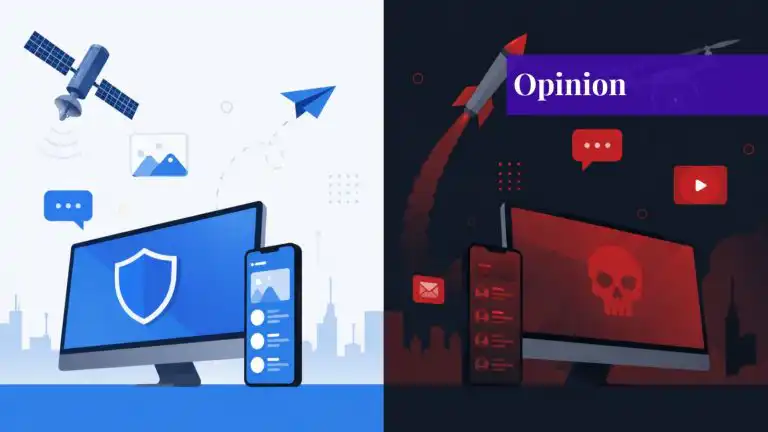
With the advent of information technology, screens have become the newest battlefield—a battlefield for conquering minds. Dissemination of information has become the new enemy, and public opinion has emerged as the biggest limit on national power. Social media talks are drastically influencing global policies. Consequently, countries are heavily investing in developing narratives and setting suitable discourses. With the emergence of different tools to spread information digitally, policymakers are also engulfed in a strange and complex issue of navigating between various shades of reality. The complexity itself is the manifestation of shifting tools of war from swords to digital screens.
The cyber influence theory, developed by Prof. Dr. Baqir Malik, a Harvard graduate and professor at Quaid-e-Azam University, aptly describes this shifting trend in warfare and the influence exerted by digital means. It engages with the emerging discussion of the power of information. The theory is defined as the capability or capacity of an actor to shape or influence the behavior, action, or decision of an individual or government through digital means. Rapid globalization and the ease of flow of information have accelerated the trend of using screens to generate narrative and win minds.
Traditionally, power was affiliated with the military strength and economic leverage of a state. To become powerful, substantial increments in such fields were considered most essential. However, global opinion is the new power indicator and is shaped entirely by digital screens. It has the capacity to influence the decisions and, thus, express power, but in a very modern and non-traditional form. Screens are critical in making, shaping, and influencing opinions. Movies, dramas, and documentaries are produced to inject a constructed reality into people’s heads, and repetitive acts make it concrete and unquestionable. The soft brainwashing is selectively used to make people patriotic and, in required times, rebellious. It is used to make public political and apolitical statements and at the same time set the scales of their tendencies from extremist to moderate.
Diminishing distance due to the internet is turning the concept of a global village into a more concrete one. Information on the internet has a global reach and, thus, an international audience too. Content creation and blockade are being used by states to influence the minds of people and subsequently affect governmental policies. The aerial war between Pakistan and India in May last year had a notable and unusual aspect of Pakistani members using sarcastic content to keep the national morale high in the tumultuous times of war, and, in parallel, proved to be the best weapon to keep the adversary in a psychological complex. Also, the 2016 American presidential election stands as a stark example of a country successfully undermining and influencing the democratic process of a rival state.
Apart from the importance of screens in shaping psychological understanding of reality. Screens are turning from a technical weapon to a more potent one, capable of physical destruction. The joint US-Israeli cyberattack on the Iranian nuclear facility in Natanz in 2010, famously known as the Stuxnet attack, shows the use of technology to cause physical destruction. The Stuxnet attack demonstrated the capability of cyber weapons/screens to compel the adversary to agree to a diplomatic approach. Stuxnet showed that what traditional weapons were not capable of doing, it did, and changed the course of Iranian nuclear strategy.
More recently, Israel’s deadly campaign in Gaza, which saw over 3% of the entire population of the territory being killed, was marked by the IDF’s military capability and technological prowess. However, global opinion was in favor of the Palestinians and was most impactful in compelling Israel to halt the genocide. Such global opinion was shaped entirely on screens where images of children getting amputated, kids losing their parents, and infants facing starvation got wide circulation. Israel’s military might was successful in turning the territory into rubble, but it could not manage to wash off the allegations of genocide, massacre, and crimes against humanity. Later, recognition of the Palestinian state by various Western states manifested that the war on screens was won by Palestinians and, and surely, the screen war was more important than the Gaza battlefield.
A negative aspect of this relatively new phenomenon in war is that it has created massive confusion due to the availability of various shades of reality. Differentiating propaganda from reality was far easier in previous eras, but now it is the reality, which has many shades, and each shade is claimed by each stakeholder with their own interests. Reels are the new reality, and every reel is created with a mission and thus expresses a specific “real image.” Traditional swords may not have become obsolete, but their significance in warfare has been absolutely diminished for the past few centuries. Now, it’s the screens that are shaping the battlefield, and the conventional weapons are the new swords—irrelevant but not obsolete.
If you want to submit your articles and/or research papers, please visit the Submissions page.
To stay updated with the latest jobs, CSS news, internships, scholarships, and current affairs articles, join our Community Forum!
The views and opinions expressed in this article/paper are the author’s own and do not necessarily reflect the editorial position of Paradigm Shift.

Zaheer Shigri is a student of defense and strategic studies at Quaid-e-Azam University, Islamabad. He writes on security and strategic affairs. He can be reached at zaheershigri524@gmail.com
Shamail Ahmed is a social and environmental activist and a student of defense and strategic studies at Quaid-e-Azam University, Islamabad.