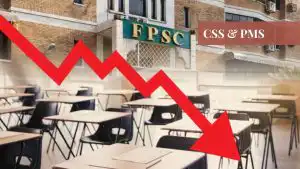


Every semester, hundreds of universities across Pakistan pass out thousands of students. All these young students dream about a better future. However, due to Pakistan’s unfortunate economic plight, the Central Superior Service (CSS) is considered a prestigious career path and a shortcut to achieving a higher social status. Therefore, after graduating from university, many students opt to prepare for the CSS exams, leading to high competition among people aspiring to join the civil services. However, the passing ratio of the CSS exam is merely around 2.5 to 3 percent per year, resulting in the loss of precious years of the country’s youth. During this time, their peers gain years of experience and earn high salaries in the private sector. Nonetheless, many believe that the CSS examination is their only option for gaining social prestige and earning a handsome salary.
CSS Exam vs Private Sector Jobs
The CSS Exam in Pakistan: Pros and Cons
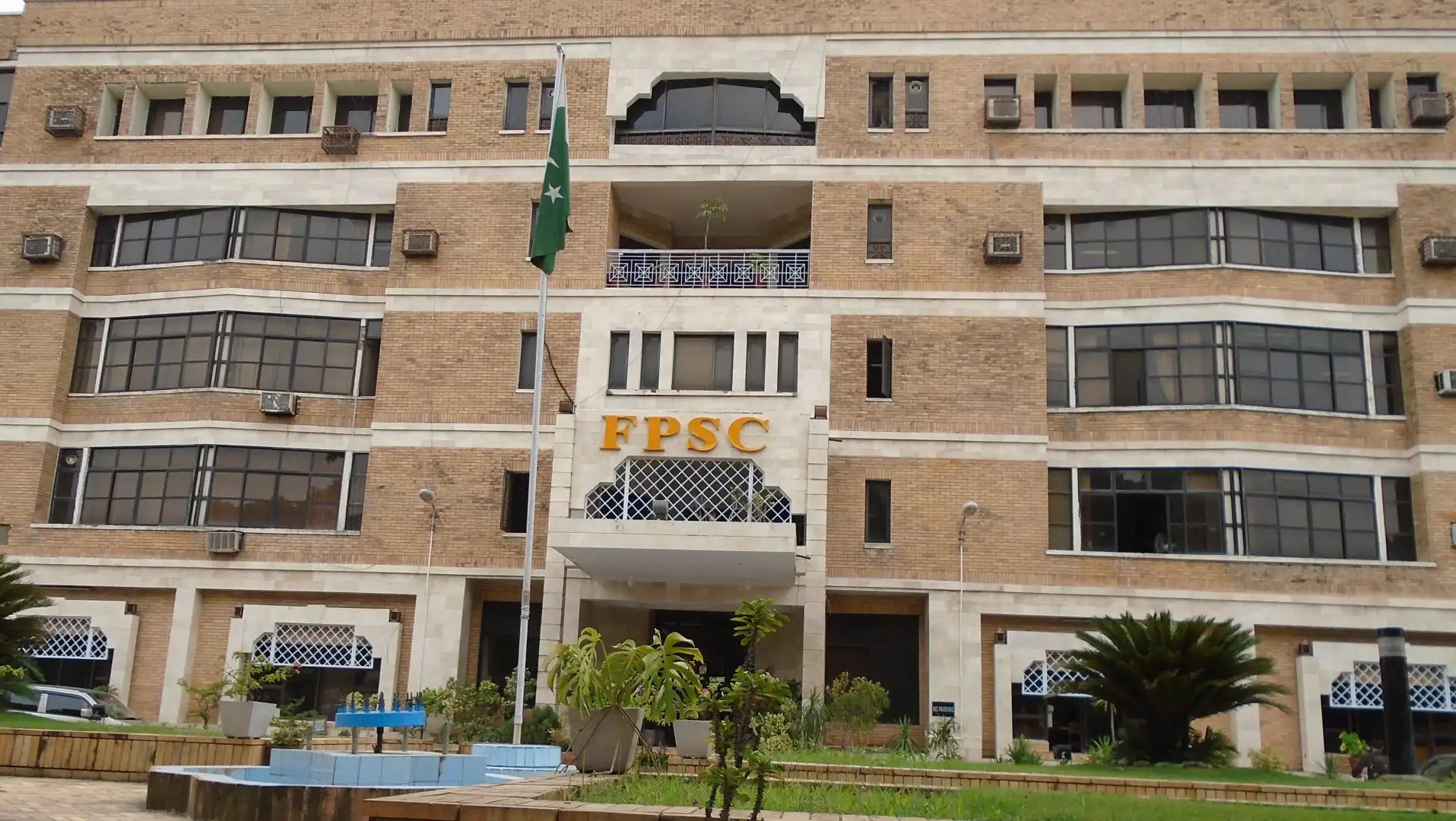
The Federal Public Service Commission (FPSC) conducts the CSS examination every year. Thousands of aspirants from across the country appear in the CSS exam to become civil servants. However, passing the CSS exam requires not only hard work but also good luck. Many believe that passing CSS in Pakistan only requires hard work, but that’s not the case. Aspirants must have a bachelor’s degree to appear in the competitive exams. The age limit set by the FPSC for appearing in the CSS exams is 30 years maximum.
Aspirants join different CSS academies for preparation for their civil services exam. Many CSS preparatory academies in Islamabad, Lahore, and Karachi attract aspirants from the country by advertising that their students have successfully passed the exam and joined the civil service of Pakistan. Moreover, they also appoint many bureaucrats and CSS officers as teachers in their academies to attract CSS aspirants. However, in most cases, these CSS preparatory institutions only provide superficial guidelines to aspirants. The reason behind the ever-increasing popularity of the CSS examination is that people think that a government job provides significant perks and privileges, along with job security.
Salaries in the Civil Service of Pakistan
Most Pakistani youth think that the civil services offer huge salaries. However, this is not true. In Pakistan, a CSP starts his service as a grade 17 officer. Therefore, their salary is equivalent to that of a grade 17 officer. They only get the salary of a regular 17th-grade officer. Meanwhile, their expenses are much higher than those of a regular officer. Moreover, the duty hours of a CSP are much higher than those of a regular 17th-grade officer. For CSS officers in the Police Service of Pakistan (PSP) and the Pakistan Administrative Service (PAS), there are no fixed duty hours, as they must respond to every unusual situation in their area.
Perks, Privileges, and Powers of a CSS Officer in Pakistan
Many people in Pakistan believe that the CSS exam is key to a luxurious lifestyle. The key reason behind this perception is the social media glamor of some CSS officers. However, the actual reason behind this sham glamor is to attract many CSS aspirants to their academies and online preparatory institutes. In reality, bureaucrats belonging to PSP and PAS enjoy most of the perks, privileges, and power in Pakistan.
In Pakistan’s bureaucratic structure, the powers, perks, and privileges of other CSS groups are lesser than those of the two aforementioned groups. The CSP officers in the Foreign Services of Pakistan (FSP) have very little power in the country, as they serve abroad for most of their careers. However, the bureaucrats in the FSP earn huge salaries and also enjoy tours to different countries.
For CSP officers in groups like the Office Management Group, the Railways (Commercial & Transportation) Group (RCTG), the Information Group (IG), and the Military Lands and Cantonments Group (MLCG), the perks, privileges, and salaries are less than those of the FSP, PSP, and PAS groups. Moreover, the prospects of promotions to higher ranks in these groups are also low.
Political Pressure on Bureaucracy in Pakistan
Indeed, the civil services have emerged as a popular career path in Pakistan. However, the reality of this job is much different than common perception. Civil servants in Pakistan face regular political pressure due to corrupt practices in the country. Many times, a CSS officer has to follow the directions of corrupt politicians because they hold the power to hinder a bureaucrat’s career progression and stability. This makes the CSS a highly competitive and pressurizing career path. The suicide of many CSS officers in the past is also allegedly attributed to significant political pressure and stress.
Private Jobs in Pakistan: Pros and Cons
While many people prepare for the CSS exams after completion of their graduation, their peers opt for private-sector jobs in their respective fields. While most CSS aspirants waste their precious years preparing for CSS exams, those employed in the private sector gain years of experience and promotions. The private sector in Pakistan is increasingly blooming. It offers greater incentives, perks, privileges, and salaries than the government sector in the contemporary era.

The private sector also offers diverse opportunities to people. It also offers fast career growth options based on their skills and performance, rather than seniority alone. People working in the private sector also have the opportunity to build and develop strong professional connections nationally and internationally. In addition, private sector employees gain practical experience, technical expertise, and exposure to modern tools and business practices.
Unlike the corrupt governmental and bureaucratic structure in Pakistan, recruitment and promotions in reputable private firms are usually more merit-oriented. Moreover, many firms offer bonuses, health insurance, transport allowances, and other incentives. Furthermore, multinational companies and remote work opportunities allow professionals to work with global teams and standards. Private organizations often encourage creativity, efficiency, and adaptability. Experience in the private sector can help individuals develop business and management skills useful for starting their own ventures later. This makes private sector jobs in the contemporary era more lucrative than government jobs.
Conclusion
In sum, the CSS exam conducted by the FPSC every year is considered a shortcut to gain social prestige and power in Pakistan. However, due to a low passing ratio and mammoth syllabus, the CSS preparation wastes precious years of Pakistan’s youth. Meanwhile, those opting for private jobs earn significant experience and career progression in these years. Moreover, private sector jobs also offer diverse opportunities, merit-based promotions, perks, and privileges. Therefore, one must consider all the pros and cons of the CSS and private sector jobs before investing their precious years in the CSS exam prep.
If you want to submit your articles and/or research papers, please visit the Submissions page.
To stay updated with the latest jobs, CSS news, internships, scholarships, and current affairs articles, join our Community Forum!
The views and opinions expressed in this article/paper are the author’s own and do not necessarily reflect the editorial position of Paradigm Shift.
Abdullah Nisar holds a degree in journalism and mass communication from the International Islamic University, Islamabad. He is currently working as a freelance journalist.