
Introduction
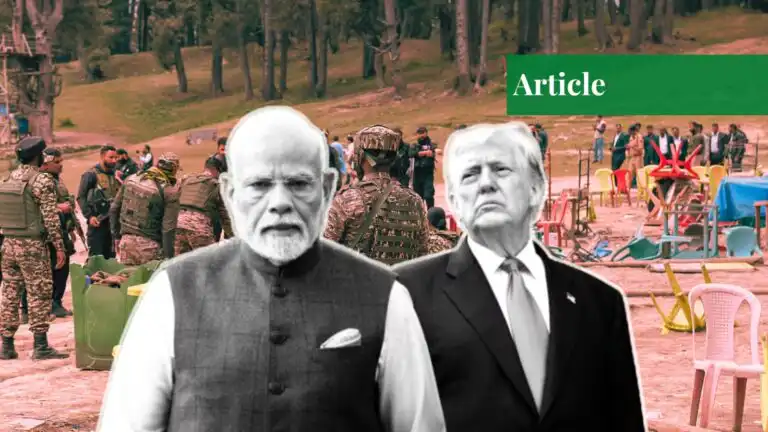
South Asia has never been inert, but the frequency of conflicts has increased manifold since the advent of the BJP in Indian politics, whose central focus is keeping the hostility towards Muslims and Pakistan alive. It not only keeps its hate politics rejuvenating but also keeps India’s hegemonic designs bourgeoning in the region. BJP’s leadership, taken out of RSS cadres, is totally averse to peaceful engagement anywhere in the region. In April 2025, an orchestrated operation in Pahalgam killing several people laid the groundwork for an unprovoked aggression against Pakistan. Without waiting for an impartial investigation or presenting conclusive evidence, India immediately blamed Pakistan for the incident, replaying an old playbook tactic to incite nationalist fervor and to silence domestic dissent.
It was followed by a full-scale military strike against innocent civilians in Pakistan, for which India faced a swift response. This standoff in May 2025 was a turning point not only for Pakistan but for the whole region and beyond. With a clear warfront leverage, Pakistan’s befitting response challenged Indian fairy tales, forcing it to reach out to the US for mediation and an immediate ceasefire with Pakistan. President Trump has since been testifying to this very fact, time and again.
However, the BJP government, under the leadership of the Modi government, chose falsehood over truth and remained adamant, not publicly admitting its defeat in the conflict. Not even India’s diplomatic embarrassments could deter “Godi Media” from claiming victory while asserting that “Operation Sindoor” was still underway. After facing a lot of criticism from inside the country as well, India conducted “Operation Mahadev,” during which innocent civilians were murdered in staged encounters, falsely labelling them as the perpetrators of the Pahalgam attack.
Efforts to Destabilize Pakistan
As internal pressure further intensified, particularly from Indian opposition in Parliament, New Delhi started amplifying its covert destabilization operations inside Pakistan. There is credible evidence of Indian-backed proxy wars through Fitna Al-khawarij and Fitna Al-Hindustan aimed at stoking unrest in Khyber Pakhtunkhwa and Balochistan, respectively. The increasing terrorist activities of these Indian proxies are aimed at keeping Pakistan internally occupied, fracturing national cohesion achieved after the May standoff, and perhaps at setting the stage for another battle under the guise of pre-emptive self-defense.
Moreover, India revived its decades-old strategy of weaponizing water, first by threatening that it would not allow water to flow into Pakistan and later by suddenly releasing the water from outflowing dams to further worsen the floods inside Pakistan. India has illegally constructed several structures on the rivers that flow into Pakistan, including the Baglihar, Ratle, and Kishenganga dams, thus affecting the flow of the Indus system and eventually threatening Pakistan’s agriculture. It can safely amount to hydrological aggression, a warlike tactic threatening the lifeline of a country.
However, this outrage against Pakistan is not new in New Delhi; rather, it is decades old, with several reasons, including external, but mostly internal. Its recent aggressiveness, similarly, is not merely a reflection of regional rivalry but of a regime increasingly failing due to its own hateful politics. The other side of “shining India” is marred with unlivable slums, inherent structural inequalities, high unemployment, and eroding democracy, coupled with state-backed violence against minorities.
All this and the recent outcry against the Modi government in its own Parliament is deafening, which may cause the Modi government to once again act rogue in order to appease the Hindutva public through the politics of fear and external hostility. This orchestrated muscular posture, claiming false victory, heaps of misinformation, and intensified proxy wars inside Pakistan suggest that India may resort to another assault against Pakistan, as has been articulated by its own army chief.
Another unheeded but pressing security concern that many analysts refuse to acknowledge is the recurring theft and unauthorized possession of uranium in India. Over the past several years, multiple cases have been reported where individuals were caught with significant amounts of uranium, raising questions about the strength of Indian nuclear security. With so much hate spewed by Hindutva extremists, the possibility of them gaining access to radioactive material and potentially accessing India’s nuclear sites is not merely a bilateral issue, as it poses a broader threat to regional and international peace and security. It warrants urgent international intervention.
The India-Israel Nexus
The recent standoff also highlighted Israel’s involvement in India’s defense and security quarters. With this in view, the establishment of a “Balochistan Studies Project” at the Middle East Media Research Institute (MEMRI) is not a coincidence but a significant development that adds a sinister layer to the ongoing regional tensions. MEMRI is a Washington-based think tank founded by Colonel Yigal Carmon, an ex-Israeli intelligence officer. He also served as a counter-terrorism adviser to Israeli Prime Ministers Yitzhak Shamir and Yitzhak Rabin.
The purpose of this project is to focus on Balochistan’s rich natural resources and strategic ports like Gwadar and Chabahar. However, the real purpose seems to be to use Balochistan as a lever to counter Iran and its growing military cooperation with Pakistan. With Netanyahu being on record about Pakistan’s nuclear capabilities, it will not be surprising if they use this collaboration to frame Pakistan for another proliferation as a part of a long-term effort to weaken, destabilize, and potentially dismember Pakistan as a nuclear-armed Muslim state.
This strategic alignment between Israel and India serves the dual purpose of reinforcing Israel’s containment strategy against Iran and complementing India’s long-standing efforts to provoke unrest in Balochistan to destabilize Pakistan from within. Pakistan, on the other hand, is not oblivious to these collaborations and alignments. Islamabad does not view them as symbolic gestures and will resort to any possible response, even if it has to go well beyond South Asia’s borders.
Conclusion
The fact remains that the world, in general, and South Asia, in particular, cannot afford another war driven by political drama. With recurring climate crises, poverty, economic instability, and extremism threatening the fabric of multiple societies, a new conflict would undo decades of development and progress. Yet, India under Modi appears determined to risk it all, not for any concern for its own citizens but only for power and false glory. The world must not ignore the happenings before the next false flag is waved and before yet another cycle of destruction is unleashed upon the people of the subcontinent.
If you want to submit your articles and/or research papers, please visit the Submissions page.
To stay updated with the latest jobs, CSS news, internships, scholarships, and current affairs articles, join our Community Forum!
The views and opinions expressed in this article/paper are the author’s own and do not necessarily reflect the editorial position of Paradigm Shift

Asifa Tanveer is an associate editor at the Institute of Policy Studies, Islamabad.