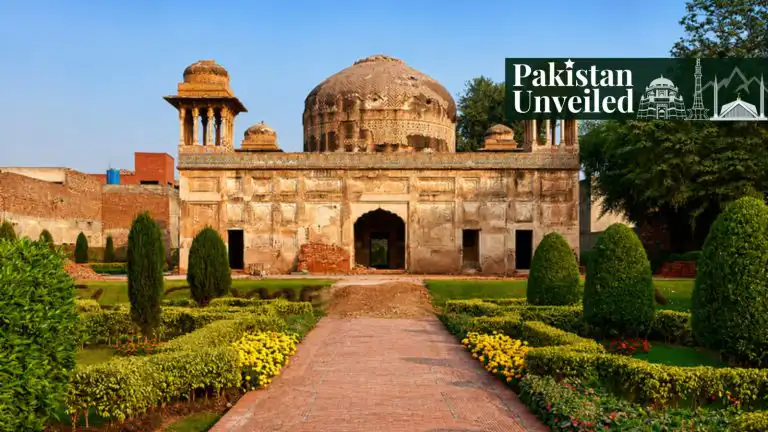
Rediscovering Dai Anga’s Tomb on the GT Road
Monuments hold a peculiar kind of silence, a silence that speaks about how certain places are waiting to be remembered. Everything in this world holds significance for as long as it has an eye to appreciate its existence. I felt this while I was standing inside the tomb of Dai Anga in Begampura, Lahore. While life goes on as usual on the busy road ahead of it, no one really notices the stories that lie behind the silent walls of this tomb.
Lahore has always been known as a place rich in its history and culture, dominating conversations around Mughal art, whether it concerns places like the Badshahi Mosque or Masjid Wazir Khan. Yet people often overlook places like the tomb of Dai Anga, which carries an equally profound history and significance.
A Woman Worth Remembering
The real name of Dai Anga was Zaib-un-Nisa. “Dai” is an Urdu word meaning “nurse.” Zaib-un-Nisa was the wet nurse of Emperor Shah Jahan. Under the Mughals, the wet nurse held a sacred place in the life of the royal child. Such a bond translated into real power and influence that lasted lifetimes.
Dai Anga’s family had deep-rooted relations with the royal family. Her husband, Murad Khan, served as a magistrate under Emperor Jahangir. Her son, Muhammad Rashid Khan, gave his life in service to Shah Jahan’s eldest son, Dara Shikoh. Likewise, the counsel of Dai Anga carried weight in one of the most important courts the subcontinent has ever known.

Before leaving for her pilgrimage, Dai Anga commissioned a mosque in the Naulakha area of Lahore. This mosque is still functioning today, and people offer prayers in it. This itself is a telling example of the position and stature Zaib-un-Nisa held at the court of Shah Jahan, as she had the means to build a mosque at a time when such patronage was reserved for the most powerful.
What the Gateway Tells You
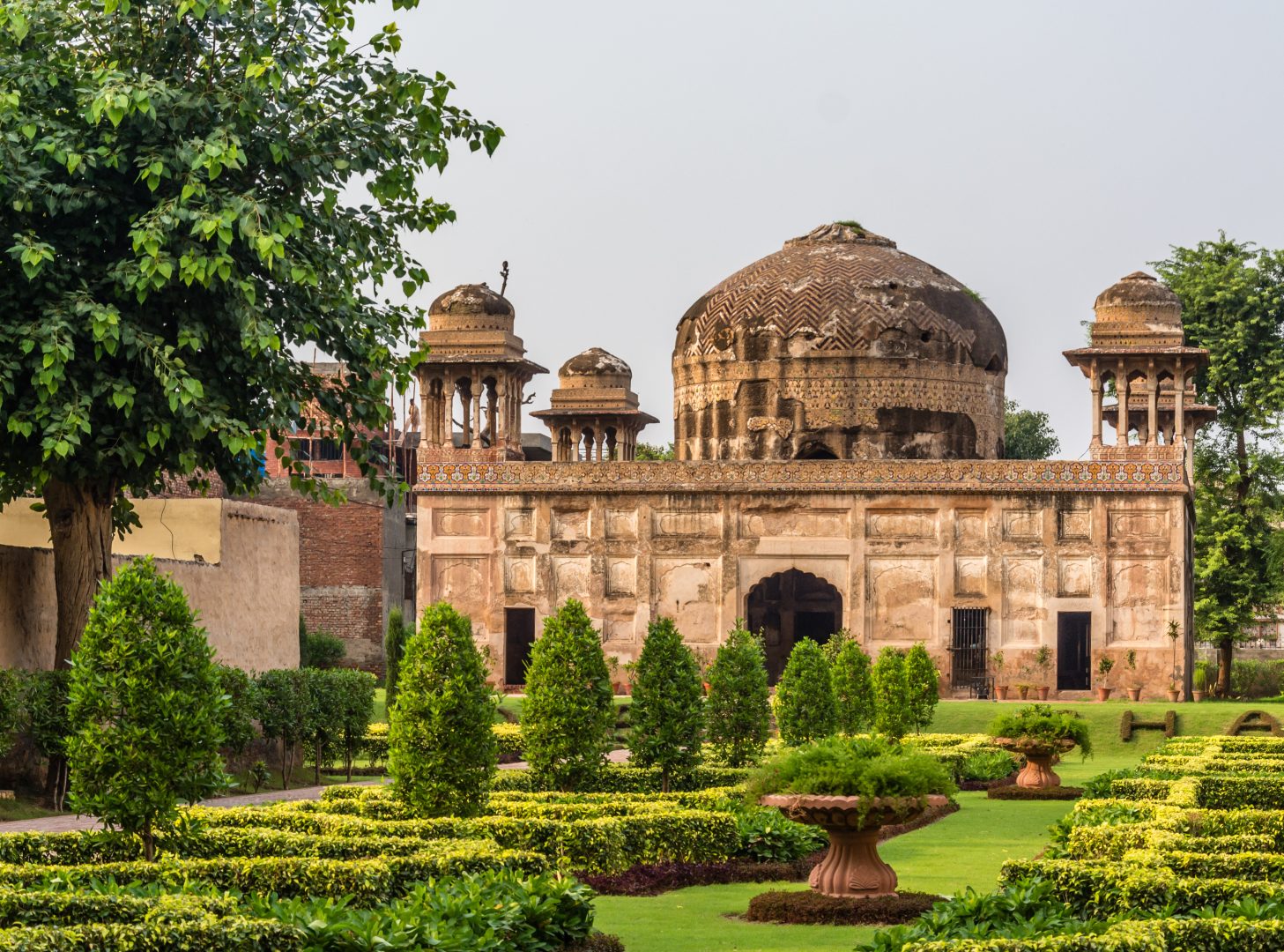
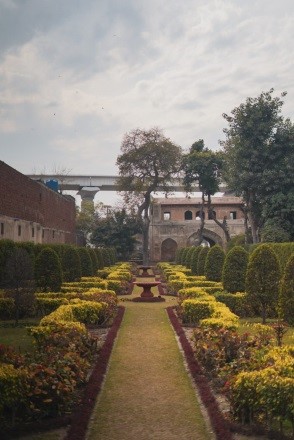
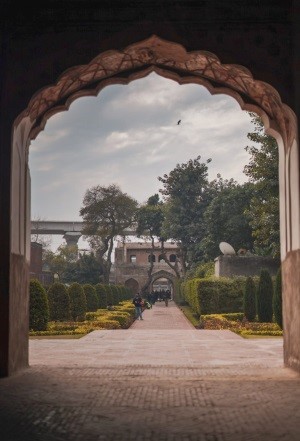
Before reaching the tomb, one passes through a lush green garden on both sides. It is believed that this garden was built before the tomb in 1655 by the Persian nobleman Mirza Sultan Baig. Despite the dust of the GT road, the garden still stands beautiful with a variety of flowers.
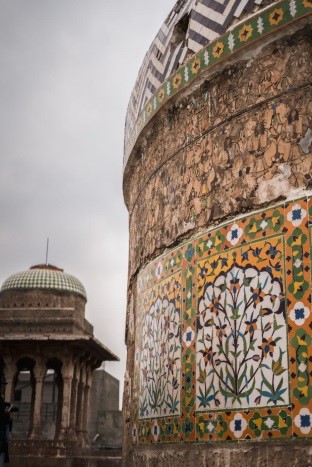
The front is covered with beautiful Mughal-style tiles in flower-like patterns. The colors—blue, green, and white—are bright and have endured despite the scorching heat of Lahore’s summers. The entrance is tall, spanning two floors, and has curved openings on each side that make it look like a stage ready for a big show. The Archaeological Department of Punjab considers it one of the best examples of this tile work in the area, and when you see it, that assessment sounds just right.
Inside the Tomb
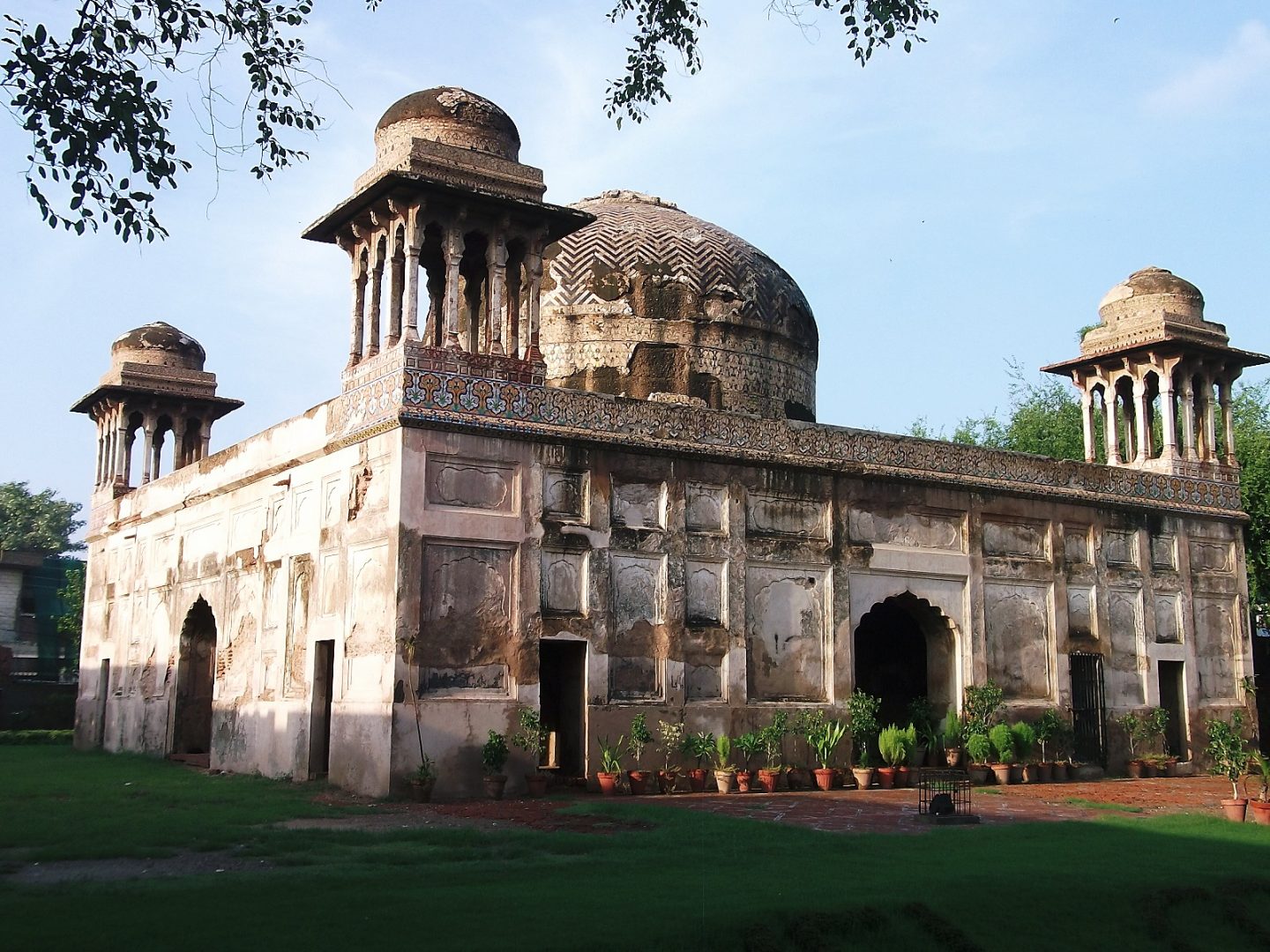
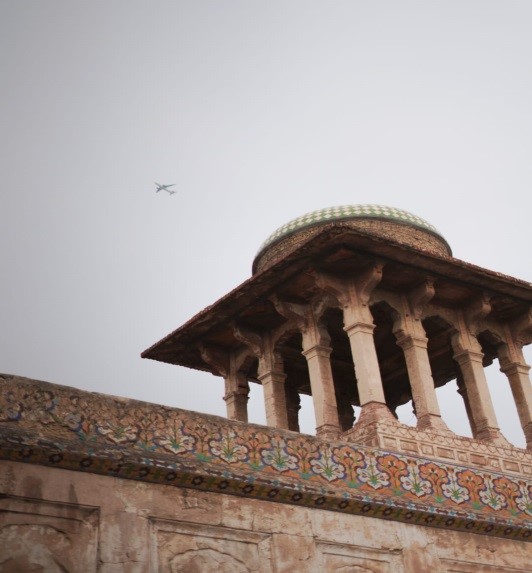
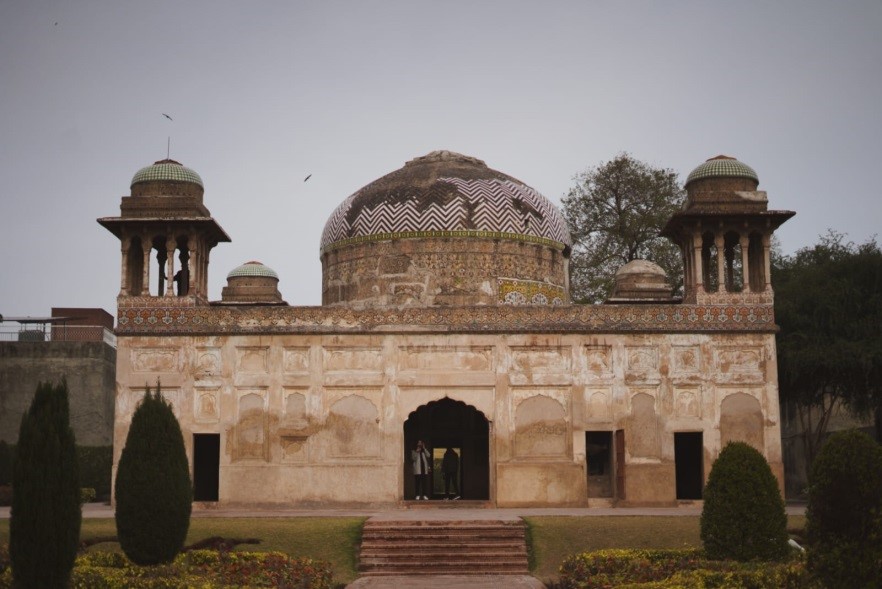
The tomb sits further in, quieter and more composed, with multiple archways leading towards the heart of it. Its unconventional structure does not follow the grand demeanor of the Mughal buildings. The corners of the tomb have towers on each side whose bases are beautified with mosaic work. There is still some kashi kari work visible beneath the towers.
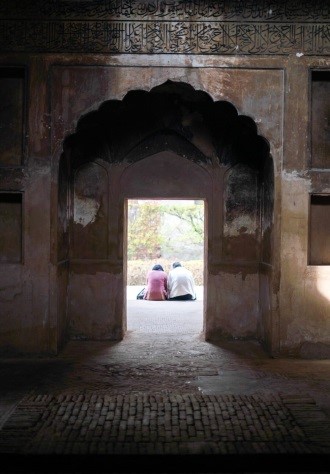
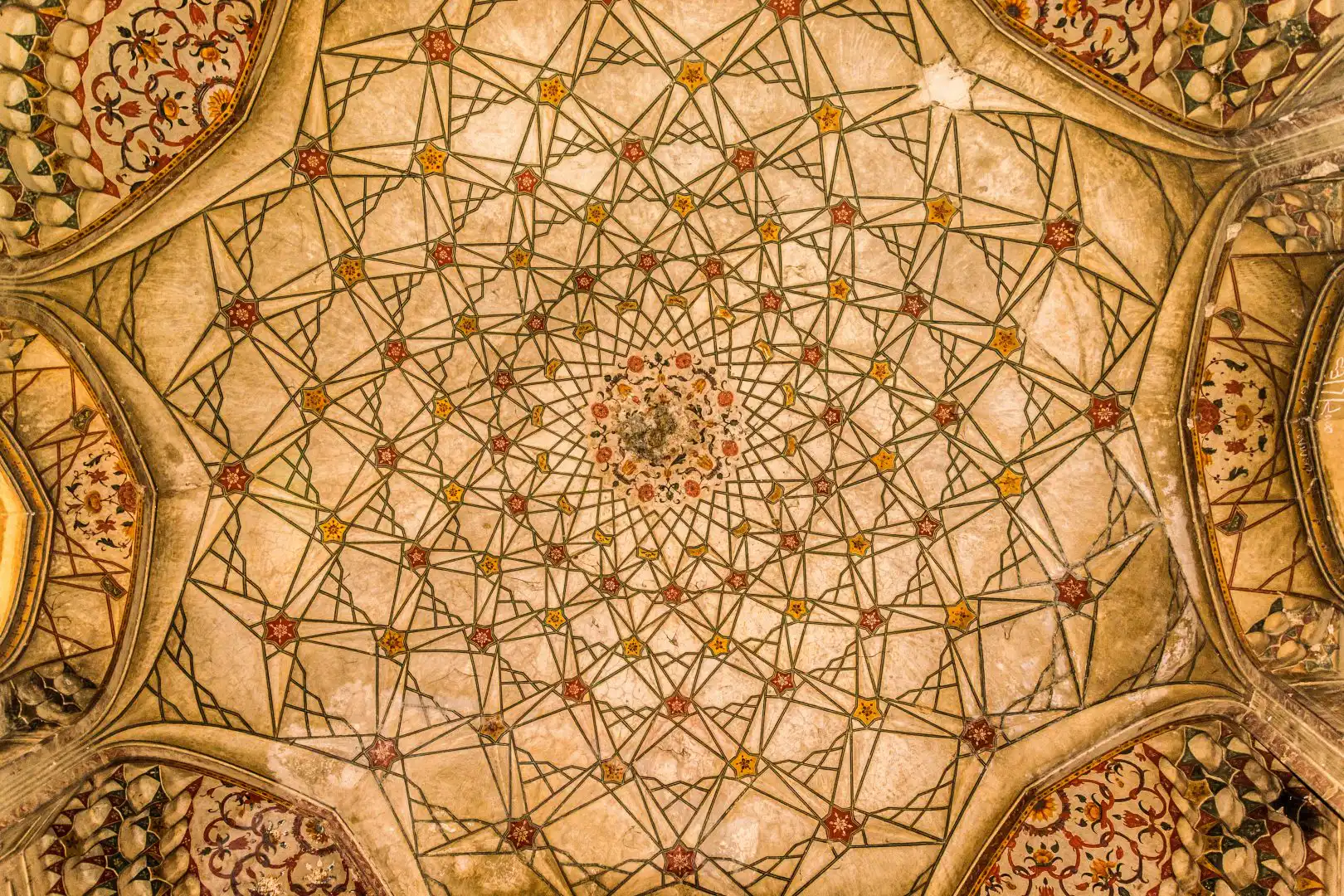
The center of the tomb offers a rich experience of architecture and history. A large central chamber, whose interior is covered with richly decorated stone carvings, tile work, and frescoes, is connected by archways to eight rooms. The chamber walls are filled with Quranic inscriptions depicting the intricate artistry and the patience of the craftsman.
By observing such delicacy, one realizes how such a place was used for meditation and prayers. Furthermore, the mysterious and spiritual nature of the tomb lies in knowing that the real tomb of Dai Anga, along with that of her daughter, Sultana Begum, does not lie on the floor of this chamber but somewhere beneath it. It is believed it was done to protect the graves from public access. So, standing in this chamber is like standing over the woman who raised an emperor.
What Remains of the Dai Anga’s Tomb
It is important to be honest about the condition of this place. Over the years, some of the tiles on the outside have fallen off. Nearby buildings have taken over parts of what used to be a large garden, leaving only a narrow strip of green between the gateway and the tomb. What was once a lively site has slowly been encroached upon.

A few years ago, the construction of the Orange Line Metro brought attention to this tomb, along with Shalimar Gardens and other monuments. People who care about heritage asked the Lahore High Court to stop construction too close to these protected sites. The court agreed and ordered that no construction should happen within 200 feet of any heritage site. UNESCO had warned that the project could cause serious, permanent damage. This legal fight was a small win for Lahore’s hidden history.
Some restoration work is now visible in parts of the site. Whether it is enough, or whether it keeps the original look without making it appear artificially perfect, is a different and important question. But the essence of this place is extraordinary. The tiles still surviving on the gateway towers show how beautiful the whole building once was.
Why You Should Visit the Tomb of Dai Anga
Unlike grand mosques like Badshahi Mosque and Masjid Wazir Khan that attract visitors daily, hidden gems like Dai Anga still echo with silence. What stood out to me most during my visit was how easy it was to get there and how few people were around. There were no long lines, no vendors pushing souvenirs, and no crowds taking photos. It was just the monument and those who quietly came to see it.
This is a side of Lahore that exists quietly beneath the city’s busier face. The tomb of Dai Anga is located on GT Road in Begampura and is open every day from 9:00 AM to 5:00 PM. You can easily reach it by car, rickshaw, or public transport from the city center. There is no reason not to visit except that many people simply don’t know it exists.
If you want to submit your articles and/or research papers, please visit the Submissions page.
To stay updated with the latest jobs, CSS news, internships, scholarships, and current affairs articles, join our Community Forum!
The views and opinions expressed in this article/paper are the author’s own and do not necessarily reflect the editorial position of Paradigm Shift.