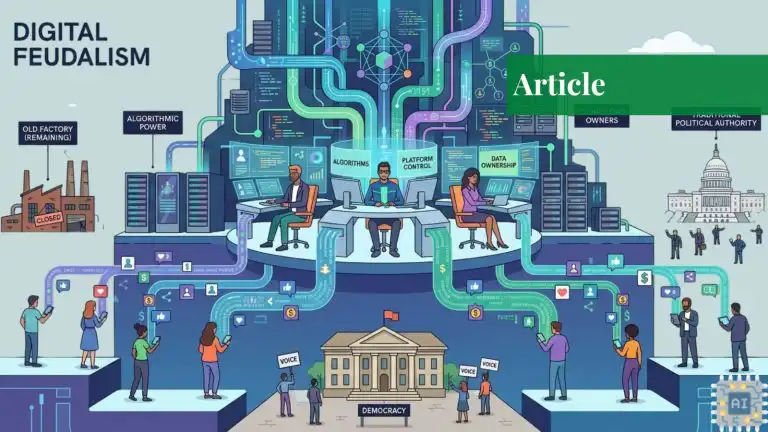
The Unexpected Win: Shift In Traditional Political Power
Welcome to the age of ‘cloudalist’, where TikTok, Instagram, and other social media platforms know you better than your friends. It’s not just about sharing memes but constructing your worldview and voting choices. For instance, despite predictions by mainstream media and political experts about the 2024 US election, Donald Trump won with a majority of votes in the electoral college, sweeping all battleground states. This raised an important question: how, even when the American establishment, often referred to as a deep state, was apparently against Donald Trump, did he manage to secure a decisive win? Traditionally, this has not been the case in the US and around the world; for example, Pakistan is a clear case in point where the digital state is challenging the deep state. The establishment is considered to hold both economic and political power within a country’s political system. President Trump’s victory insinuates a fundamental shift in how political power operates in the modern era.
Means Of Mental Production And Ideological State Apparatuses
The answer lies in what Adorno and Horkheimer in Dialectic of Enlightenment (1944) called ‘Means of mental production’. They contended that Mass media and culture are not just entertainment but serve as tools for ideological domination. They are essential for constructing beliefs and values that shape the individual’s understanding of the world. Controlled by the elites, they manufacture consent and discourage thought. According to Adorno and Horkheimer, modern capitalism has industrialised culture and transformed it into mass-produced commodities. By controlling the culture industry, the ruling class controls the means of mental production. Today, its application is the new TikTok algorithm, where one gets stuck in the rabbit hole of content because digital platforms have industrialised our attention economy.
Similarly, French sociologist and philosopher Louis Althusser argued that ‘ ideological state apparatuses’(ISA), such as mass media, religion, and the educational system, as opposed to ‘repressive state apparatuses’ (RSA) like the police, judicial system, and the military, maintain a hegemonic structure. Today, ISA has moved into digital architecture. Power has shifted from curating the news to owning the code that decides who sees it. A 2024 study from Queensland University of Technology found that X’s algorithm was potentially tweaked in July 2024—the same month Elon Musk endorsed Trump—to boost Musk’s own posts by 138% and retweets by 238%.
Manufacturing Of Common Sense And Hegemonic Narratives
Noam Chomsky and Marv Waterstone, in “ The Consequences of Capitalism”, lay out the methods of making common sense in society by arguing that it is a collection of our accumulated experiences in which all the social institutions, from family to education and media, play a role. Over time, people develop cognitive filters, only allowing information to pass that reinforces their preconceived biases. The reason people believe elite narratives across demographics, as explained by Kate Crehan in Gramsci’s Common Sense: Inequality and Its Narratives, is that hegemonic narratives reflect the world as seen from the vantage point of the rulers, not the ruled”. In this exercise, all resources are utilised to make the people believe that the rulers are working in their interest.
In today’s digital age, social media curates content based on past behaviour and preferences, creating echo chambers and filter bubbles. A significant portion of Donald Trump’s campaign was focused on shaping public perception through media, specifically social media. It was a shift from traditional politics to ‘vibe politics’, where he engaged in nontraditional media tours, such as interviews with multiple podcasters targeting younger demographics like Gen Z and millennials. In this, he was supported by conservative social media influencers and tech mogul Elon Musk, who used his platform, X, to advance a certain narrative that shaped public opinion in favour of Donald Trump, alongside hundreds of millions spent by him.
Rise Of Techno-Feudalism
The new means of production in the information age are emerging, where those who hold supremacy over technology are more powerful than those who have traditionally been the centre of power. In “Techno Feudalism: What Killed Capitalism”, Yanis Varoufakis, the former Finance Minister of Greece, said that the era of capitalism is over, and it has been replaced with digital feudalism. Where all the tech owners (Cloudalists”) are the modern feudal lords, and production has taken a back seat. Where power lies in Silicon Valley. Which raises the question: If the tech moguls are feudal lords, then does that make us the digital serfs? The Trump victory in the US and the reliance of the global far-right on social media for its rise showcase that the political order of a nation-state now hinges on algorithms and information, not so much on traditional sources of power.
If you want to submit your articles and/or research papers, please visit the Submissions page.
To stay updated with the latest jobs, CSS news, internships, scholarships, and current affairs articles, join our Community Forum!
The views and opinions expressed in this article/paper are the author’s own and do not necessarily reflect the editorial position of Paradigm Shift.

Hamza wyne is a writer with a gold medal in Sociology. He teaches CSS Aspirants. His research focuses on political behaviour, media influence and democracy.