A Glance at the Foreign Policy of Pakistan Since its Independence
Pakistan’s geostrategic location and significance always position it at the center of regional and global politics. Since its independence from British rule, Pakistan has been a key player in international politics. At the time of independence, Pakistan was struggling with economic and security dilemmas as it inherited a regional enemy at its eastern border. These dilemmas pushed Pakistan towards the United States in the early years of its inception. Pakistani leadership decided to join the US bloc, making the country a direct party to the Cold War. Pakistan also signed the Southeast Asia Treaty Organization (SEATO) and the Central Treaty Organization (CENTO), the two Cold War-era military alliances against the Soviet Union.
This alignment fulfilled Pakistan’s immediate ambitions but proved detrimental to its long-term regional and international objectives. Throughout history, the US-Pakistan relations have been transactional. Washington repeatedly engaged with Pakistan to achieve its regional and international ambitions. However, it always used Islamabad as a scapegoat and imposed economic embargoes on it after its ambitions were materialized.
Repeated betrayal by the United States pushed Pakistan towards regional powers, primarily China and Russia. Pakistan and China have been historic allies. Their mutual animosity towards New Delhi serves as the bedrock of their all-weather friendship. The two sides are also collaborating on various infrastructure and development projects, as well as cooperation in defense, intelligence, and energy sectors. Pakistan is also hosting the China-Pakistan Economic Corridor (CPEC), the flagship project of the Belt and Road Initiative (BRI).
However, Pakistan has a bitter history in terms of its relations with Russia. Pakistan’s alignment with the Western bloc during the Cold War led to hostile relations between the two sides. Islamabad played a critical role in the dismemberment of the Soviet Union during the Soviet-Afghan War by supporting the Afghan Taliban. In the past two decades, the two sides have attempted to establish cordial relations.
The Changing World Order: From Unipolarity to a Multipolar World
The dismemberment of the Soviet Union at the end of the Cold War led to the US-led unipolar world order. However, this unipolarity soon transitioned into a multipolarity due to the rapid rise of China and Russia’s resurgence on the global stage. With the turn of the 21st century, China emerged as a great economic and military power. Beijing’s economic diplomacy also led to the expansion of its influence around the globe. Russia also resurged as a major global diplomatic power.
The world also witnessed a significant rise in the diplomatic influence of middle powers, especially Pakistan, Saudi Arabia, Japan, India, and the UAE. The strategic significance of the South Asia region has also been magnified due to the increasing diplomatic influence of Pakistan, India, and China.
These factors, accompanied by the United States’ unilateralist and interventionist policies, contributed to the rapid decline of the US-led Unipolar World Order. Over the past three decades, the United States has violated the sovereignty of different nations around the world. It unleashed terror and violence in different third-world countries, including Afghanistan, Iran, Iraq, Syria, Vietnam, Venezuela, and Yemen.
The New World Order and Great Power Competition
With the emergence of a multipolar world order, great-power competition also intensified, especially between the United States and China. For the past few years, Russia and China have been seeking to establish an inclusive, pluralistic, and egalitarian multipolar global order. However, they do not seek to replace the United States’ role. They only seek to establish a parallel system with the US still being the key international player. Beijing and Moscow only seek to establish a world order in which the national interests and strategic autonomy of every nation are secured. The establishment and increasing role of multilateral organizations like the BRICS and the Shanghai Cooperation Organization (SCO) demonstrate the objectives of the two states for the future international order.
Foreign Policy Choices for Pakistan in a Multipolar World
As the international system is undergoing significant changes and competition among major powers is also increasing, the foreign policy options for states like Pakistan are becoming narrow. In international relations, states act to preserve their national interests, and foreign policy decisions are only made to achieve a nation’s own ambitions and objectives. Washington, being the global hegemon, has always dictated foreign policy decisions to third-world nations. Its interventionist policies sparked security concerns among its allies and rivals.
However, Russia and China have developed a soft image due to their inclusive policies. Both nations strengthened their political clout through economic diplomacy. Their infrastructure and development projects provide lucrative opportunities to the Global South. China’s BRI project has played a pivotal role in expanding its diplomatic clout across more than three continents. The United States has repeatedly exerted pressure on Pakistan through the IMF and FATF to suspend the CPEC project. However, Islamabad never conceded to the US pressure over the CPEC issue.
Pakistan is also vying to bolster its bilateral relations with Russia. Due to its economic woes and energy crisis, Pakistan seeks to buy cheap Russian oil. The two sides also seek to enhance cooperation in the defense, technology, and intelligence sectors. However, Pakistan’s economic reliance on the US-backed Western monetary institutions and Washington’s threat to sanction Islamabad make it difficult for the country to enhance its relationship with Moscow. Due to Pakistan’s mediatory role in the US-Iran war, the world is once again witnessing a transition in global power dynamics. The Pakistan-US strategic partnership has reached a new apex. Moreover, Pakistan is playing a critical role in ensuring regional security. However, these developments do not minimize Islamabad’s foreign policy complications in a world transitioning from a unipolar to a multipolar order.
Mapping Foreign Policy Choices for Pakistan
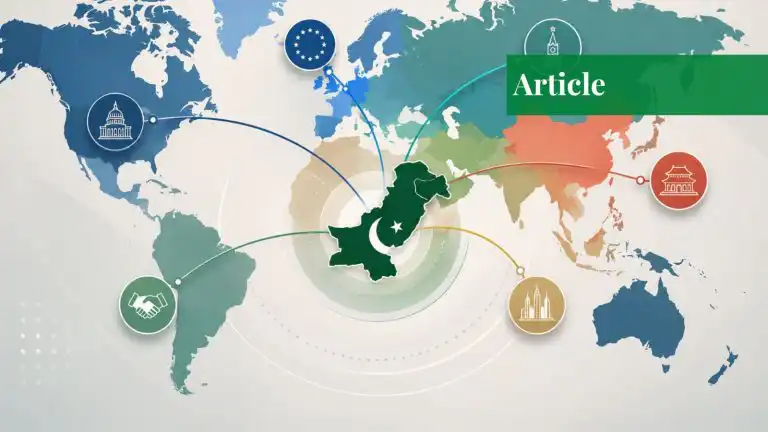
In a transitioning global order and rising geopolitical tensions between major powers vying for global influence, Pakistan needs to preserve its strategic autonomy. It also needs to maintain an independent foreign policy to safeguard its national interests. Pakistan also needs to decrease its dependence on Western economic institutions, especially the IMF, by diversifying its economic relations with different regional and global powers. Moreover, Pakistan needs to emphasize its new policy of establishing relationships based on economic ties rather than transactional geostrategic collaborations to strengthen its economy and expand its global diplomatic clout. Pakistan’s diplomatic role in the recent US-Iran war has increased its global stature. However, it seriously needs to transform this diplomatic victory into long-term economic gains.
If you want to submit your articles and/or research papers, please visit the Submissions page.
To stay updated with the latest jobs, CSS news, internships, scholarships, and current affairs articles, join our Community Forum!
The views and opinions expressed in this article/paper are the author’s own and do not necessarily reflect the editorial position of Paradigm Shift.
Abdullah Nisar holds a degree in journalism and mass communication from the International Islamic University, Islamabad. He is currently working as a freelance journalist.