
The post-Cold War era, often referred to as the Peace Dividend, has now come to an end, with the US turning away from the European security burden against an overtly exaggerated Russian threat. This breakup in transatlantic relations is not an immediate incident but rather a follow-up to persistent tensions, demands, and dissatisfying results. Ranging from economic entanglements to threat perception, the European countries, in particular the NATO members, have developed sharp divergences with each other. The western, central, eastern, and southern flanks of NATO are now representing a quagmire and have further disrupted the so-called alliance cohesion.
With the revival of President Trump in 2025, the all-weather partnership of the transatlantic alliance is over, and the era of European strategic autonomy has begun. From years of struggle with burden sharing, the debate is now completely shifted towards burden shifting, with Europe taking care of itself. The newly released National Security Strategy (NSS) under the Trump 2.0 administration clearly stated that Europe is at the brink of civilizational erasure, which cannot be taken as a major security ally, as it is now threatening Western civilization itself. With Trump 2.0 imposing serious tariffs on its European partners, the matter has now reached the point of European sovereignty, self-respect, and territorial integrity, with the US practically demanding the annexation of Greenland – a protectorate of Denmark.
Historical Overview
Greenland became a colony of Denmark in the 18th century and maintained the status quo for about two centuries. The United States played a major role in the geopolitical aspect of the region by having Greenland strategically governed during World War II when Nazi Germany occupied Denmark. After the defeat of Germany, the US administration asked the Danish authorities to sell Greenland to the US, which was bluntly rejected by Denmark. In 1953, Greenland’s colonial status ended, and it became an integral part of the Kingdom of Denmark.
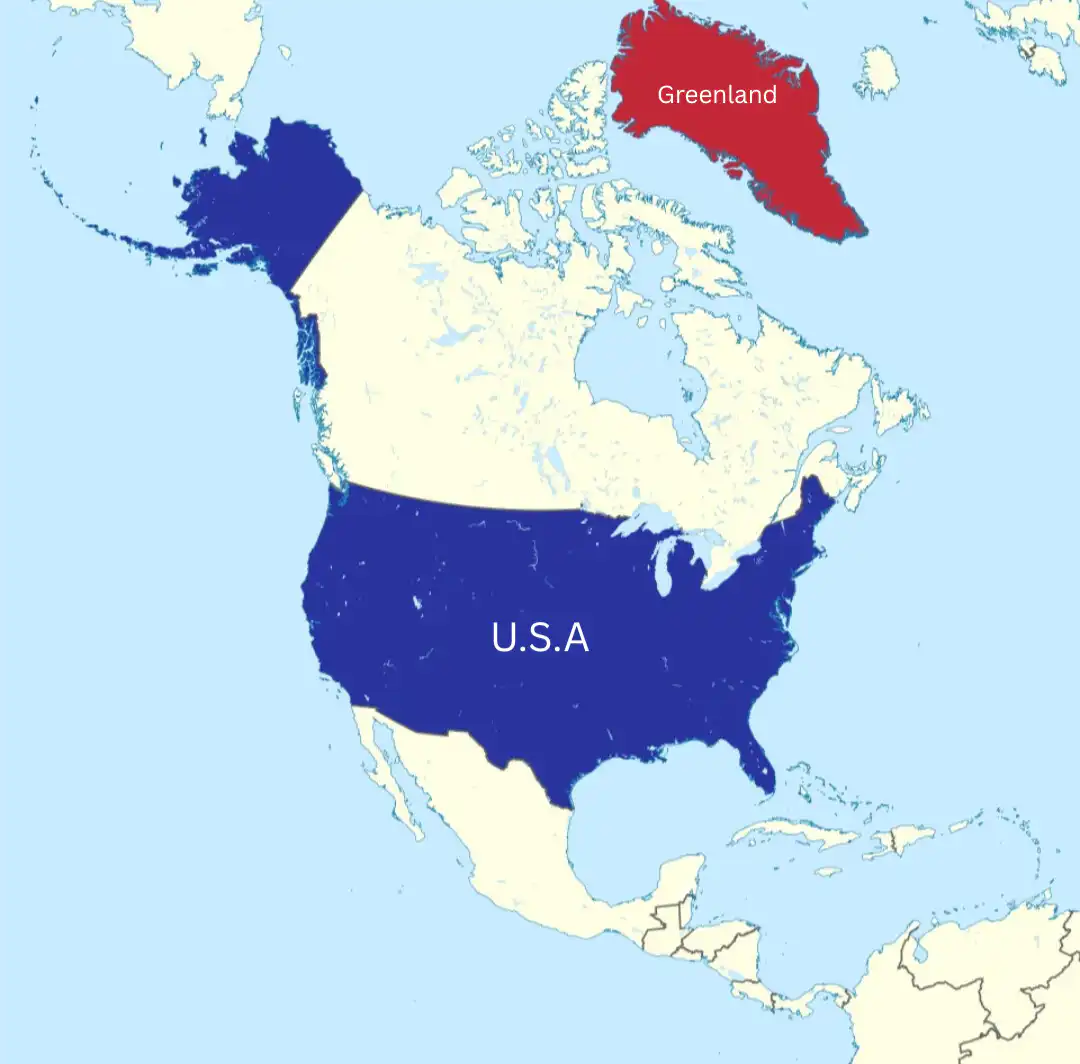
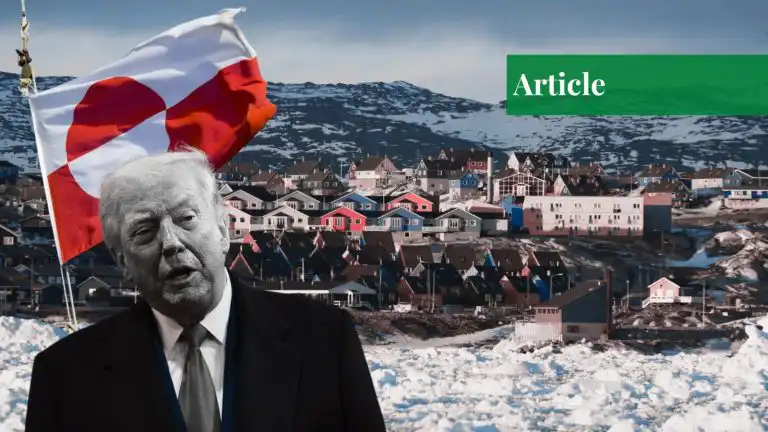
The US has long been eyeing this small but strategically significant territory of the Arctic. From the late 1860s to 2026, various US administrations have shown interest in buying the territory of Greenland from Denmark. Thus, the Trump 2.0 demand is a precedent for this. But the geopolitical situation and the regional security architecture make it quite evident that this time the threat is much more compact and serious than ever before, with President Trump declaring Greenland a national security concern for the US.
Rationale Behind the US Appetite
Under the kingdom of Denmark, Greenland is a semi-autonomous island with a population of approximately 56,000 people. The domestic matters, including education, health, and natural resources, are under the control of Greenland, but Denmark still retains its foreign policy and defense. Greenland has been a major strategic place in regard to security and prosperity.
The geographic location of Greenland makes it strategically important to the U.S. It is located at a position that makes it a major point to monitor and guard against potential adversaries like Russia, whose closest distance to the Western Hemisphere is through the Arctic Ocean. The US has to keep an eye on shipping routes, economic and military, in the region, and this is not easy to achieve with the available bases.
The most significant thing is the GIUK gap in the Arctic. This is the sea distance between Greenland and Iceland, as well as the United Kingdom. It has been a significant shipping choke point, particularly to the submarines, and also its control has been significant in monitoring the movements of Russian and Chinese navies in the North Atlantic and the Arctic seas. Had Greenland been an American territory, it would have offered eyes on enemies and ease in monitoring the sensitive area.
Moreover, the Arctic is an untapped area that contains oil, gas, and rare earth minerals. The estimates of undiscovered barrels of oil and natural gas in Greenland are 17.5 billion and 148 trillion cubic feet, respectively. In addition, it is said to contain 36.1 billion tons of rare earth elements, which makes it one of the largest deposits globally. These resources completely align with 21st-century energy competition and Trump’s ‘Drill Baby Drill’ strategy.
Options for the US
The Trump 2.0 administration has made it pretty clear that the annexation of Greenland is inevitable. President Trump has stated that “anything less” than US control of Greenland is “unacceptable,” arguing the United States needs the territory for national security purposes, which could in turn strengthen NATO. As of now, the US has the following options to make Greenland a US territory:
- Soft Power
This approach is a two-tiered strategy to lean influence on Greenland. The first is deepening divisions between Greenland and Denmark, which has already started. Over a long period of time, the US officials have framed Denmark as a problem, not a partner for Greenland. Last year, while visiting Greenland, the US VP JD Vance openly criticized the Danish authorities for failing Greenlanders. The Trump administration is deliberately treating Greenland as a separate political entity rather than a part of Denmark.
The second is offering Greenland a Compact of Free Association (COFA), which is a framework the US already uses with several small Pacific nations. Under this framework, the US gets wide military access while the partner country receives immense financial support, security guarantees, and duty-free access to the American markets. In other words, this plan offers Greenland to leave Denmark and come under the US security umbrella – a transition from the protectorate of one country to another.
- Economic Coercion
The Trump administration, famous for the president’s obsession with tariffs, could use this as leverage. And this has already started. President Trump has announced a 10% tariff on European countries, not accepting the US annexation plan, and supporting the Danish authorities against the US. Remember that President Trump has already imposed high tariffs on European countries for buying Russian oil and gas. The newly imposed tariffs over the issue of Greenland serve as a pressure tactic to accept the US demands.
- Hard Power
If soft power fails to achieve its target, the US could pursue military intervention and potential annexation. Another episode just like in Venezuela could be repeated, but this time with much ease and greater access. The US has already established its Pituffik Space Base in Greenland, which could potentially become an operational center for an attack. The Danish forces present in a very small number in Greenland basically serve the purpose of surveillance and monitoring, not to fight a superpower.
Europe’s Retaliation or The End of NATO
Europe’s retaliation would also comprise a three-pronged approach: political stance, economic coercion, and the deployment of military troops in Greenland. Europe has already condemned the US moves and projected solidarity with Denmark and Greenland. European leaders have jointly rejected Trump’s annexation plan and declared that Greenland belongs to its people. The second retaliation would be in the form of economic coercion, following the path of Chinese reciprocal retaliation to the US. Instead of appeasement, Europe might coerce the US economically. The EU might use its anti-coercion instrument, also known as the Trade Bazooka. This would allow the EU to put heavy fines on American tech companies and coordinate a dumping of US government bonds.
The last resort would be military retaliation against the US, which seems quite dubious. In order to deter the US, the NATO members have launched a military exercise called Operation Arctic Endurance, whereby troops from France, Germany, Norway, and Sweden have entered Greenland. This is known as the EU’s Tripwire Strategy under which, before Greenland, the US has to face NATO retaliation. The astonishing fact here is that these troops make up a number of just 30 personnel. At this critical time, this serves as a political signal and intention from the member countries to the US to be ready for resistance. In line with this, the Danish defense minister has already stated that Danish troops would shoot first and ask questions later.
Regional and Global Repercussions
- If the US attacked Greenland or tried to annex it against the will of its people, the so-called transatlantic partnership would deteriorate – and end NATO.
- Further divisions would erupt amongst the European members as the only overarching and cohesive authority- NATO – has already been disrupted.
- Europe would plunge into the interwar period once again, with Russia controlling it under its own security model.
- Before the annexation, member states like France could leave the alliance, as it had already questioned the alliance’s trajectory and cohesion several times throughout history – a Frexit could be a serious possibility.
- The European countries would start tilting toward China, not only for economic relations but also for a security partnership.
- The anti-American sentiments would once again start prevailing in the European societies.
- The US could lose one of its biggest market bases, controlling a large chunk of the American economy.
- The US would face domestic political backlash, with civil protests ramped up – a kind of civil war.
- The annexation of Greenland would further allow the authoritarian regimes to follow suit – a precedent for China, Russia, Israel, India, etc., to control their spheres of influence as they wish.
- The Global South would also start taking care of itself, instead of relying completely on any major power whose interests are transactional.
- The entire world would come under the shadow of Hobbesian law with the disruption of rules-based order.
Conclusion
The annexation of Greenland by the US would be one of the major blunders of its foreign policy. The 21st-century multipolar world has no room for such selfish and naked power adventures. History is evident that whenever a major power starts declining, it creates a mess in the international security architecture and targets its allies bluntly. This is what the US under the Trump administration is doing right now. The already questioned transatlantic partnership, i.e., NATO, is now finally at its decisive stage, where a single step could deteriorate the entire European order, with the rest of the world facing or waiting for their turn.
If you want to submit your articles and/or research papers, please visit the Submissions page.
To stay updated with the latest jobs, CSS news, internships, scholarships, and current affairs articles, join our Community Forum!
The views and opinions expressed in this article/paper are the author’s own and do not necessarily reflect the editorial position of Paradigm Shift.

He is pursuing a BS in International Relations programme from International Islamic University, Islamabad and has a keen interest in research works, policy analysis, defence and strategic studies and conflict resolution.