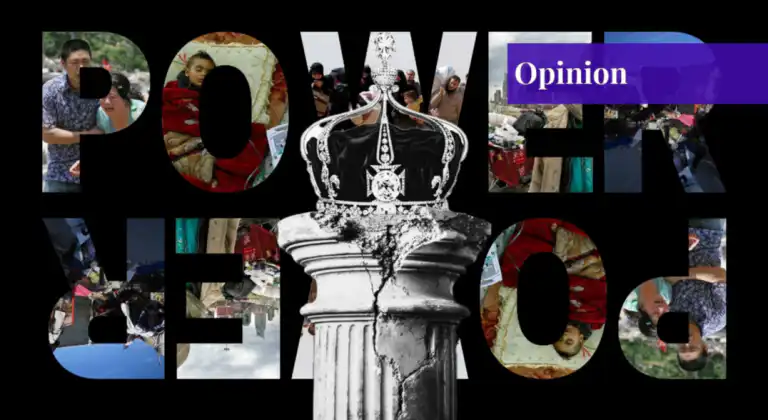
Centuries of political thought converge on one enduring truth: power never limits itself. It expands instinctively and consumes the very society it claims to protect. From Tacitus to Acton, the warning has remained constant. The pursuit of power hollows institutions, distorts morality, and reduces human lives to mere instruments of strategy.
Tacitus witnessed this in imperial Rome. Emperors justified domination through patriotism, stability, and necessity. Centuries later, Edward Gibbon observed that the elevation of one ruler required the submission of multitudes.
Prominent historian Friedrich Meinecke initially believed that state violence could build a unified, cultured nation. Two world wars shattered that illusion. He realized that, ultimately, untethered power destroys civilization instead of protecting it. Unrestrained Realpolitik, he warned, allowed a destructive force to enter political life.
The pattern endures. Once power becomes an end in itself, truth becomes negotiable, law becomes conditional, and morality becomes subordinate to survival. The 20th century witnessed more than 100 million deaths through war, genocide, state repression and politically engineered famine. Totalitarian regimes perfected the use of propaganda, surveillance and fear while presenting themselves as guardians of order.
The Cold War revealed the same logic. Superpowers justified proxy conflicts across Asia, Africa and Latin America as strategic necessities. Smaller nations became battlegrounds in contests they did not create and could not control.
Thomas Gordon and John Trenchard were influential British writers. Their ideas profoundly shaped the political philosophy of the American Revolution. In Cato’s Letters, they warned that power naturally seeks expansion because rulers possess greater force, resources, and fewer restraints than those they govern.
The post-9/11 era reveals a starkly similar strain. Extraordinary surveillance powers, military interventions, and executive actions introduced as temporary necessities have become embedded in normal governance.
The lesson is consistent across systems. Power, once granted, rarely surrenders authority voluntarily. Without institutional resistance, exceptional measures gradually become accepted practice.
The same pattern appears beyond formal institutions. Powerful states often justify expansion through necessity, portraying each escalation as unavoidable and each sacrifice as temporary.
History, however, shows that strategies built on dominance create consequences beyond control. The pursuit of security can produce insecurity, and attempts to preserve influence can generate the very instability they were intended to prevent.
Today, Realpolitik follows the same pattern. States speak of peace while pursuing strategic advantage; human suffering becomes a calculation and civilian deaths evoke the heartless euphemism of collateral damage.
The modern world has outfitted its arsenals with more powerful tools. Digital technology has accelerated the reach of political power. Surveillance systems, algorithmic influence, and information warfare allow states to shape public perception with unprecedented speed.
Yet, the human consequences remain painfully familiar. They are agonizingly manifested in displaced families, ruined cities, and generations forced to inherit the aftermath of decisions made by remote rulers.
The central tragedy of Realpolitik is that ordinary people become statistics in a strategic game. This pathology reached a perilous apex in Gaza, where civilians remain trapped beneath a genocidal campaign of collective punishment. Ironically, the calculus of unchecked authority does not stop at one border; it radiates outward, treating sovereignty as conditional and force as its own justification.
This logic starkly manifested itself in the unlawful and reckless elimination of Iran’s top leadership and direct attacks on its soil. This is not deterrence. It is profoundly lawless, deeply corrosive, and a destabilizing creed in which might serves as its own justification, sovereignty is expendable, and impunity becomes policy.
The absolute infamy of this creed was laid bare at the Shajareh Tayyebeh Primary School in Minab. A devastating airstrike targeted it and tore through the school, killing 120 innocent children and their teachers.
The sight of freshly dug small graves serves as the ultimate indictment of modern Realpolitik. When unchecked nations play games of absolute dominance, it is always the most vulnerable who pay the ultimate price.
Bernard Bailyn, historian and Harvard University professor, asserted in “The Ideological Origins of the American Revolution” that 18th-century Americans viewed the lust for power as a permanent feature of human nature. The actors and arenas change, but this instinct steadfastly endures.
This pathology is not confined to geopolitics; it manifests just as readily within domestic borders. Dissent becomes disloyalty and necessity justifies excess. The ultimate danger is when power professes to be the republic itself. Nietzsche foresaw the dark truth of this deception and described it as: “A state is called the coldest of all cold monsters. Coldly lieth it also; and this lie creepeth from its mouth: I, the State, am the people.”
Liberty survives not because leaders are always virtuous but because institutions assume otherwise. Checks and balances are not impediments but safety valves to restrain ambition. Democracy begins to fracture when loyalty to a ruler eclipses allegiance to the institutions that hold power accountable.
When these restraints erode, the consequences rarely remain confined to the political sphere. History is littered with leaders who thought they could initiate and then manage wars. They are initiated with confidence, expand through necessity, and persist through vanity.
The gravest threat to any society comes when exceptional powers morph into ordinary practices, outgrowing the institutions meant to contain them. Democracy is not tested by the strength of its rulers but by that of the limits placed upon them. History’s warning remains timeless. When institutions surrender to executive overreach, power does not simply expand – it bends, captures, and ultimately remakes them in its own image.
If you want to submit your articles and/or research papers, please visit the Submissions page.
To stay updated with the latest jobs, CSS news, internships, scholarships, and current affairs articles, join our Community Forum!
The views and opinions expressed in this article/paper are the author’s own and do not necessarily reflect the editorial position of Paradigm Shift.
Mir Adnan Aziz is a columnist whose writing explores the forces that shape power, belief, and society.