
A sanctions regime is a promise. Its force comes less from the penalties than from the belief that they will hold. On a Friday night in October, that belief took a hit.
President Trump announced that Russia would immediately supply more than 300,000 tonnes of diesel, followed by 500,000 tonnes in November and 1 million tonnes after that. The Treasury Department backed the announcement with a licence allowing Russian diesel imports until April 7. The paper trail is thin. There is a phone call, a social media post and a time-limited waiver. No treaty, no published text, no pricing mechanism. The White House did not say who would pay for the fuel or when it would arrive.
The timing explains the deal. Diesel has hit record highs, the midterm elections are weeks away, and the Iran war has strengthened Moscow’s ability to profit from exports that allies had worked to restrain. Washington is not discovering a new philosophy of energy trade. It is treating a pump price as a political emergency.
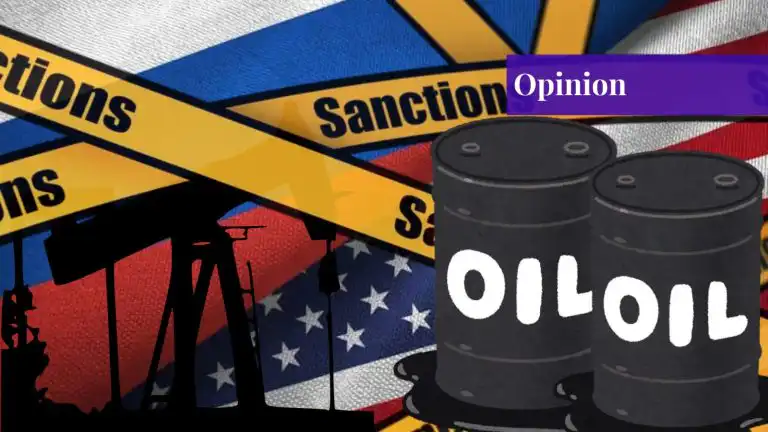
The contradiction is the story. The announcement came despite years of sanctions, the latest of which, announced only last month, targeted buyers of Russian oil. A government cannot punish a customer on Monday and become one on Friday without teaching every observer something about how seriously the first act was meant.

India has noticed. Analysts there say New Delhi could now question the American argument that Russian energy purchases fund the war in Ukraine, given Washington’s own decision to allow the imports. The licence is temporary, and the sanctions law with its tariff threat against large buyers of Russian oil remains in force. Buyers are being asked to follow a rule; its author is bending. Expect them to remember that.
Moscow, meanwhile, reads the deal as a win and says so. Deputy Prime Minister Alexander Novak reportedly framed it as a boost to the economy: more sales mean more production, more refining and more tax revenue for the state budget. That candour matters. The money is the point, and Russia does not hide it.
Would it even work? Doubt is warranted. One analyst quoted by Al Jazeera was unsure the licence would bring in enough volume to move American diesel prices. The announced volumes are modest against a vast national market, and the license expires in April. The political cost is paid in full, but the relief may arrive partially and late.
That cost is already visible. Senator Chuck Schumer called it a “filthy deal” that aids a Putin he accuses of helping Iranians target American troops. Other Democrats called it a desperate escape from the consequences of the Iran war. Partisan, yes. But the underlying question is not partisan: what does a sanctions threat mean once its sender has shown it can be traded for lower fuel prices?
The paradigm shift here is quiet but real. For four years, the working assumption was that Russian energy was a moral and strategic exclusion zone, to be priced down, capped, and starved. This week, the exclusion became a variable. Energy security has outranked pressure on Moscow, and a domestic calendar has outranked an alliance’s. Once that ordering is visible, it cannot be unseen by Kyiv, Brussels, Delhi or the Kremlin.
None of this means the decision was indefensible. Leaders face real shortages and real voters. But a government that takes the Russian barrel should be honest that sanctions were always a bargaining position rather than a principle. The honest course is to say so, publish the terms, and tell allies what the next exception will cost them.
If you want to submit your articles and/or research papers, please visit the Submissions page.
To stay updated with the latest jobs, CSS news, internships, scholarships, and current affairs articles, join our Community Forum!
Find our FREE quizzes and MCQs here!
The views and opinions expressed in this article/paper are the author’s own and do not necessarily reflect the editorial position of Paradigm Shift.

Abrar Hashmi is associated with the Institute of Regional Studies, Islamabad. He is also a student of international relations at Government College University, Lahore.