
Introduction
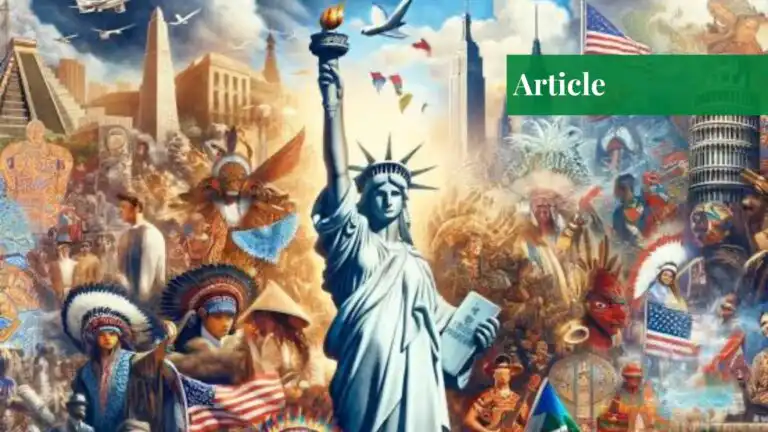
Various forms of power exist in our interconnected world. The traditional pillars of influence have always been military and economic dominance, but another force is at play: soft power. Soft power was the term invented by Professor Joseph Nye of Harvard University to mean the ability to modify global perceptions as well as behavior through co-option instead of coercion. The American Dream, which implies freedom, opportunity, and success for all individuals, is central to soft power.
This article will examine what constitutes soft power and how the American Dream has shaped the world. The term “soft power” originated from Nye’s book Bound to Lead: The Changing Nature of American Power in 1990. Nye expanded on this idea in his later work, “Soft Power: The Means to Success in World Politics,” published in 2004. In contrast to hard power, which depends on military prowess or economic might, soft power emphasizes attraction and persuasion capabilities. It aims to alter other people’s preferences using cultural political values and foreign policy.
Understanding the Components of Soft Power
Culture and Soft Power
Numerous components (culture, political values, and foreign policies) combine harmoniously to create influence and attraction, which are parts of soft powers. Culture is an important tool for exercising soft powers. This includes highbrow culture, such as literature, art, or classical music, and lowbrow culture, such as movies, TV shows, pop music, or fashion, among others. Through Hollywood films, television programs, and popular music, America has been able to capture audiences internationally, hence contributing to her soft powers.
Exporting American culture is a powerful aspect of its capability for exerting a form of “soft” or cultural imperialism. Hollywood still maintains its supremacy over the global entertainment industry, with films achieving not only commercial success but also promoting American ideals and principles (the idea of the American Dream). Similarly, television programs have attracted various audiences, thereby embedding global standardized American cultural norms and values into them.
One of the ways Hollywood has managed to be a cultural hegemony is through its ability to exercise soft power. American movies often depict and propagate American values, lifestyles, and ideals, thus shaping the world’s perceptions about it. This results in a situation where there is marginalization of local cultures and ultimately homogenization of world cinema. Critics claim that Hollywood might stereotype certain cultures or be biased, perpetuating misunderstanding as well as cultural imperialism.
Politics and Soft Power
Democratic principles are fundamental to the United States and these form an important aspect of its soft power profile. Democracy is one of the major political values that define America, among other concepts such as rule by law or transparency. The US therefore projects its own democratic governance together with human rights accountability onto the international stage, influencing how other nations perceive themselves.
The cornerstone of the American political value system is democracy; hence, the USA consistently promotes democratic governance as well as free and fair elections. Thus, by promoting democracy, the US acts as a role model for countries aspiring to establish their democratic institutions or consolidate weak ones. Another political value that shapes America’s soft power is the rule of law.
Upholding the rule of law guarantees individuals, including those in authority, are submitted to and answerable to the law. This dedication to the rule of law has resulted in trust, stability, and respect for legal systems, hence contributing to America’s influence on global affairs. Transparency in governance also plays a role in building soft power for the United States. A key focus is laid on having open, accountable institutions with effective public participation and anti-corruption measures.
Government transparency makes governance more transparent, enhances the government’s credibility, and promotes citizens’ participation in administration. Sometimes, the United States puts its national interest before making democracy better. The US is accused of having a history of backing up autocratic regimes as long as they are serving its strategic or economic interests. This kind of double standard in promoting democratic values might obviate the United States from being considered a serious global proponent of democracy.
Foreign Policy as a Component of Soft Power
The exercise of soft power requires diplomacy, development aid, and global leadership. The USA keeps ties with other countries by engaging in diplomatic processes such as peacekeeping missions and participating in international organizations. Development aid and humanitarian assistance remain fundamental mechanisms through which America shows commitment to improving the lives of people across the globe.
The US provides foreign aid to many poor nations while actively participating in world affairs, thereby projecting its superpower status that fosters positive relationships with other states. United States serves as an important intermediary between Israel and Egypt, evidenced by high-level diplomacy that was observed during the Camp David Accords where the US mediation led to a peace treaty between Egypt and Israel.
Making sure that there is goodwill among future leaders globally is what cultural exchange initiatives under public diplomacy allow for in the US. Development aid and humanitarian assistance are essential for showing how much attention the USA pays to global welfare issues. Giving grants and expertise together with other resources via agencies like USAID, the US aims to enhance economic growth, improve medical care provision systems, and advance education standards among developing states. These principles attract people toward the American Dream.
In addition to contributing to global governance and stability through multilateral interactions, America has been involved in establishing several global institutions over time. Participation in international agreements related to climate change or trade shows that the US takes part in addressing different aspects of the environment collaboratively.
However, some criticisms have been raised regarding America’s use of foreign policy soft power. There is often hypocrisy on the part of the Americans whenever they are seen to be going against their own principles. For example, the support of despotic governments that promote democracy can be equated to double standards. The Iraq War is an example of unilateral action that has sometimes dented America’s image and strained its relations with its allies, thereby undermining its soft power.
The American Dream as a Marketing Tool
The essence of soft power is the American Dream, a phrase that has been widely cherished globally. It represents concepts such as personal motivation, hard work, and determination. In addition, it symbolizes the core values of United States democracy, including freedom and equal rights in society.
The term “American Dream” was first used by James Truslow Adams in his 1931 book “The Epic of America.” Adams described it as:
“That dream of a land in which life should be better and richer and fuller for everyone, with opportunity for each according to ability or achievement.”
The philosophy behind this notion traces back to the US foundational documents like the Declaration of Independence and the Constitution with their emphasis on individual freedoms and liberties. Over many years now, the world has had a unique understanding of life; its perception has altered since Americans introduced the American Dream.
American literature, film, and pop culture have constantly told the story of the American Dream, as it has become an essential theme. It has created a national identity and motivation for millions around the world. From F. Scott Fitzgerald’s writings to Hollywood films that became the pinnacle of great movies, the American Dream captured generations’ imagination, hence being instrumental in soft power projection.
The United States has been a destination for people across the globe because of the promise that is associated with the American Dream. Immigrants have always gone to America in search of greener pastures. These immigrants have brought talent, innovation, and diverse perspectives into the country, thus contributing significantly to its overall economic growth and technological development.
The commitment of the United States toward promoting democracy and human rights globally is driven by the American ideals of the American Dream. The US has played an important role in promoting democratic governance and fighting for freedom and equality throughout the entire globe. By aligning its foreign policies with its interpretations of what constitutes a better life underlined by the principles related to the American dream, the USA managed to project its soft power, thereby shaping global politics.
Conclusion
It can be deduced that soft power is extremely important in shaping global mindsets and attitudes. The American Dream is also instrumental in projecting America’s soft power since it contains the ideals of freedom, opportunity, and success that are applicable globally. The international stage has been greatly affected by the American Dream through things like culture, political values, and foreign policies.
Most importantly, Hollywood films and television programs have allowed America to reach audiences worldwide with its ideals and principles. The challenge, however, comes with cultural imperialism accusations and stereotypes. Soft power attributes such as democracy, rule of law, and transparency form part of America’s profile. The United States supports democratic governance through promoting human rights which makes other countries follow suit, although some people have criticized their double standards.
Lastly, it can be stated that the American Dream has been pivotal regarding soft power thrusts on a global scale. Its cultural, economic, and political impact has made the USA a major player in the international arena, influencing opinions all over the world.
If you want to submit your articles and/or research papers, please check the Submissions page.
The views and opinions expressed in this article/paper are the author’s own and do not necessarily reflect the editorial position of Paradigm Shift.

Minahil Khalid is a student of M.Phil International Relations at Kinnaird College for Women University, Lahore. Her research interests revolve around global political issues and security studies.