
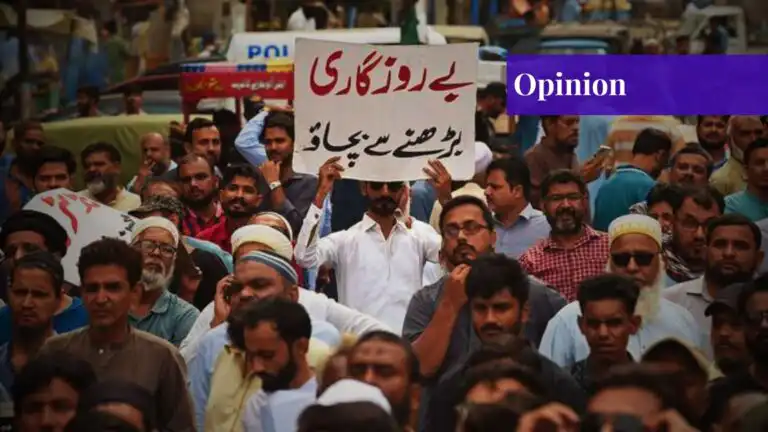

Pakistan is a youthful state, too youthful. Over two-thirds of Pakistanis are less than 30, and about two in seven are 15-29, and this population demographic window of opportunity can either drive a century of growth or a decade of social and political turmoil. The jobs will be the difference: when the nation is unable to turn its youth bulge into productive work, the economic and security effects will be far-reaching and extensive.
Official series would be less frightening at first sight: modeled ILO/World Bank indicators of youth unemployment (middle-aged 15-24) would show single to low double-digit rates (around 9-10% according to recent series). But headline unemployment is deceptive because a very large proportion of 15-29-year-olds are in neither education, employment nor training (NEET), and even those who are employed are trapped in informal, low-paid and precarious work. The hidden weaknesses are more important in terms of stability than the big figure.
Why the contradiction? Since headline unemployment only includes individuals seeking employment, it overlooks millions who no longer seek employment, now participate in casual or unpaid labor, or remain in low-productivity family work. According to labor force surveys, large numbers of young Pakistanis, particularly women, are not involved in the labor market at all: the participation of women in the labor force in Pakistan is one of the lowest in the region, which only weakens the productive role of half of the population, aggravating the NEET problem. The outcome is a high number of underemployed youth with hopes and few opportunities.
This is an economic issue, but it is also a strategic issue. Youths who are economically marginalized are at greater risk of poverty, forced migration, joining criminal or extremist networks, and instability in the city. The issue of climate disasters has further increased the vulnerability: according to the World Bank Post-Disaster Needs Assessment of the 2022 floods, tens of billions of dollars of damage and the relapse of millions of people into poverty, including small businesses and local job opportunities, were caused. In the absence of timely, properly designed policy reactions, shocks transform the otherwise employable youth into long-term economic casualties.
What should be done is practical and urgent. I propose three mutually reinforcing, time-bound policy priorities to reduce the risk of a social and political time bomb.
- Establish youth employment as a national strategic infrastructure: To create a ring-fenced Youth Employment Fund (YE-Fund), Pakistan should consider demand-based vocational and digital skills, wage co-financing, and subsidized first-time hires at SMEs, as well as highly focused microfinance to youth entrepreneurs in the most impacted provinces. The YE-Fund is to work with such clear performance indicators (placement rates, six- and twelve-month job retention) and be safeguarded in the budget to avoid distraction in times of fiscal pressure.
- Associate short-run stimulus with medium-run structural change: Post-disaster public works following floods and shocks must be fashioned to be labor-intensive and skills-building, which may absorb the youths as they mend the local infrastructure (rural roads, irrigation, and flood defenses). The programs have the benefit of instant revenue, constructing marketable skills, and the possibility of reversing workforce poverty through reduced backward slippage. Such schemes should be co-financed by donors and multilateral partners who are already funding reconstruction, provided that they are transparently targeted and include local labor. The 2022 PDNA offers a platform for financing and how reconstruction could be employed to generate millions of short-term jobs, which, with suitable design, would convert to long-term employment.
- Bridge the gender gap through structural remunerations: Pakistan has low rates of labor-force participation by women, compared to the regional levels; even small increases would boost the labor force and increase the resilience of households. The effective policy instruments are subsidized childcare, female and safer transport, apprenticeships in flourishing sectors (medical care, education, and digital services) that are specifically targeted to women, and subsidies to companies that employ and keep women. The spatial focus of the interventions must be on the provinces and districts where NEET is the most prevalent and the involvement of women is the least.
Coordination between finance and planning, labor and education ministries, as well as between the provincial governments and donor partners, will be vital. There are already practical models, such as youth guarantee schemes and employer-led apprenticeships with wage subsidies have been introduced in various middle-income countries, which means that Pakistan should borrow effective practices and not begin afresh. Political will, disciplined implementation, and transparent evaluation are what is most desired.
Measurement matters. Sustained employment (6 to 12 months), informal to formal work transitions, NEET decreases among individuals aged 15-29 years old, and gendered outcomes should be used in measuring success. Regular and open labor-market information (quarterly reports) and open dashboards will allow correctional policy response.
The price of doing nothing is great: more poverty, more migration pressure, more urban slums, loss of social trust – these consequences narrow the domestic policy space and make foreign policy harder. By being timely in action, ring-fencing resources, securing the vulnerable following shocks, and focusing on inclusive labor absorption, policy-makers will be able to resource Pakistan to transform the demographic burden into a strategic asset.
The rationale is simple: a nation that provides decent opportunities to young people uses their energy and productivity to experience growth; a nation that allows its young people to become lazy pays with insecurity, loss of productivity, and the inability to maintain state security. The option is that of Pakistan–and there is not much time to use it.
If you want to submit your articles and/or research papers, please visit the Submissions page.
To stay updated with the latest jobs, CSS news, internships, scholarships, and current affairs articles, join our Community Forum!
The views and opinions expressed in this article/paper are the author’s own and do not necessarily reflect the editorial position of Paradigm Shift.