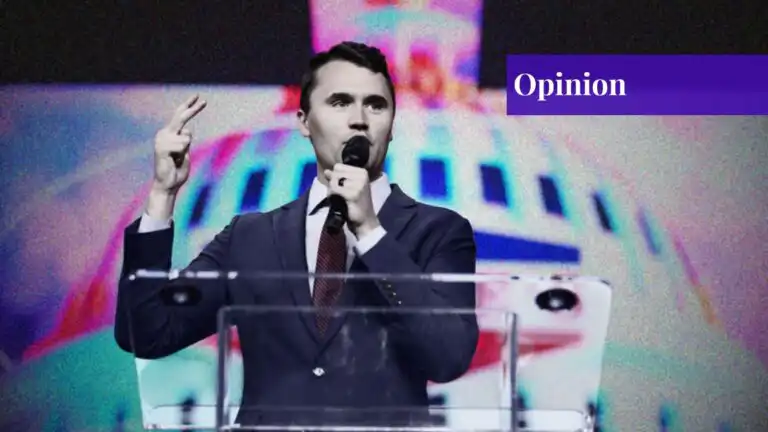
On 10th September, 2025, U.S.-based conservative activist Charlie Kirk was shot fatally during a college debate at Utah State University. While the event has reignited the debate around gun laws in the country, it has more significantly exposed the fragile state of free speech in the West. Kirk was known as a staunch First Amendment advocate, even declaring that “hate speech… is protected by the First Amendment,” and his rise to fame includes open debating with students at his “Prove Me Wrong” campus events. Yet his assassination has sparked outrage on all avenues; Kirk supporters have marshaled politicians and students in his name, while his critics, who once lambasted the anti‐immigrant, anti‐Muslim rhetoric that Kirk openly boasted, have openly celebrated his death or criticized his legacy. This case thus offers an interesting look into the reality of free speech in the West. It has opened up as a stark test of whether Western democracies truly honor free expression, or whether they rely on social pressures and unofficial controls to muzzle dissent.
Legal Analysis: How the West Sees Free Speech
From a legal perspective, Western nations have always championed free speech. In the U.S., the First Amendment forbids Congress from curtailing free speech, as it famously protects “ugly” and “gross” speech of all kinds. In contrast to this, Europe and other democracies expressly recognize limits. Article 10 of the European Convention on Human Rights explicitly allows for placing restrictions on expression for security, order, or protecting others’ rights. Many EU countries also go to the extent of criminalizing public incitement to hatred against protected classes. Pakistan’s case is also similar to that of Europe. Article 19 of the Constitution of Pakistan promises freedom of speech to its citizens, subject to ‘reasonable restrictions’ that may be imposed by law.
Even in the U.S., common law and statutes have carved out exceptions. Any speech that incites imminent violence or constitutes a true threat is not protected. But U.S. courts have broadly upheld precedents of political expression. For example, a UCLA law professor notes that this is “likely to further confuse people, whether citizens or law enforcement or others, about what’s protected and what’s not protected”. This has established that most Western systems promise a ‘near-total’ free speech. But this also opens questions about whether para-legal forces have become the de facto censors for free speech in the West.
Soft Censorship: Society’s Influence on Speech
In practice, many limits on speech are imposed not through laws or courts, but through social and institutional pressure. A prime example of this would be the wave of public condemnation and punishment after Kirk’s death. Within hours, social media and Republican media outlets were publishing lists of people who made “insensitive” comments about the assassination, demanding punitive action. For example, U.S. Vice‐President J.D. Vance urged supporters to “call” the employers of anyone “celebrating Charlie’s murder.” Conservative officials went to the extent of threatening to revoke the licenses of professionals he accused of sympathizing with the killing.
These campaigns have real bite. So far, dozens of educators and public employees nationwide have been suspended or fired for social‐media posts about Kirk’s death. The use of freedom of expression is being employed as a tool to silence opinions and curb dissent. One former teacher’s complaint argued that her Facebook post criticizing Kirk’s gun‐rights views was mere hyperbole, not a true threat, but it was used to frame her opinion.
These episodes illustrate social or “soft” censorship in action. Pakistan is no stranger to this phenomenon. There have been several cases where traditional media censorship has been used to restrict coverage. Whether it is silencing opinions on sensitive issues of opposition parties or blocking websites by labeling them as anti-state, Pakistan has its own history with soft censorship. Critics argue that it amounts to curtailing freedom of expression, because out-of-favor voices are deplatformed and disfavoured without due process.
Hate Speech and “Cancel Culture”
This naming‐and‐shaming culture blurs with what critics call “cancel culture.” Critics on the right have also framed cancel culture as an extreme phenomenon, with Trump calling it “the very definition of totalitarianism,” accusing leftists of “driving people from their jobs, shaming dissenters.” The Kirk saga has also resurfaced a hot debate over what counts as protected speech versus punishable “hate speech.” While some conservatives argue that any denial or mockery of an assassination is beyond the pale, others have invoked Kirk’s own words to show how disguising hate speech as free speech shows the double standard. Kirk himself was no stranger to such controversies. He frequently attacked Islam online, once writing that “Islam is the sword the left is using to slit the throat of America”, and these opinions remained protected despite their hatemongering nature.
The observers on the outside have, however, observed the irony this situation has uncovered. Jenin Younes, an official of the Arab American Anti-Discrimination Committee, noted that the Trump allies pushing censorship were “the same people… who were railing against cancel culture… a few years ago, when it was the left doing it”. Many on the left have, in fact, been censured by right‐leaning institutions.
Days after Kirk’s death, Fox News pulled Jimmy Kimmel’s late‐night show over his monologue about Kirk’s suspected killer. This reveals a culture of inconsistency, where the right to free speech is very conveniently weaponized for partisan or ideological motives. Both sides claim to defend free speech while accusing the other of hidden censorship, revealing flaws in the laws of free speech itself. The Kirk case illustrates how quickly battle lines can shift, where speech perceived as radical on one side is branded hate, while defenders of speech accuse their opponents of hypocrisy or silencing.
Paragovernmental Powers and the Deep State
A deeper analysis of the debate around free speech in the West reveals how more opaque forces can influence who gets heard. Intelligence networks, security agencies, and government partnerships with tech companies constitute the “paragovernment” that quietly shapes discourse. Even with the Kirk case, the Pentagon publicly announced plans to “address” any service members who mocked Kirk on social media, with the State Department warning that it would revoke visas for foreigners celebrating the assassination. These moves have nothing to do with legally recognized crime, yet they signal a readiness to mobilize federal power against disfavoured expression. Some justified this as protecting public order, but critics see it as the government picking winners and losers in political speech.
Throughout history, the U.S. has been no stranger to conducting mass surveillance on digital communications. Former NSA contractor Edward Snowden’s revelations in 2013 showed that the U.S. ran sweeping Internet monitoring programs collecting data from within and outside the country. Similarly, there has been evidence of the U.S. government collecting and purchasing data for extensive surveillance. This also includes Dragnet Surveillance authorized under the laws, like Section 702 of FISA and Executive Order 12333, which allows bulk data collection without warrants or notice. Sensitive personal information of American citizens is collected, including political, religious, and demographic details, which undermines the basic concept of free speech and privacy. Ultimately, speech policing by powerful agencies, be it surveillance dragnets or high‐level edicts, poses a deeper threat; it acts as censorship without any court ever being involved.
Conclusion:
Charlie Kirk’s assassination has uncovered a paradox of Western free speech; Freedom of Expression is legally safeguarded, yet often constrained by values, culture, and deeper political motives. The result is a marketplace full of ideas where everyone fears the consequences of aggressive negotiating. Ultimately, the truth of West’s free speech promise will only be upheld if citizens, institutions, and the government itself resist the shortcut of “canceling” disfavored voices. Suppressing dissent in the name of protecting freedom of speech risks making democratic regimes resemble the very authoritarian systems they condemn. The solution to this lies in developing a political culture that tolerates dissent and enforces protections evenly, regardless of ideology. In the words of a U.S. advocate, free speech is “the check on government control,” and anything less undermines the very foundations of democracy.
If you want to submit your articles and/or research papers, please visit the Submissions page.
To stay updated with the latest jobs, CSS news, internships, scholarships, and current affairs articles, join our Community Forum!
The views and opinions expressed in this article/paper are the author’s own and do not necessarily reflect the editorial position of Paradigm Shift.
Zainab Kashif is a bachelor's student of public administration at NUST, Islamabad. She is passionate about geopolitics and policy preparedness.