Introduction
Contemplating peace amidst the chaos of war is a rare trait that a person holds even in the increasing gloom and aggressive stance adopted by leaders. The world, as it stands now, is far from realizing peace within the current order. War only causes suffering, death, and pain, yet it also offers a new way to see things differently. Heraclitus, a Greek philosopher, once said, “War is the father of all things.” Initially, it may seem that Heraclitus praises war, as it dominates the scene of conflict, but a closer look, if done properly, can provide a complex interpretation of this statement. Tal Gur introduces a new perspective by recognizing the transformative power of conflict, which can lead to both negative and positive changes, depending on how one views the conflict. Moreover, human suffering through violence cannot be overlooked, but the pursuit of peaceful solutions should always be maintained.
In today’s time, there is growing uncertainty that prevails in the world over peaceful approaches. The challenges for conflict resolvers, mediators, and negotiators have multiplied in attaining peace. One major challenge is that the evolving post-truth culture, which conflates truth and lies, makes it difficult to debunk what’s real and what’s fake. Peace nowadays is just like finding a needle in a haystack. This idiom perfectly fits in the context of present circumstances, as it is extremely hard to find peace in the environment that we see the world is surrounded by. The new kind of battle being waged in the digital domain, which has taken shape over the years since 2020, has blurred the lines between reality and imagination.
The Brookings’ article on the evolution of disinformation in 2020 points out that even if the authorities try to play a cat-and-mouse game to catch the operatives involved in disinformation campaigns, they somehow manage to evade them. As the operatives in the digital space have employed tactics to leave no footprint by enhancing their sophisticated abilities through synergizing the use of AI, which is quite alarming. The offensive and defensive adaptability from both sides is being exercised, but the growing disinformation campaigns still pose a threat. Hence, the era of post-truth is upon us, where the battlefield is now in the palm of our hands, through which a new kind of war is being waged, and it keeps on evolving with new dynamics.
The role of media cannot be ignored today, as it plays a pivotal role in developing narratives. The narratives can either offer peace or disseminate hate, fueling further chaos in the already divided world. In times of political and social crises, the media becomes a battleground. The battle for shaping narratives, influencing perception, policy decisions, and international viewpoints is sometimes used to push the story in one’s own favor. The media’s role is often critical in either stabilizing or destabilizing a country’s strategic environment. A key example that comes to mind is the recent India-Pakistan conflict, which happened in May 2025, and is also used as a case study in this article for readers to think about in a different way.
During the four-day conflict, what really stands out is the war of narrative that improved the image of Pakistan internationally as well as domestically. This is discussed later in the article, where an analysis is drawn. Furthermore, concerns rise over the spread of misinformation and disinformation, which can distort facts, deepen societal divisions, and undermine trust in institutions. These issues tend to intensify during crises when urgent events and emotionally charged audiences converge. Although digital media, print, and social platforms can be used constructively, their negative impacts must be recognized.
Technological advancements and broad media access are usually beneficial; however, they can also present significant risks. The risks associated with the digital space go far beyond a wide spectrum, intersecting and piercing through our daily and professional lives. Keeping the risk factors associated with the digital domain in mind, the question needs to be asked whether peace can be achieved in South Asia while having a clear understanding that the war of narrative in the post-truth age dominates and peace seems elusive, especially when it comes to India and Pakistan.
This article explores the threat that prevails in South Asia, where the recent India and Pakistan conflict in May 2025 blurred the line between authentic information and fabricated lies generated through AI or other means. Furthermore, during the fog of war, the battle over narratives was being waged in the digital, cyber, and social domains, making the peace efforts more elusive than ever. Moreover, this article also sheds light on the grey area, which is present amidst the chaos. Navigating through it is an art in itself, as the post-truth environment keeps developing.
Super Spreaders Navigating the Post-truth Era
From hybrid warfare tactics to internal disinformation efforts, every country’s narrative faces mounting threats. The media, whether traditional or digital, has the power to either promote unity or intensify divisions, particularly amid political instability, social conflicts, or external challenges. Adversaries exploit media channels to disrupt national cohesion and shape political discourse. Eggel and Mallard, in their article Narrative Warfare in the Digital Age, observe that “The media landscape, now made up of billions of blogs and social media pages, has entered a state of growing fragmentation never witnessed before.” The analysis suggests that now the digital space is only left for more reach, views, and likes, which has made professional journalism questionable.
The “super-spreaders” is a term used to describe individuals who disseminate fabricated news, spearhead misinformation and disinformation campaigns. They do not verify the content they share, making the digital environment more vulnerable to the consumption of fake news. Moreover, today’s age of alt-truth, or more specifically, post-truth, where one cannot make a clear distinction between lies and truth, has led the narrative warfare to a different realm. This is alarming in the sense that distinguishing truth from fabricated lies has become a new norm, and social media is inundated with posts of this nature.
Eggel and Mallard’s analysis is on point, as millions of users are now using social media platforms for projecting their interests, some propagating false narratives while others are trying to explore the truth amid the upheaval in the digital space. This new age of information warfare is disturbing, and if not properly checked, could be a potential battlefield for various stakeholders. There would be no room to unearth the truth amid the growing lies disseminated by super-spreaders, making it even more difficult to exercise sound judgment amid the chaos.
The trend is quite obvious in the present global order, where the stakeholders in disseminating misinformation or running a disinformation campaign have multiplied, and where a multitude of actors are involved. As is evident from the discussion, information warfare is a global concern nurtured only by the new post-truth dilemma of fabricated and systemic disinformation. In this backdrop, the war of competing narratives between India and Pakistan cannot be ignored, where both sides have tried their best to push their narrative.
The Battle of Narrative During the India-Pakistan Conflict 2025: International Media Analysis
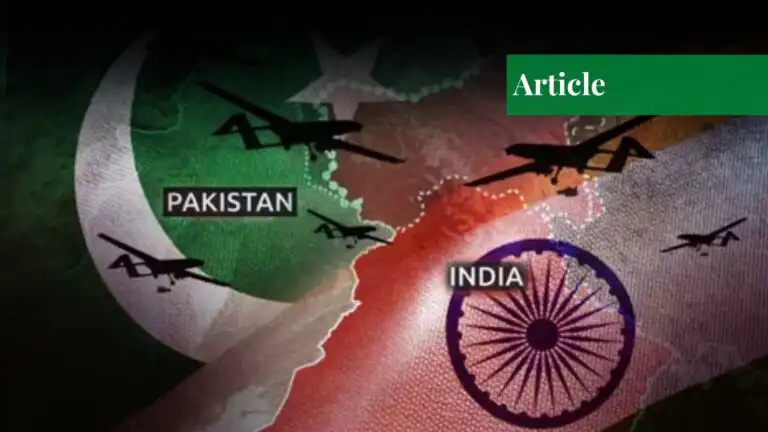
On 22 April 2025, terrorists attacked innocent tourists in Pahalgam, Indian-occupied Kashmir, killing 26. Pakistan was blamed without solid proof. Pakistan, being a responsible nation, condemned the attack and called for an impartial investigation. In May 2025, long-time rivals India and Pakistan had a military clash that lasted for four days. From missile exchanges to border clashes and the usage of sophisticated drones, it pushed both countries to the brink of full-scale war. The chance of an all-out war was averted when a timely mediation effort by the United States (US) helped de-escalate the situation and brokered an immediate ceasefire.
US Secretary of State Marco Rubio said that the ceasefire was achieved after “extensive negotiations.” It would not be wrong to give credit to the US for preventing a potential catastrophe in South Asia. The conflict could have easily spiraled out of control. Regarding the conflict, the international news agency, TRT Global, also reported on the air battle between the two countries. They described it as “the largest dogfight since World War II.”
Notably, the conflict was not only waged on the borders and in the skies. It extended into digital and cyberspace, with both sides actively shaping and controlling their narratives. Pakistan’s response was grounded in truth and facts, with a measured tone. On the other hand, India’s narrative was built on fabrications and distorted facts. Moreover, a promotion of an aggressive, nationalist stance was observed through their media channels during live coverage. The international media observing the digital landscape analyzed what was being reported. The news agency TRT Global examined a coordinated disinformation campaign that was streamed online, favoring the Indian perspective during the conflict. According to TRT Global, a coordinated propaganda and misinformation campaign through various media outlets was observed.
Notably, news agencies like DNA, Zee News, Aaj Tak, India Today, and ABP News promoted a strategic narrative that was far from the truth. False television reports, like “Islamabad was occupied and Karachi Port was attacked” and “strikes in Lahore and Rawalpindi,” were shown as breaking news. There was also a false report of the arrest of Pakistan’s army chief, General Asim Munir, who is currently a field marshal. A volley of unverified breaking news was aired during the conflict. In further analysis, TRT World also noted that some journalists apologized for sharing unverified reports during the conflict. While in other instances, some outlets in fact deleted their posts without explanation. A trend was clearly observed as these stories were driven by systematic fabrication aligned with a nationalist agenda and government stance. This indicates a serious concern that needs the utmost attention globally for a holistic approach to debunk narratives and promote quality journalism.
Junaid Kathju, writing for Al Jazeera Journalism Review, analyzed how Indian media fueled panic and spread disinformation, highlighting their inundation with fake news and celebrating claims about Operation Sindoor. The Indian media’s narrative caused national shame and led the public to question the government’s transparency about losses. On the Indian side, there were ethical breaches in the media domain, which the citizens have raised concerns about. Furthermore, Hannah Ellis-Petersen of The Guardian pointed out that both India and Pakistan used digital platforms to spread disinformation, creating a blurred line between truth and falsehood.
Circulating recycled AI images, video game simulations, and old catastrophic videos, both sides engaged in deliberate “information warfare.” During the ongoing conflict, AI-generated material was widely shared to celebrate victory over the offensive undertaken by both rival states. These tactics raise questions about the extent to which states deceive the world during conflicts, a complex issue with no simple answer. According to Ellis, analysts believe that such approaches are new ways to tackle threats and also gain the upper hand in the digital frontier in warfare, where tactical misinformation is used for propaganda to manipulate the narrative and escalate tensions. In the aftermath of the conflict, both India and Pakistan claimed victory after the declaration of a ceasefire.
Balancing Between Truth and Lies: The Predicament of the Grey Zone Effect
Can the fog of war in the present era of post-truth, where narratives are shared without being properly verified, be accepted as a reality? Since May 2025, Pakistani media have commendably navigated the complex grey zone with responsible journalism. A recent analysis shows that the ongoing conflict of competing narratives continues. Threats persist in the digital space while the exchanges of counter-narratives have become routine. In this backdrop, passing on Pakistan’s perspective effectively is difficult. There are many reasons, but mainly due to the absence of a proper communication framework. Hence, the threats are still there in the grey zone. Navigating through these areas in the post-truth environment is challenging.
Pakistan has always taken a defensive approach in tackling this realm. It is clearly obvious that propaganda and mistrust increase tensions and lead to regional instability. This creates conditions for escalation in South Asia. The blurring between truth and lie creates uncertainty, making it hard to distinguish reality from deception. The analysis further suggests that a strategic plan and a platform for reflection and dialogue are required to make Pakistan’s media more resilient and responsible. There is no doubt that the recent conflict showed how responsibly Pakistan navigated, but there is always room for improvement. Moreover, a communication framework aligned with the strategic policy of the government of Pakistan has to be adapted to counter hostile narratives. Considering the recent India-Pakistan conflicts as a case study, a lot could be learned.
As a start, strong measures to counter misinformation are essential and the need of the hour. This cannot be done individually, but it is a collective effort where all stakeholders can be engaged. What should be done then? The manipulation of narratives remains a key concern. This is affecting young people not only in peacetime but also during local situations of political and social unrest. Reflection on our own local setting is also necessary. Furthermore, the rise of social media and AI has changed how narratives are shaped and the way we look at things. Now, public opinion is influenced by misinformation and polarization in society. Protecting the national narrative and rebuilding trust in institutions could be the way forward.
As discussed earlier, the establishment of a resilient media strategy is a priority. Here again, it is worth asking whether Pakistan needs a strategic narrative plan or whether we should wait to see what happens next. A lot needs to be done, as the conflict is far from over. The storm has passed for now, and waiting for the next one without preparation would be foolish on our part. Policymakers must establish a national strategy and direction by engaging all stakeholders from relevant sectors to develop an appropriate framework to effectively tackle the post-truth narrative challenges. Lastly, changing the overall strategy from a defensive to an offensive narrative approach is essential to tackle vulnerabilities within the digital space.
Conclusion
Peace in South Asia is achievable. In the context of India and Pakistan, it seems more elusive. There is a huge trust deficit that has grown over the past few years between the two nuclear-armed countries. There is an urgent need for international intervention between India and Pakistan to restore peace. US President Donald Trump offered to work closely with both India and Pakistan on the Kashmir solution. Pakistan has welcomed the offer, and the Ministry of Foreign Affairs appreciated the US president’s willingness to resolve the Kashmir issue.
War can be cancerous, and if it is not properly curtailed, then it spreads like wildfire. As mentioned earlier, the post-truth environment brings various challenges, and the most important one faced by peacebuilders, conflict resolvers, mediators, and negotiators is how to navigate amid chaos where narratives blur the line between truth and lies. Pierre Hazan, in his book “Negotiating with the Devil: Inside the World of Armed Conflict Mediation,” has considered post-truth as an enormous challenge for mediators. Controlling the narrative is now the new norm, and navigating through it can be challenging, but regional peace can only be attained through good intentions, sustainable partnerships, and growing together harmoniously. Coercive measures to contain one country against another do not bring a peaceful solution in the context of South Asia. War brings devastation and misery, and to begin with, let there be dialogue and a space to reflect on the future course for pathways to peace in South Asia.
If you want to submit your articles and/or research papers, please visit the Submissions page.
To stay updated with the latest jobs, CSS news, internships, scholarships, and current affairs articles, join our Community Forum!
The views and opinions expressed in this article/paper are the author’s own and do not necessarily reflect the editorial position of Paradigm Shift.

Nauman Gul is an IMI-qualified mediator and an International Mediation Campus (IMC) fellow. He has completed his master's in peace and conflict studies from the Centre for International Peace and Stability (CIPS) at the National University of Sciences & Technology (NUST). Presently, the writer is working at the Centre for Countering Terrorism and Violent Extremism Studies (CCTVE) at the Institute of Regional Studies (IRS), Islamabad. He can be reached through LinkedIn and via the following email: naumangul27@gmail.com,