Introduction
Washington’s demands in 2026 are no longer relevant to the officials in the Berlaymont in Brussels and the leaders of powerful countries in Asia, Africa, and Latin America. All of them are rather trying to navigate in the anarchic world where US power is declining rapidly. The center of geopolitical concern has moved from the Euro-Atlantic region to the Indo-Pacific region. Currently, we are at the turning point for a transition in the world order and are in the era of anarchy.
Human history has always witnessed a similar motif of balance of power for centuries. Empires climb to the pinnacle of power and glory, relish in their golden age, and eventually decline. They perpetuate tales of past glory to later generations. The decline of a hegemonic empire leads to a period of anarchy in the world order because such empires are the ones holding the world order, and when they weaken, the order dies with them. Emerging powers fill this vacuum and then start repeating the same process of “rise and fall” like their predecessors.
This realization has not been new. Ibn Khaldun, in his book Muqaddimah, discussed the existence of such phenomena and introduced the concept of Asabiyyah, also called “group solidarity” or “social cohesion.” He pointed out that groups that possess strong Asabiyyah will rise by dominating their rivals, whose Asabiyyah has weakened over time. Trump has been the catalyst that caused a loss of Asabiyyah in the US due to reasons such as the crackdown on illegal immigration, MAGA hate campaigns, and the dismantling of DEI initiatives.

Conversely, China is currently a rising power that has maintained its social cohesion, even if it is through authoritarian rule and massive surveillance mechanisms. Many reports have indicated a very high trust rate that Chinese citizens put in their institutions compared to many Western countries, which is also a result of the difference between Eastern and Western cultures and values. The West cherishes individual liberty, while the East tends to be more collectivist, with control, order, and stability, and strong social ties playing a major role in people’s lives.
Many scholars have also alluded to this phenomenon at one point or another, exploring “how” empires rise and “why” they fall. One amongst them, Sir John Glubb, has provided analysis on Assyria, Persia, Greece, the Roman Republic, the Roman Empire, the Arab Empire, the Mamluk Empire, the Ottoman Empire, the Spanish Empire, Romanov Russia, and the British Empire in his work “The Fate of Empires and Search for Survival.” Through analysis of all those empires, Glubb proposed an estimated 250-year cycle for their rise and fall. He divides the life of these empires into seven ages: the age of outburst, the age of conquest, the age of commerce, the age of affluence, the age of intellect, the age of decadence, and finally, the age of decline. The rise of American imperialism has been no exception and is now in its “age of decadence.”
Curiously, America is about to hit the 250th anniversary of its birth this year on July 4th, 2026, which seems to indicate that, indeed, the lifespan of a superpower is about to reach its end. In this article, I will attempt to explain the relative decline of the American-led world order, the foundations of its collapse, and its linkage to Donald Trump’s second term in office.
American Imperial Decline
The world was bipolar, divided between two great powers, the USA and the USSR, during the Cold War. It had since shifted to the unipolar order of the American-led liberal world order in the 1990s. The decline of American dominance began as early as the beginning of the 21st century, as most scholars agree. American invasions into Afghanistan and Iraq led to resentment in those populations and reduced both America’s political leverage and its financial resources, while the 2008 global financial crisis served to further solidify speculations about its weakening economic structure.
A pivotal point occurred in 2013 when President Xi Jinping came to power, unveiling China’s grand scheme of the Belt and Road Initiative, which greatly hastened the rise of a multipolar world and America’s loss of economic supremacy. In the same year, President Obama was unable to convince his allies to join an invasion of Syria despite his tough “red lines” proclamation. Eventually, a deal facilitated by Russia did manage to bring some practical results that highlighted America’s inability to impose a unipolar will unilaterally.
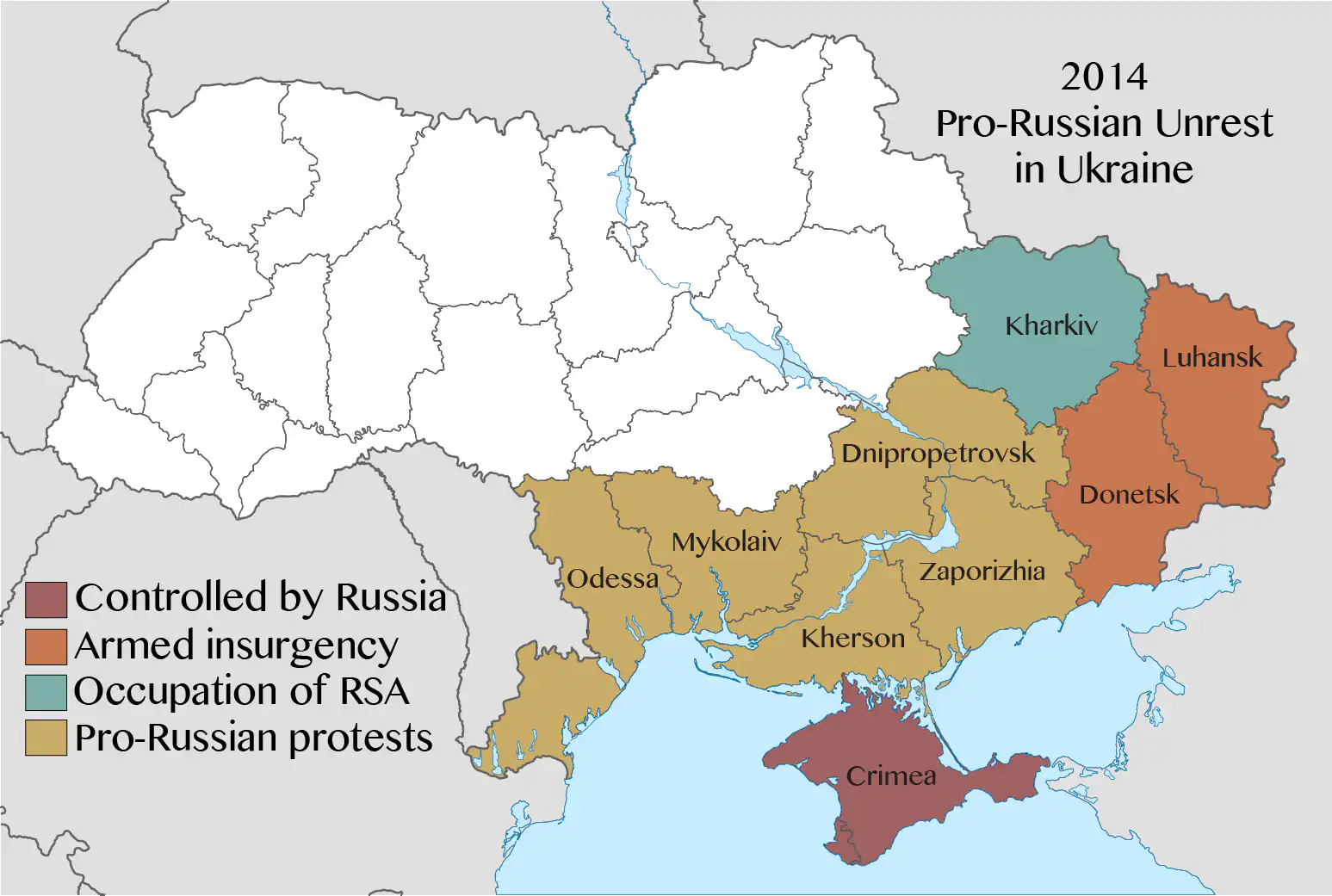
From 2013 onwards, both China and Russia have consolidated their power and formed a “No Limits Partnership” to challenge the United States on a global scale. Russia annexed Crimea in 2014, escalated conflict in Donetsk and Luhansk by backing separatist groups, and eventually invaded Ukraine in 2022. In contrast to America’s policy of invasions after WWII, China focused its entire efforts on gaining dominance in economic terms and raising its military power and prestige, epitomized in China’s Victory Day Parade in 2025. Organizations such as BRICS+ and the SCO serve as tools to further promote multipolar movement through increasing security, economic, and political cooperation among their members.
Trump and Foundations of American Hegemony
American military strength and alliances, the free market economy and dominance of the dollar, technological dominance and innovation, and American soft power due to cultural and ideological influence, as well as American control over international institutions, are the pillars holding the American hegemony in place. Deep political divisions, loss of social cohesion, American interventionism, overextension of its military power, rapid growth of China, revival of Russian influence on the world stage, ballooning sovereign debt, and challenges to the dollar from cryptocurrencies, the yuan, and discussion of a BRICS currency union are contributing to American imperial decline. Instead of remedying these trends, the policies of the second Trump administration accelerated American decline by making things worse.
Military Supremacy: From Strategic Reach to Overreach
It goes without saying that America still commands the world’s most powerful military, boasting an unmatched global reach with more than 750 military bases. It commands strong air, sea, and land capabilities; firm financial backing; state-of-the-art technologies; and an extended network of allies. However, sheer weapon power, combined with huge defense budgets, does not define a state’s power. Ally’s trust, institutional/moral legitimacy, the willingness of others to support your cause, and a sound strategy for the achievement of set goals are also defining variables. On these parameters, the policies and politics pursued by Trump’s administration were highly damaging.
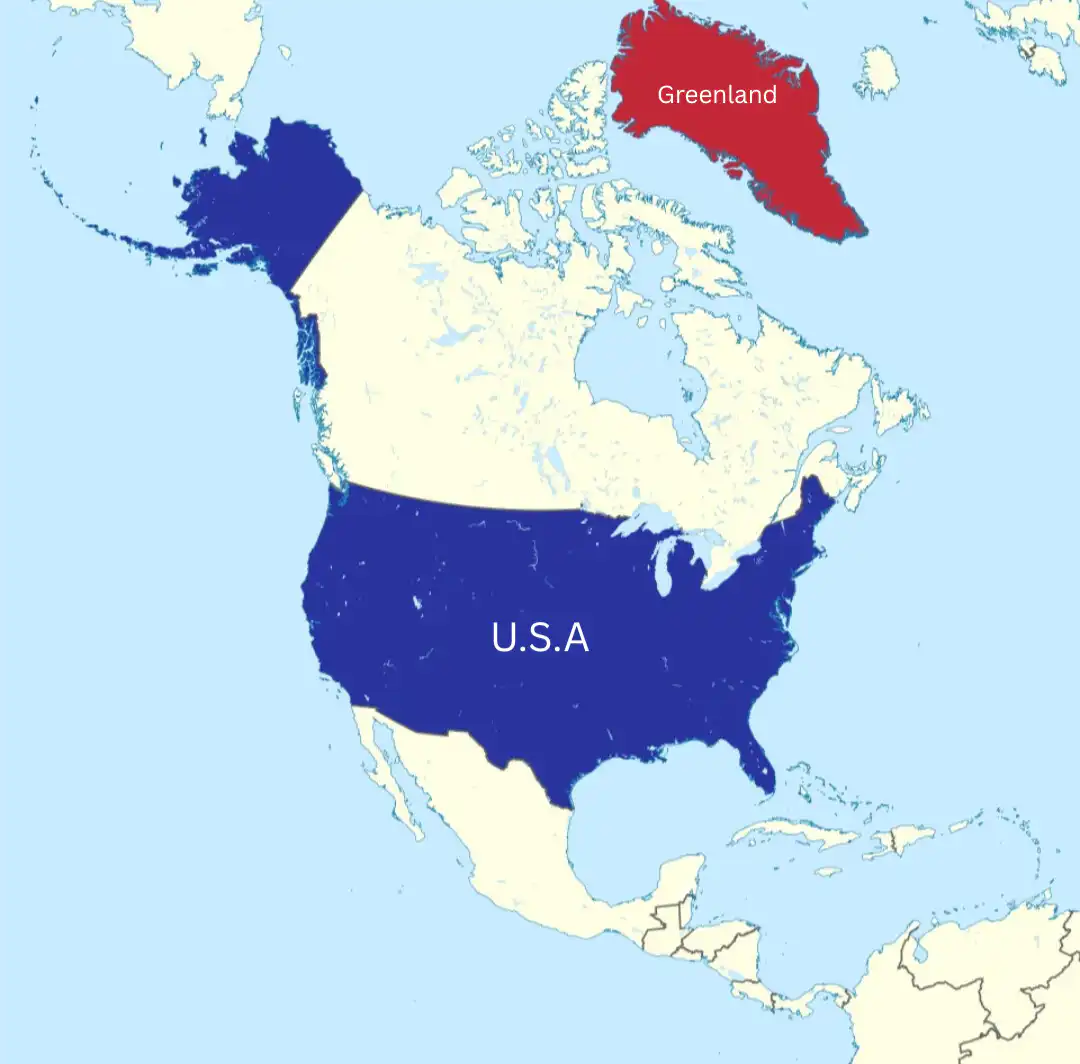
Upon taking office, Trump publicly threatened Europe multiple times with the potential annexation of Greenland, an autonomous territory within the Kingdom of Denmark. In February 2025, Trump confronted Ukrainian President Volodymyr Zelenskyy in an Oval Office meeting that was then followed by a brief cutting off of weapons and intelligence transfers to Ukraine. This move alarmed European allies greatly. On April 2, 2025, President Trump placed new trade tariffs against the EU and declared April 2 as “Liberation Day.” He then pushed his NATO allies further, urging them to spend 5% of their GDP on their military expenditures at the NATO summit in The Hague on June 25, 2025.
The disagreement between the US and its NATO partners became evident in the 2026 illegal war waged by the US and Israel against Iran. The airspace of Spain, Italy, and some other European countries was closed to US fighter jets, and their military bases are not allowed to be used against the invasion of Iran. In retaliation, Trump labeled NATO a “paper tiger.” He also complained against NATO allies that they are not helping the US on the issue of the reopening of the Strait of Hormuz. On social media, Trump has been regularly trolling leaders of the US ally states, including Mark Carney, Keir Starmer, Emmanuel Macron, Mette Frederiksen, Friedrich Merz, and others. EU leaders are currently working on a “strategic realignment” toward China and other Global South nations, which is shown in recent travels of the leaders of the EU countries to Beijing and New Delhi.
The Europeans have increased their spending on defense and are searching for “strategic autonomy” since they do not know if they can still count on American assurances in the next election cycle, crisis, or presidency. These European allies have historically joined the American order on the assumption that the United States will remain devoted to protecting and fostering them and their well-being. The weakened confidence is due to the truculent policies and unpredictable character of the Trump era. The more the Trump administration treats alliances as transactions and demands renegotiation of terms for dealings with each other, the less they serve as strong supports of an American world order.
It is maintained by critics that Iran posed no threat to the US and its interests at all, and in this war, the Trump administration failed to reach even a single strategic objective, despite having assassinated the past Supreme Leader of Iran, Ali Khamenei, and top Iranian officials, and lost hundreds of billions in the war. The Arab allies will surely be asking this question: How can the US safeguard their interests, sovereignty, and territorial integrity when it cannot secure its own bases from Iranian drones and missiles? The war exposed that the web of US bases in West Asia is there for the defense of Israel more than for the defense of Arabs.
The US military failed to provide open passage in the Strait of Hormuz. Not only has the world economy taken the blow, but the illusion that US military might has global reach has been torn apart as well. The sheer weight of American destructive capability is still intact, but the extent to which the US can win decisive battles on the field is in doubt. The Trump 2.0 regime not only damaged the image of American military power globally but also shattered the alliance system, which underwrote both American supremacy and global leadership.
Dollar Hegemony: From Global Trust to Financial Coercion
If the military superiority provided the United States with the hard power to retain its status as the sole superpower, the dollar hegemony and trustworthiness in global markets provided it with the financial backing for many years. The US dollar has been the global reserve, exchange, lending, and transaction medium for decades. This unique advantage enabled the US to exercise its leverage on other countries via layered sanctions and helped it to freeze the financial assets of Russia, Iran, Venezuela, etc. However, the U.S. has employed these pressure mechanisms for a long time, and that is backfiring now. Faced with the uncertain stability of the dollar, nations are turning to gold or other substitutes. The more the US uses finance as a weapon, the more the rest of the world seeks to distance itself from the dollar.
The Trump administration imposed protectionist measures, including tariffs and secondary sanctions on its allies and adversaries in an effort to protect US interests and defend American firms against “unfair” foreign competition. The fact that the dollar is used in the vast majority of global trade, reserves, and transactions, tariffs did not just impact American importers in terms of additional cost. It also affected the global supply chains and foreign currency values, as well as forced foreign exporters to reduce their dollar prices in order to be able to compete in the US market by accepting some tariff costs instead of transferring the whole costs to American consumers.
Since dollar dominance in global trade magnifies the damage suffered by countries due to American tariffs, it is understandable that these countries will be trying to reduce dollar dependence and perceive it as a weakness. This naturally has led to new currencies, like the yuan, and projects such as Project mBridge, a multi-central bank digital currency (CBDC) that can bypass the SWIFT system. This must alarm Washington, as it is only due to the dollar’s dominance that it does not default. Its debt-to-GDP ratios are colossal. April 2026’s national debt stands at over $39 trillion and is already at over 100% of GDP. As projected by the Congressional Budget Office (CBO), it may hit over 101% of GDP at the end of 2026 and climb over 120% by 2036.
Ray Dalio, the founder of Bridgewater Associates, aptly termed this a “debt death spiral” in which the US government sells off more and more debt to pay an annual interest bill of almost $1 trillion. In brief, Trump introduced tariffs around the world that, in turn, worked against him and sped up the already slow decline of the world away from American dependence, which certainly included the world’s reduced dependence on the dollar compared to the past. Trump 2.0 has come up with an inherent paradox. The US should be taking initiatives to maintain the perception of the dollar as a safe and credible currency so that its status as a reserve currency will be sustained, enabling it to pay its growing debt bills. However, the tariffs and the trade war launched by Trump proved otherwise.
Soft Power: Technological, Cultural, and Ideological Decline
For years, the United States was at the heart of technological innovation. It developed Silicon Valley, it manufactured the most advanced semiconductors, it developed the world’s leading digital platforms, and it established world standards in digital communications, business, and information systems. This led to an immense soft power of Washington in the contemporary world. While America still leads in the design of high-tech chips today with companies like Nvidia and Intel, it is no longer solely in control. Countries such as China, France, and the UAE are pumping vast amounts of cash into sovereign AI, cloud infrastructure, industrial automation, and data-processing areas to lessen their reliance on the US. The increasing industrial power of China, especially in industrial AI and robots, will become a further threat to American technological dominance.
America had long identified itself as the nexus of culture and ideology. It championed democracy, rule of law, education, Hollywood, citizenship, diversity, inclusivity, equity, multilateralism, gender equality, human rights, and freedom. America had labeled itself “the land of opportunity and freedom” to everyone of any race, ethnicity, religion, or identity. The rise of the MAGA movement and internal divisions and partisan differences have diminished that image, if not entirely annihilated it.
The Trump administration imposed a de facto visa ban on 75 countries, launched attacks on immigrant families and communities at home, conducted mass deportations of immigrants, created mass hysteria through ICE raids, killed people in the streets, attempted to take away birthright citizenship, suspended the process of seeking asylum, and implemented a plan to denaturalize its citizens. Trump’s support for Christian nationalism and far-right policies, as well as that of his vast MAGA movement, challenge the multilateral system, which has long been central to American principles.
Under the policies enforced by Trump, the United States seems no longer a champion for human rights, moral standards, peace, and order. US participation in Israel’s offensive operations in Iran, Palestine, Lebanon, Syria, Iraq, and others led to extensive suffering, humanitarian crises, and unrest in the area. Compared to former presidents, Trump offered unique and unprecedented military, diplomatic, technical, and financial support to the immoral and illegal practices of Israel, which include genocidal actions, ethnic cleansing, mass starvation, and mass displacement of people in Gaza, and the development of settlements in the West Bank. They have been openly criticized by sovereign governments globally, as well as the United Nations, Amnesty International, and human rights activists.
Institutional Control: From Rule-maker to Rule-breaker
The US traditionally relied on the rules-based order and international institutions to gain legitimacy for its goals and behaviors. Under the Trump administration, the US is no longer a rule-of-law enforcer but a rule-breaker that bends, bypasses, or abandons rules at its own leisure. Trump is pushing his own narrow agenda with coercion, inconsistency, and “Truth Social” displays. He was critical of the UN and vowed to slash the UN budget. The Trump administration has pulled the US out of 66 international bodies and treaties, namely the Paris Agreement, World Health Organization (WHO), UN Human Rights Council, UN ESCO, UN Framework Convention on Climate Change (UNFCCC), UNFPA, IPCC, and IRENA.
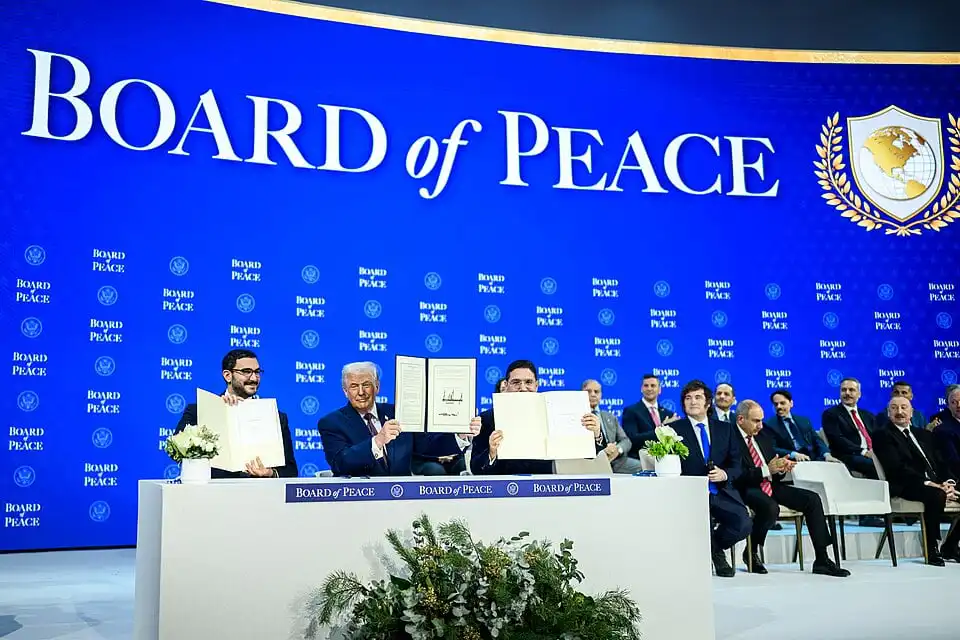
Trump denounced NATO for “not doing enough” and sanctioned the International Criminal Court (ICC) and its officials, who are prosecuting the Israeli war criminals. Thus, Trump circumvented the framework of the United Nations and set up a “Board of Peace” under White House command to deal with disputes such as that in Gaza. This is significant in the sense that Trump undermined institutional legality, which had previously been the basis of the United States’ dominance of the international arena. On the other hand, alternate institutions and coalitions such as SCO, BRICS, ASEAN, AU, and other intra-regional or cross-regional institutions are growing more and more emboldened and effective.
Conclusion
The decline of American imperialism is sure to happen in the 21st century. Trump 2.0, however, is the catalyst pushing this process forward. He has already eroded the bases of US hegemony. Allies are being hesitant, competitors are growing powerful, the dollar is diminishing as the global reserve, shared ideals are eroding, social ties are fracturing, divisions are mounting within, and the American system of global governance is crumbling. These difficulties did not begin under Trump. However, he made them worse. He did this by making American leadership seem more focused on transactional diplomacy, forceful, less predictable, and less legitimate globally.
The supremacy of the United States is certainly not going to disappear so quickly. We should perceive it as a “relative decline.” The United States is going to continue to be strong militarily, a major player in terms of the economy and technological sophistication, and a formidable power in terms of institutions in the foreseeable future. Currently, we are witnessing the phase of transition from a unipolar to a multipolar world. Because the world has not reached a new balance, we are facing more instability, chaos, and unpredictability than before. This is what a world beyond Washington means in my article. It is not a world without America. Rather, it is one where Washington is not the ultimate rule-maker for all others.
If you want to submit your articles and/or research papers, please visit the Submissions page.
To stay updated with the latest jobs, CSS news, internships, scholarships, and current affairs articles, join our Community Forum!
The views and opinions expressed in this article/paper are the author’s own and do not necessarily reflect the editorial position of Paradigm Shift.

Abdul Rehman is a student of political science with a strong interest in international relations, political theory, geopolitics, global power transitions, and contemporary world affairs. He writes analytical pieces that connect historical patterns, political theory, and current international developments in an accessible manner.