
Pakistan’s stock market is one of South Asia’s most dynamic and historically significant financial markets. It has produced extraordinary returns in certain periods, attracted international institutional investors, and also experienced some of the most dramatic collapses seen in any emerging market globally. Understanding how it works, who participates in it, what drives its movements, and what risks it carries is essential knowledge for anyone considering investing in Pakistan or simply trying to understand the country’s broader economic picture.
This guide covers the full picture from the market’s structure and history through to how it trades today, what factors move it and what both local and foreign investors need to know before getting involved.
The Pakistan Stock Exchange: Structure and Overview
The Pakistan Stock Exchange, commonly known as PSX, is the country’s sole national stock exchange, operating from its headquarters in Karachi. It was formed in January 2016 through the consolidation of three previously separate exchanges: the Karachi Stock Exchange, the Lahore Stock Exchange and the Islamabad Stock Exchange. The Karachi Stock Exchange, which had operated since 1947, was by far the largest of the three, and PSX essentially inherited its structure, its listed companies and its trading infrastructure.
PSX is regulated by the Securities and Exchange Commission of Pakistan, known as SECP. The SECP sets the rules governing listed companies, brokerage firms, fund managers and all market participants. It also oversees investor protection frameworks and market surveillance to maintain integrity across trading.
The exchange lists companies across a wide range of sectors like banking, oil and gas, fertilizers, cement, textiles, power generation, pharmaceuticals, food and beverage, and telecommunications. The total number of listed companies on PSX sits at around 520 to 540 at any given time, though this figure shifts as new listings arrive and companies occasionally delist or merge.
The KSE-100 Index: Pakistan’s Primary Market Benchmark
The KSE-100 Index is Pakistan’s most closely watched stock market indicator. It tracks the performance of the 100 largest companies listed on PSX by market capitalization, and covers over 80% of the PSX’s total market value. The index is free-float adjusted, meaning the calculation accounts only for shares available for public trading rather than total shares outstanding.

When people discuss Pakistan’s stock market performance in any given period, they are almost always referring to the movement of the KSE-100. A rising KSE-100 signals broad market strength. A declining index signals widespread selling pressure.
Beyond the KSE-100, there are additional indices like the KSE-30, which covers the 30 most liquid companies, and the KMI-30, which tracks Shariah-compliant stocks for investors who require investments to adhere to Islamic finance principles.
The KSE-100 reached a significant historical milestone in May 2017 when it was reclassified by MSCI from frontier market status to emerging market status. This upgrade attracted considerable international attention and a wave of foreign institutional capital into Pakistani equities in the months surrounding the reclassification.
A Brief History of Pakistan’s Stock Market
Understanding where Pakistan’s stock market stands today requires some knowledge of where it has been.
1947 to 1990s: Establishment and Early Growth
The Karachi Stock Exchange was established in September 1947, just weeks after Pakistan’s independence. In its early decades, it operated as a relatively small domestic exchange serving a limited number of listed companies and a narrow base of local investors. Progressive governments through this period took varying approaches to private enterprise, with some periods of nationalization reducing the scope of the listed market considerably.
The 1990s: Liberalization and Volatility
Economic liberalization in the early 1990s opened Pakistan’s capital markets to foreign investment and expanded the number of listed companies significantly. This decade also introduced Pakistani investors to the sharp volatility that would become a defining characteristic of the market. Political instability, sanctions following Pakistan’s nuclear tests in 1998, and repeated currency crises created an environment where dramatic gains and equally dramatic losses occurred within short timeframes.
2002 to 2007: The Bull Market Years
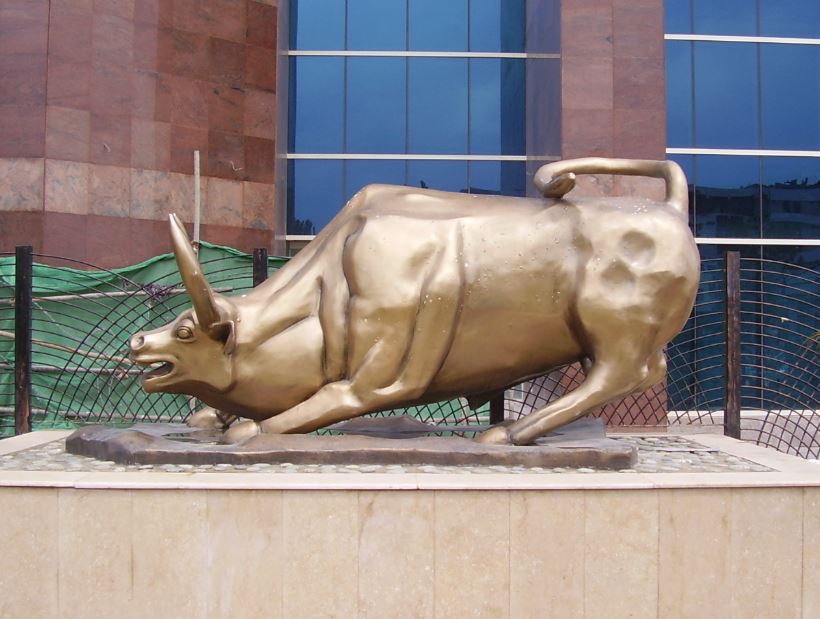
Pakistan’s stock market delivered some of the strongest returns of any market globally during this period. The KSE-100 rose from around 1,700 points at the start of 2002 to over 15,000 points by early 2008. A combination of macroeconomic stabilization, strong corporate earnings, a growing middle class, and significant foreign portfolio investment drove this remarkable run. The KSE-100 was recognized by international financial publications as one of the best-performing markets in the world across several years in this window.
2008 to 2012: Crisis and Recovery
The 2008 global financial crisis hit Pakistan’s market hard. The KSE-100 fell sharply, and in an extraordinary regulatory decision, the exchange imposed a floor on stock prices in August 2008, preventing further declines but also freezing the market and trapping foreign investors who could not exit their positions. The floor was eventually lifted, and the market found its footing over the following years.
2017: MSCI Reclassification
The upgrade to emerging market status in 2017 was a landmark moment for PSX. Foreign institutional investors who had been waiting for this reclassification moved capital into Pakistani equities, and the market reached new highs. However, the anticipated sustained inflow of foreign capital did not fully materialize at the scale many had projected, and the market subsequently pulled back through 2018 and 2019.
2020 to Present: Pandemic, Recovery, and Macroeconomic Pressure
The COVID-19 pandemic caused a sharp but brief market decline in early 2020. The recovery was faster than many anticipated, driven partly by the State Bank of Pakistan’s aggressive interest rate cuts, which made equities more attractive relative to fixed income. The market reached all-time highs in nominal rupee terms in subsequent years, though in US dollar terms, gains were significantly eroded by the substantial depreciation of the Pakistani rupee. Pakistan’s ongoing macroeconomic challenges, like high inflation, recurring IMF program negotiations and a persistent current account deficit, have created a complex backdrop for equity investors in the most recent period.
Key Sectors on the Pakistan Stock Exchange
Several sectors dominate PSX both by market capitalization and by trading volume.
Banking
Pakistan’s banking sector is the largest component of the KSE-100 by market capitalization. The major commercial banks listed on PSX include Habib Bank Limited, United Bank Limited, MCB Bank, Allied Bank and Bank Alfalah, among others. Pakistani banks have historically operated with wide net interest margins given the spread between deposit rates and lending rates and have delivered strong dividend yields in certain periods.
Oil and Gas
Pakistan has a significant domestic oil and gas sector, with companies like Oil and Gas Development Company (OGDC) and Pakistan Petroleum Limited (PPL) among the largest listings on the exchange. The performance of this sector is naturally linked to international oil prices and to the government’s pricing policies for domestic petroleum products.
Fertilizers
Pakistan’s agricultural economy creates strong domestic demand for fertilizers. Companies like Fauji Fertilizer Company and Engro Fertilizers are prominent listings and have delivered consistent earnings in periods of strong agricultural output and favorable gas pricing.
Cement
Pakistan’s cement sector is a proxy for construction activity and infrastructure spending. The sector contains a large number of listed companies and is closely watched as an indicator of domestic economic momentum.
Textiles
Textiles and apparel represent Pakistan’s largest export category, and the sector has a significant presence on PSX. Export demand, international cotton prices, and currency movements all influence listed textile company performance considerably.
Power and Energy
Independent power producers and energy distribution companies form a significant part of the listed market. This sector has been complicated in recent years by the circular debt crisis in Pakistan’s power sector, which has constrained cash flows across multiple listed companies.

How Trading Works on the Pakistan Stock Exchange
PSX operates a fully automated electronic trading system. Trading sessions run Monday through Friday with a pre-opening session followed by the main continuous trading session and a closing session. Trading hours follow Pakistan Standard Time.
Orders are matched electronically through the Central Depository Company of Pakistan, known as CDC, which also handles settlement and the custody of securities. The standard settlement cycle on PSX is T plus 2, meaning trades settle two business days after the transaction date.
Retail investors access the market through licensed brokerage firms registered with PSX and regulated by SECP. Online trading platforms have made market access considerably more straightforward for retail participants over the past decade. Investors open a Central Depository Account through a broker, which holds their securities in electronic form.
Foreign investors can invest in Pakistani equities through a special convertible rupee account known as an SCRA. This account structure allows foreign investors to bring capital into Pakistan, invest in listed securities and repatriate proceeds, including dividends and capital gains, without restrictions under current SECP and State Bank regulations.
What Moves Pakistan’s Stock Market
Pakistan’s equity market is influenced by a set of factors that differ meaningfully from those driving more developed markets.
Interest Rates and Monetary Policy
The State Bank of Pakistan’s monetary policy decisions have a profound influence on PSX. High interest rates make fixed-income instruments more attractive relative to equities and typically create selling pressure on the stock market. Rate cuts tend to trigger significant equity market rallies as capital flows from fixed income into stocks seeking better returns.
IMF Program Status
Pakistan has been a frequent participant in IMF support programs, and the status of these programs significantly affects market sentiment. A successfully negotiated IMF agreement typically signals economic stabilization and triggers positive market reactions. Program delays or breakdowns create uncertainty and selling pressure.
Currency Stability
The Pakistani rupee has experienced substantial depreciation against the US dollar across multiple periods in the market’s history. Currency depreciation erodes the US dollar value of Pakistani equities for foreign investors and creates inflationary pressures domestically that can compress corporate margins.
Political Stability
Pakistan’s political environment has historically been a significant driver of market sentiment. Periods of political uncertainty, constitutional crises, or transitions of government tend to coincide with elevated market volatility. The relationship between civilian governments and the military establishment is a factor that sophisticated investors in Pakistani equities monitor closely.
Commodity Prices
As a commodity-influenced economy, Pakistan’s market is sensitive to international oil prices, gas pricing and agricultural commodity movements. Rising oil prices increase Pakistan’s import bill and pressure the current account while also potentially boosting the earnings of listed domestic oil and gas producers.
Corporate Earnings
At the company level, quarterly earnings announcements move individual stocks and sector indices. Pakistan’s listed banking sector earnings are particularly closely watched as banks represent such a large share of overall market capitalization.
Foreign Investment in Pakistan’s Stock Market
Foreign portfolio investment in PSX has historically been a significant driver of market direction. When foreign investors are net buyers, the market tends to rise. When they are net sellers, the outflows create substantial downward pressure given the relatively smaller domestic institutional investor base.
The MSCI emerging market classification has kept PSX on the radar of international fund managers who track or benchmark against the MSCI Emerging Markets Index. However, Pakistan’s weight in that index is small, meaning most international funds allocating to emerging markets have modest Pakistan exposure.
Foreign direct investment in listed companies through strategic stakes is separate from portfolio investment and represents a different category of capital inflow. Several major listed companies have significant foreign strategic ownership.
Risks of Investing in Pakistan’s Stock Market
Pakistan’s market offers the return potential characteristic of a frontier and emerging economy but carries risks that investors need to assess honestly.
Currency risk is the most significant risk for foreign investors. The Pakistani rupee has weakened substantially against major currencies over multi-year periods, and this depreciation can eliminate or significantly reduce returns that appear attractive in local currency terms.
Political and governance risk reflects Pakistan’s history of governmental instability, judicial interventions in economic policy, and unpredictable regulatory changes.
Liquidity risk is real in certain listed companies outside the KSE-100. Daily trading volumes in smaller listed companies can be thin, making it difficult to build or exit positions without moving the price.
Macroeconomic risk stems from Pakistan’s recurring balance of payments pressures, high inflation periods, and public debt trajectory, which create an uncertain backdrop for corporate earnings.
Regulatory risk includes the possibility of policy changes affecting specific sectors or market structure changes that alter the investment landscape.
How to Start Investing in PSX
For Pakistani resident investors, the process of starting to invest in PSX has become considerably more straightforward in recent years.
The first step is opening a brokerage account with an SECP-licensed broker. The broker facilitates the opening of a Central Depository Account, which holds your securities electronically. Most established brokers now offer online account opening and mobile trading applications.
Investors need to complete standard Know Your Customer documentation, including national identity verification through NADRA. Once the account is active, investors can place buy and sell orders through the broker’s trading platform.
For investors who prefer not to pick individual stocks, National Investment Trust mutual funds and private sector fund management companies offer collective investment schemes that provide diversified exposure to Pakistani equities through a single investment.
Pakistan’s Stock Market vs. Regional Peers
Comparing PSX with regional stock markets provides useful context for investors assessing where Pakistan sits in a broader investment framework.
Pakistan’s market is smaller than India’s Bombay Stock Exchange and National Stock Exchange by a very wide margin, both in terms of total market capitalization and daily trading volumes. It is also smaller than Indonesia’s exchange and Thailand’s SET.
Against frontier market peers, Pakistan has historically offered higher return potential with commensurately higher risk. The market’s low correlation with major global indices in certain periods has also made it of interest to international investors looking to diversify beyond more mainstream emerging markets.
The Road Ahead for Pakistan’s Stock Market
Pakistan’s stock market outlook is tied inextricably to the country’s macroeconomic trajectory. A successful period of economic stabilization with inflation brought under control, foreign exchange reserves rebuilt to comfortable levels, and a sustainable IMF program in place creates a foundation for sustained equity market development.
The domestic investor base is growing as digital brokerage platforms and mobile investment applications reduce barriers to participation for younger Pakistani investors. Pension fund reform and the gradual growth of voluntary retirement savings schemes could also bring larger pools of domestic long-term capital into listed equities over time.
The privatization agenda, when it moves forward, has the potential to bring significant new listings to PSX and expand both market capitalization and sectoral diversity. Several state-owned enterprises have been candidates for privatization and eventual listing for many years, and their eventual arrival on the exchange would represent a meaningful expansion of the market.
FAQs
The KSE-100 is Pakistan’s primary stock market index tracking the 100 largest companies listed on the Pakistan Stock Exchange by market capitalization. It is the standard measure of overall market performance and the figure most widely quoted when discussing Pakistan’s stock market on any given day.
Yes, foreign investors can invest in PSX-listed securities through a special convertible rupee account. Capital can be brought into Pakistan in foreign currency converted to rupees for investment and repatriated along with returns under current regulations. Currency risk remains a significant consideration for foreign investors given the rupee’s historical depreciation.
PSX operates Monday through Friday following Pakistan Standard Time. The main trading session runs through the morning and early afternoon with pre-opening and closing sessions at either end. Specific session times should be confirmed directly with PSX or a registered broker, as schedules are subject to regulatory updates.
If you want to submit your articles and/or research papers, please visit the Submissions page.
To stay updated with the latest jobs, CSS news, internships, scholarships, and current affairs articles, join our Community Forum!
The views and opinions expressed in this article/paper are the author’s own and do not necessarily reflect the editorial position of Paradigm Shift.
Paradigm Shift is an official staff account.