Introduction
The Belt and Road Initiative’s five objectives include policy coordination, unhindered trade and connectivity, financial integration, and fostering human ties. The project’s initial goal was to establish a physical infrastructure connection between East Asia and Europe.
Formerly known as the “One Belt, One Road,” the Belt and Road Initiative (BRI) was unveiled in 2013 and is arguably Xi Jinping’s flagship project to establish his name and goals in Chinese history while shifting the balance of power in the world toward the Middle Kingdom. Many contend that this huge endeavor could make or break China’s future from a foreign policy perspective, but there appears to be skepticism already at home. In addition to including numerous nations worldwide, the scope is unprecedented, and more are anticipated to follow. The BRI encompasses over 60 emerging economies, a majority of the world’s output, and a population of over 4 billion. It is a comprehensive public diplomacy strategy for China to integrate with different global regions.
The stakes are high, and the attention this project has been receiving has drawn both harsh criticism and visionary praise. Criticism of this Chinese initiative ranges from concerns about inefficiency to the acquisition of corruption often encapsulated by the term: “Debt Trap.” On the other hand, the praise for BRI, though less widespread, comes from commentators, ministers, and heads of state who assert that their nation is already benefiting from the initiative. In recent years, the number of articles discussing this idea about China’s foreign policy and its consequences in the nations that receive it has increased dramatically. Initially, most of the articles came from the so-called “Western media.”
However, the trend soon attracted the attention of BRI-participating nations. A commonly cited example of debt trap diplomacy is the case of Hambantota Port in Sri Lanka, where the government reportedly had to sign a 99-year lease after struggling to repay Chinese loans. This incident had already gained widespread attention, but this claim was refuted.
China’s Soft Power Strategy Through the Belt and Road Initiative (BRI)
Alongside the BRI, the nation has built new international organizations to strengthen its soft power. Under President Hu Jintao, China launched an effort to improve its reputation internationally in 2007. The 17th Central Committee of the CCP subsequently announced in 2011 that “building our country into a socialist cultural superpower” was the country’s national objective. The BRI was first announced under President Xi Jinping just two years later. China has been creating new organizations, such as the NDB and the AIIB, which are regarded as soft power endeavors in addition to the BRI. China has contributed significant money to these global initiatives, or “soft power ventures.” For example, it gave the Asian Infrastructure Investment Bank US$50 billion at the beginning, which was half of the bank’s original funding.
Furthermore, China committed $41 billion to the New Development Bank, which was founded by the BRICS nations, $40 billion for its Silk Road Fund, and US$25 billion for the Maritime Silk Road. China’s pledges to support these endeavors were expected to reach $1.41 trillion by 2025, which has already been exceeded. Even though the main purpose of these organizations and initiatives is economic, their effects go beyond China’s economic expansion. China’s use of the BRI as a soft power instrument does not establish a direct, immediate, or physical connection between itself and the nations it has impacted. On the other hand, China’s influence can reach these nations through BRI connections.
China’s BRI strategy demonstrates its soft power as it aims to protect its supply chains, open up new markets for its goods, and establish a favorable international environment for its rise to prominence. China is establishing itself as a leader in economic diplomacy and infrastructure development worldwide, and this strategic move represents a larger change in the balance of power in the world. As a result, the BRI represents China’s efforts to reshape the global order to suit its interests and values better, sitting at the intersection of development, diplomacy, and geopolitics. By doing this, China hopes to advance its economic growth, protect its geopolitical interests, and become a major player in international development and global governance.
China’s ability to promote exports, investment, tourism, ideas, and policies is greatly influenced by its image and appeal in the eyes of people in other nations. Compared to hard power, like military might, soft power has been found to have greater beneficial consequences that advance national and international interests. The key advantage in international competition is the power of attraction, or “soft power,” which is more potent than coercion. “One country gets other countries to want what it wants in contrast with the hard or command power of ordering others to do what it wants” is the definition of the use of soft power.
The influence of soft power is based on how appealing a nation’s culture, political beliefs, and policies are, as opposed to “hard power,” which is the capacity to compel others by using a nation’s economic or military might. Some of the most important components in creating and enhancing one’s soft power are discourses that shape and broadcast one’s political quality, economic superiority, and cultural appeal, as demonstrated by the growing attractions of Singapore and South Korea.
The Debt Trap Diplomacy: An Argument
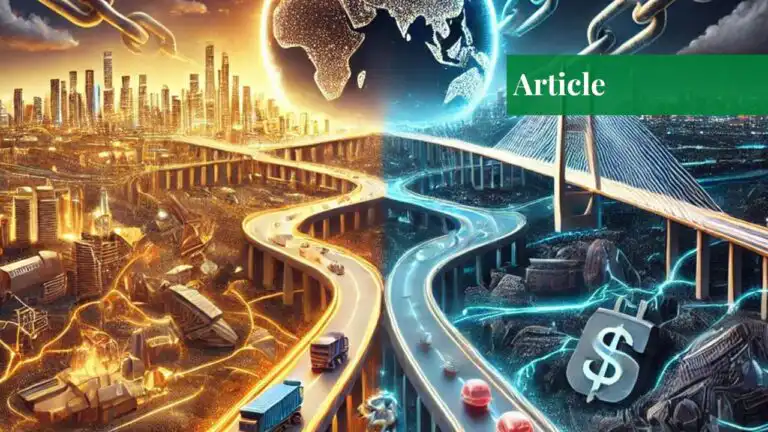
The Debt Trap diplomacy argument says that China’s Belt and Road Initiative is deliberately lending money to developing countries for infrastructure projects, which could result in overwhelming debt levels when these countries fail in debt repayments. China may use financial leverage to obtain strategic or political advantages. Critics argue that China pursues a policy of “debt-trap diplomacy,” which involves enticing impoverished, developing nations to accept unsustainable loans for infrastructure projects so Beijing can take control of the asset when they run into financial difficulties, thus expanding its military or strategic reach. However, evidence supporting these claims remains scarce.
Sri Lanka and the BRI
The Hambantota Port
Although the Hambantota Port lease is frequently used to illustrate China’s “debt-trap diplomacy,” this theory is mainly incorrect. The 2017 agreement between Sri Lanka and CMPort was a lease that Sri Lanka started to develop its infrastructure after the US and India rejected it; it was not a debt/equity swap. Although Sri Lanka maintains control over the port and the Sri Lankan debts to China make up a very small portion of the nation’s overall external debt, concerns about the port’s strategic ramifications still exist.
The Hambantota case brings broader concerns about debt sustainability, the recipient country agency, and China’s changing foreign investment strategy. Instead of viewing the port as a deliberate debt trap, it is more useful to consider the broader impact of Chinese investments, the effectiveness of BRI projects in fostering economic growth, and how host countries can take advantage of these chances for sustainable development rather than portraying the port as a purposeful debt trap.
As of 2021, Kyrgyzstan remains one of the highest debtor countries in terms of GDP percentage to Beijing, with its debt payments to Beijing reaching approximately 30% of its GDP. Because of its outstanding debt, analysts question whether Kyrgyzstan is susceptible to the same debt-trap diplomacy that has been documented in Sri Lanka.
However, Chinese authorities have consistently rejected the debt-trap diplomacy narrative as a “groundless allegation.” Instead, China describes debt servicing as essential to breaking through barriers in developing nations with great potential but lacking capital.
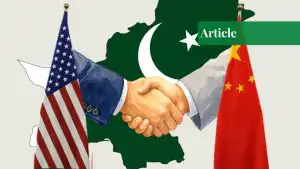
Implications for Pakistan: The Pakistan-China Economic Corridor (CPEC)
A key component of China’s strategic shift toward the Indian Ocean is the China-Pakistan Economic Corridor (CPEC), commonly regarded as the BRI flagship project. With an estimated $62 billion investment, the project intends to build 1,800 miles of highways, oil pipelines, and railroads to link China’s western provinces to the Arabian Sea. The project is still in progress and has many dubious optics that have beset other BRI nations that are more susceptible. In return for building a special economic zone, Pakistan gave China a 43-year lease on land at the Gwadar Port, a crucial CPEC logistical hub. This was on top of a 40-year lease that gave the China Overseas Port Holding Company 91% of the profits from Gwadar Port. Given its 14-meter depth and ability to accommodate Chinese aircraft carriers, Gwadar Port also has a great chance of serving two purposes.
The China-Pakistan Economic Corridor (CPEC) emerged to fill the expected financial inflow gap when the United States started to withhold aid in 2018. China’s investment in Pakistan came at a critical time. However, Pakistan’s geopolitical position has changed dramatically due to its increasing economic dependence on China, which has made it harder for the US to use soft power to influence the nation. Due to its increased reliance on Chinese assistance, which has its own set of difficulties, Pakistan’s options in the global financial system have also been restricted.
The United States’ ability to exert soft-power influence over Pakistan has been weakened since it is now economically dependent on China and has somewhat distanced itself from its prior economic reliance on the United States. Pakistan has openly acknowledged its exclusion from the CPEC implementation process and is currently suffering from unfavorable loan terms. As a result, Pakistan has been unable to fully Capitalize on the revenue generated from port activities.
Conclusion
The stakes are high, and the attention this project has been receiving has drawn both harsh criticism and visionary praise. Criticism of this Chinese initiative ranges from concerns about inefficiency to the acquisition of corruption often encapsulated by the term: “Debt Trap.” On the other hand, the praise for BRI, though less widespread, comes from commentators, ministers, and heads of state who assert that their nation is already benefiting from the initiative. In recent years, the number of articles discussing this idea about China’s foreign policy and its consequences in the nations that receive it has increased dramatically. Initially, most of the articles came from the so-called “Western media.”
Belt and Road Initiative (BRI) is a project that balances being a strategic international move with being a development initiative that can potentially change the world. Concerns about debt distress and sustainability, sovereignty, and unequal partnerships cannot be disregarded, even though they present enormous opportunities for infrastructure development, trade connectivity, and economic integration. The BRI offers possible benefits and major obstacles to participating nations like Pakistan, highlighting the necessity of cautious negotiation, open agreements, and proactive steps to guarantee long-term gains. The ability of the BRI to strike a balance between its partners’ goals and China’s geopolitical interests will ultimately determine its success.If you want to submit your articles and/or research papers, please check the Submissions page.
The views and opinions expressed in this article/paper are the author’s own and do not necessarily reflect the editorial position of Paradigm Shift.

She is currently pursuing a Masters degree in Peace and Conflict Studies at the National University of Sciences and Technology (NUST).