Artificial intelligence has quickly changed from an idea into a strong force moving society from simple things like virtual assistants and recommendation systems to advanced systems that can write, design, code, and analyze information. Artificial intelligence is changing the way people live and the way people work. Companies use technologies to become better at what they do and to be more productive. A big question that comes up is: Is intelligence creating new opportunities, or is it taking away jobs and making the economy less stable? While it is true that there are worries about losing jobs, history and what is happening now suggest that artificial intelligence is more likely to make work better than to take it away completely. The problem is not about controlling technology but about making sure that workers, companies, and governments can change and fit into the situation.
Throughout history, new technology has often made people worry about losing their jobs. During the Industrial Revolution, machines started to do the work that people used to do, and workers were scared about their jobs. Similar worries happened when computers, automation, and the internet came into use. Even though these technologies changed old industries, they also created new areas and new jobs. Following a pattern, some jobs may disappear or become less important, but new ones are coming up that require skills in building, managing, and working with systems. One of these is artificial intelligence and its ability to make work more efficient. Companies can automate tasks so workers can focus on more creative, important, and personal work. For example, artificial intelligence can look at a lot of information in seconds, helping people make choices in health care.
Artificial intelligence can help doctors diagnose illnesses accurately, and in finance it can find fraud and look at market trends. In education, tools powered by intelligence help create a learning experience that fits each person instead of replacing teachers. These tools often make their work better. Help them do better jobs. Also, artificial intelligence is creating kinds of jobs. There is a need for data scientists, machine learning engineers, people who look at the ethics of artificial intelligence, cybersecurity experts, and people who help companies change how they work. Countries need people to build, check, and improve intelligence systems. In addition, industries that support structures like cloud computing and information management are growing fast. These changes show that technology can create jobs even as it changes the way people work.
There is an upside, but we should not ignore the real problems that artificial intelligence brings. Unlike technologies that mainly affected people doing physical jobs, artificial intelligence can automate and replace tasks that people in office jobs do. Customer service workers, accountants, translators, and even some people who create content may find that part of their work is done by machines. This makes people worried about losing their jobs for workers whose skills are connected to regular tasks. The effect of intelligence will not be the same for everyone; people with higher education and special skills may be in more demand, while those in jobs that follow a pattern may have more problems. If governments and companies do not help workers who lose their jobs and have trouble changing, existing gaps in wealth could get bigger.
Moving into jobs without having access to learning, training, and changing skills means that the future of work will depend not just on new technology but also on how well society prepares people for change. Economic security is another thing to worry about; if artificial intelligence makes many jobs disappear in some areas, people may spend money, which affects the whole economy. Jobs are one of the ways people get money and feel safe. If changes happen fast without enough help, unemployment could go up. Experts in economic problems must think about how to deal with automation, including programs that help workers learn new skills, safety nets, and rules that help everyone grow together. At the same time, fear that artificial intelligence will take most jobs may get worse when companies use parts of human abilities that machines can’t copy, like creativity, feelings, making choices, leading, and building relationships.
These abilities are still very important in areas like health care, teaching, helping people, managing, and art. Even though artificial intelligence can process information and do tasks, it does not have the real-life experiences and understanding needed for parts of work and personal life. So the best workers in the future will probably be those who mix skills with special human skills. Companies also have a duty in shaping the future of work. Instead of seeing artificial intelligence just as a way to save money on workers, businesses should focus on using it to make people better. Companies that spend on training their workers can create chances for them. To change, we are more likely to see results.
When people and artificial intelligence work together, it can make work better. Keep jobs meaningful. For example, artificial intelligence can help customer service workers by giving them answers, letting the workers focus on solving hard problems and making good relationships with customers. Schools, colleges, and training places need to teach students skills that will help them in life. These places should focus on thinking, being able to change, using computers, solving problems, and learning all the time. These skills will help people stay strong as industries keep changing. Governments and companies should also make it easier for workers to get training so they can move into new jobs. In the end, the discussion about intelligence and how it affects work is still going on.
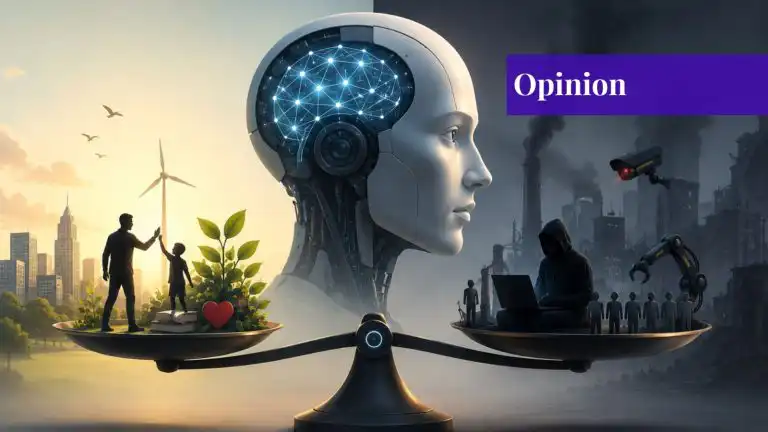
Work should not be seen as a friend in the fight between technology and artificial intelligence. AI is not a good answer to economic problems. How it affects people depends on how society decides to use and control it. If it is used well, artificial intelligence can help improve ideas, work, create new businesses, and make life better. But if it is not taken care of or controlled, it could make things unequal and cause people to lose jobs. The economy be unstable. The future of work is not a fight between people and machines. A way of changing and adjusting that will change what work means. The big challenge is making sure that the good parts of intelligence are available to many people, not just a few. This can be done by putting money into learning, helping workers change jobs, and making rules.
Responsible innovation from governments and businesses can help build a future where artificial intelligence helps the economy grow. People do better instead of causing problems. The choices made now will decide if artificial intelligence becomes something that helps people or a danger to the economy in the years to come.
If you want to submit your articles and/or research papers, please visit the Submissions page.
To stay updated with the latest jobs, CSS news, internships, scholarships, and current affairs articles, join our Community Forum!
The views and opinions expressed in this article/paper are the author’s own and do not necessarily reflect the editorial position of Paradigm Shift.

Muhammad Imroz hascompleted his BS in International Relations from BUITEMS and an MA in Political Science from UOB, Quetta.