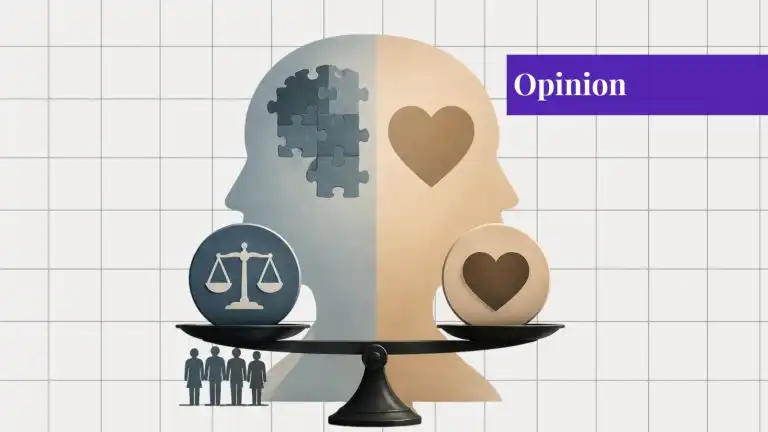
Is the atrocity of rape morally wrong? Is murdering someone in cold blood culpable? Almost universally, such grievous wrongdoings are condemned as violations that warrant revulsion and stern punishments. These crimes are inherently deemed wrong because we possess an objective framework of ethics that draws a clear demarcation between right and wrong. With religion, that ethical architecture is further bolstered, espousing virtue, denouncing vice, and categorically laying out the difference between the two.
The relativist, however, is gripped by a dilemma while disputing ethical boundaries. For them, the moral dichotomy is ambiguous, as they advocate the subjective construction of reality, arguing it is different for each person. The standard of differentiating virtue from corruption becomes equivocal. For example, a theist can decry rape as a deplorable act because their religious outlook says so, but the relativist, because their theoretical apparatus is based on subjectivism, is thrust into a predicament. Another person may counter that their ‘reality’ is different. Chaos ensues, each contesting the other. Yet, the most consequential implication that follows is the loss of a moral compass and the cloaking of morally abominable deeds under the guise of ‘subjective reality’.
Furthermore, relativists are governed by the maxim, ‘there is no universal truth’, asserting that values and ethics vary from person to person and culture to culture, and are only relative to their respective contexts. However, this very claim is upheld as an objective truth. The negation is sustained as ‘universally’ true. This is not a minor technicality; it lays bare the internal inconsistency of the argument. Relativists want to apply their thesis to everyone, while negating that any other ethical framework is universal. Moreover, following the same logic, if morality is relative, then the objectivist’s rebuttal of the relativist would also be true. Socrates posited the very same argument while critiquing Protagoras, a renowned champion of relativism: any skeptical claim which undermines moral truth assumes itself to be true and universal. Thus, subjectivism, save for itself, denies universality—while arbitrarily treating itself as axiomatic.
Another proposition advanced against objectivism is that if there were universal ethics, why do we see such a staggering diversity of cultural practices and moral norms across the annals of history? Why do we witness practices like infanticide and sati (self-immolation) prevalent in some societies while not in others? This contention, nonetheless, confuses multiplicity of traditions with the absence of objective truth. By the same rationale, across centuries, people debated the shape of the Earth, the laws of physics, natural disasters as the wrath of gods, and whether the universe had a beginning. None of it meant that a true answer did not exist; it suggested a dearth of ability to apprehend it. The planet was always round, and earthquakes always happened because pieces of the Earth’s crust slipped and released energy. In addition, a closer inspection suggests that, underlying the different norms and traditions, a shared principle remained the same cross-culturally. To exemplify, Sparta, a Greek city-state, would place greater emphasis on the martial prowess of young boys and their military strength. Conversely, Athens would attach more significance to fields such as logic, philosophy, and rhetoric; the core precept of both city-states was training citizens to contribute back meaningfully to society. Only the ways differed.
In the last two centuries, we have witnessed tremendous advancement in ideals like human rights, free speech, abolition of slavery, enfranchisement of women, and much more. We pride ourselves on the immense progress that has been made in various arenas. Moral relativism imperils that improvement since, if the language of moral progress is relative, we have not improved; we have only changed. It looks down upon our deep-seated convictions to call out, challenge, and change ways and traditions that were cruel and degrading to the human enterprise. Our innate moral conscience instills in us the belief that rape was abhorrent even when societies accepted it, that slavery was a depraved institution even when it was prevalent, and that robbing someone of their life was always an egregious violation of human dignity. All the great champions of human rights, such as the abolitionists or activists like Martin Luther King Jr., bore immense sacrifices because they believed fettering a human in chains and discriminating based on colour were objectively wrong even when their societies condoned it.
If you want to submit your articles and/or research papers, please visit the Submissions page.
To stay updated with the latest jobs, CSS news, internships, scholarships, and current affairs articles, join our Community Forum!
The views and opinions expressed in this article/paper are the author’s own and do not necessarily reflect the editorial position of Paradigm Shift.

Hamza Tareen is a sophomore at LUMS, majoring in political science and likes to write on a wide range of topics from philosophy and theology to Islamic history and politics.