
Beyond the Checkpoint: A Border Economy Under Strain
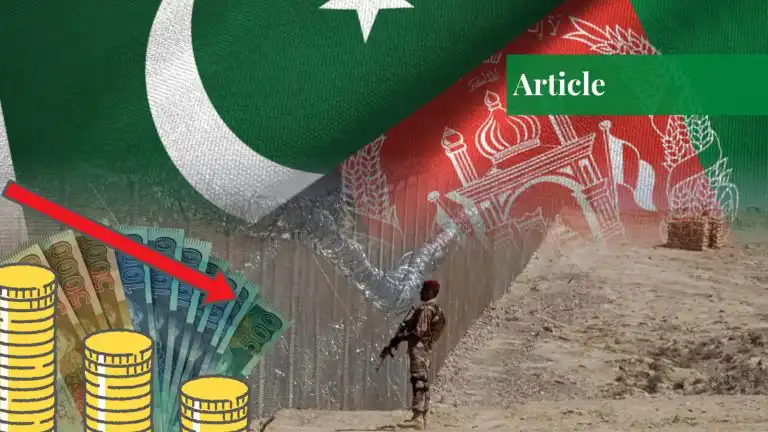
For those communities located along the Pakistan-Afghanistan border, the shutdown of a checkpoint goes beyond just politics. This leaves trucks idle, products waiting to reach markets, businesses losing revenue, and laborers returning without pay. The effects of the suspension of normal trade activities since October 2025 have now gone beyond customs checkpoints, showing how vulnerable this cross-border-trade-dependent economy is.
While issues of security are still central to this dispute, the economic harm has become more visible with each passing day. The trade volumes have reduced, commercial relations have been weakened, and Afghanistan has increased its efforts towards finding other ways around. For Pakistan—especially in Balochistan and Khyber Pakhtunkhwa—the focus is no longer on when these checkpoints will reopen but whether this trade can resume.
A Border That Sustains Thousands of Livelihoods
The Pakistan-Afghanistan border, also known as the Durand Line, measures around 2,640 kilometers. Its political status is disputed by Afghan governments, but its economic importance for the people on both sides of the border is clear.
Chaman and Spin Boldak serve as the links between Balochistan and southern Afghanistan, while Torkham connects Khyber Pakhtunkhwa with eastern Afghanistan. These borders have been used for transporting agricultural produce, manufactured items, drugs, and other goods for many years. Apart from the exporters and importers, these borders are important to truckers, loaders, customs officers, commission agents, warehouse managers, shopkeepers, and farmers.
The ongoing crisis originated from the violent incidents that took place in October 2025. Pakistan stopped customs processing at Torkham, Ghulam Khan, Kharlachi, and Angoor Adda on 12th October, while the Chaman border was closed on 15th October. Islamabad justified the move, citing security reasons and blaming the Afghan Taliban government for allowing militants to use their territory. Kabul rejected the charges. Following that, Afghanistan declared a ban on trade with Pakistan in November. The dispute may seem to be primarily political and security-related, but its economic implications cannot be ignored since normal commercial movements have been disrupted.
The Numbers Behind the Decline
The evidence can be found in the figures for bilateral trade. The Ministry of Industry and Commerce of Afghanistan noted that the volume of trade between the countries dropped from roughly $2.461 billion in 2024 to $1.766 billion in 2025, representing a decline of around 28.2 percent. Exports from Pakistan to Afghanistan went down from $1.644 billion to $1.261 billion, while exports from Afghanistan to Pakistan dropped from $817 million to $505 million.
These figures are yearly figures before and after the October 2025 shutdown and do not represent the full extent of the shutdown’s consequences. However, it shows that the weakening of trade ties has been costly to both economies. Trade in transit cargo through Pakistan offers a particularly striking example. According to the customs data cited in Dawn in July 2026, the transit cargo declined from 42,959 containers worth $1.36 billion in fiscal year 2024-25 to 11,592 containers worth $367 million in fiscal year 2025-26. Container volumes and declared value of cargo decreased by about 73 percent in this period.
The downturn actually began before that; the traffic through transshipment hit its peak of 102,886 containers valued at $6.7 billion during FY 2022–23. This point is important because Pakistan’s move hastened the transition of trading patterns for Afghanistan that were already taking place.
Local Traders Pay the Immediate Price
It would be impossible for national figures on trade to depict the full picture of losses incurred by a small trader whose business investment is in cargo that is not reaching its destination. Chaman presents a very illustrative example. As reported by the Dawn newspaper in August 2026, Rehman Gul, a commission agent with 21 years’ experience, lost Rs110 million when the freight trucks loaded with farm produce were stuck. He had already paid the money, thus becoming vulnerable in case of disruption to trade, as a result of which the normal functioning of his business was hindered.
This is a personal loss incurred and not a calculation of total losses incurred by Chaman. However, it depicts how quickly an extended closure can change advance payments and supply chain agreements into losses. These losses affect the whole local economy as well. If traders stop buying, then farmers have to face delays in payment or reduced demand. If trucks stop moving, then drivers, loaders, mechanics, and transport companies face joblessness. The warehouse capacity remains underused, and shops remain without clients.
The same commercial network links Khyber, Landi Kotal, and Peshawar, with merchants, transport companies, and manufacturers benefiting from trade connections with Afghanistan for many years. No official estimate is available for how many jobs have been lost altogether by members of this community. Nonetheless, the disruption of trade connections puts great stress on individuals and families without other sources of income.
Pharmaceuticals Reveal a Wider Economic Cost
The impact transcends the traditional border market. The pharmaceutical industry in Pakistan faces a significant decrease in access to an export market it had been enjoying for many years. According to data on the Pakistan Trade Development Authority’s Pakistan Pharma Portal, Pakistan’s pharmaceutical exports to Afghanistan amounted to $155.68 million in FY2024-25, accounting for about 34.1 percent of Pakistan’s overall pharmaceutical exports that year.
This latest data highlights the pressure faced by the sector. Pharmaceutical exports from Pakistan fell from $457.456 million in FY2024-25 to $319.012 million in FY2025-26, representing a fall of 30.26 percent. They fell by yet another 25.53 percent in value during July-September 2026 from the same period the previous year. According to industry representatives, the trade disruptions with Afghanistan have been one of the primary causes, although the data cannot establish this on its own.
There is an effect on the commercial logistics of the sector and on Afghan consumers who were dependent on Pakistani sellers as well. There have been concerns raised by industry representatives that Afghan patients will find themselves having to pay more for substitutes as existing supply lines get disrupted.
Afghanistan Looks Beyond Pakistan
Afghanistan has incrementally shifted towards importing goods and transiting through Iran and Central Asia. The alternative routes would pass through the Iranian ports and via the overland route through Uzbekistan, Turkmenistan, and Tajikistan, as alternatives to the current dependence on Pakistan.
This is not just a temporary measure because of a closed border. Afghanistan already diversified its trade routes even before the closure in October 2025, and the prolonged closure makes the incentive to diversify trade routes stronger. Reuters reported that Afghan traders started using alternative routes to sustain trade amid frequent closures.
Diversification would provide Afghan companies with more options; however, it does not reduce the cost burden of alternative routes. These alternative routes could be longer, more expensive, and more complicated in terms of logistics. Small traders would be especially vulnerable in this regard, as they have limited resources to cover these costs.
Another challenge that Pakistan faces in this scenario is similar yet different. Afghanistan was an important customer for Pakistani medicines, agricultural products, and manufactured goods. It is possible that the Afghan importers would establish stable connections with their suppliers outside Pakistan even after the resumption of trade.
A border closure can therefore produce a lasting commercial realignment: the immediate loss of trade is followed by a longer-term loss of customers, investment, and strategic advantage.
The Cost for Pashtun Border Communities
The impact of the current crisis on the Pashtun communities of Chaman, Killa Abdullah, Spin Boldak, Khyber, and nearby Afghan territories goes well beyond a simple downturn in national trade figures. For these communities, it touches livelihoods and trade links by which many families earn a living.
Daily wage earners may not always compensate for the lost earnings, and smaller traders may not have sufficient funds to maintain their business activities in case of any sustained disruption. Farmers face certain dangers since they will have problems selling and transporting the produce, as buyers will not be able to collect their products.
This situation does not affect everyone equally. Large companies may have enough money to switch suppliers and reroute their shipments, whereas smaller companies will have a limited client base and transportation connections. Once a company closes, workers move away, and the buyer sets up a long-term relationship somewhere else, it would be more difficult to restore the earlier economic activity level.
The above communities should not be considered as a side effect of the political conflict. Economic predictability is crucial for these communities since they have to rely on cross-border trade.
Security and Trade Must Be Addressed Together
Pakistan has a legitimate responsibility towards ensuring the security of its citizens and dealing with the issue of militant violence. The Afghan government denies Islamabad’s allegations, and the security dispute remains unresolved, which hinders normalization of ties. Security issues, as well as economic consequences of the dispute, cannot be ignored.
The task is to find a solution that will minimize the risks of insecurity without making the commercial disruption permanent. Phase-based opening of borders based on credible security assurances and reliable customs procedures can contribute to restoring trust. Exemptions from border closures for vital supplies and medical products, along with restricted access for locals, could help prevent unnecessary suffering while maintaining legal control over borders.
Finally, both countries need to communicate transparently with the business community. Reliable customs procedures, accurate information about restrictions, and dispute resolution mechanisms will facilitate the work of traders. The infrastructure itself is incapable of solving a political problem, but reliable customs procedures can prevent economic losses.
Conclusion
The Pakistan-Afghanistan boundary dispute has shown the vulnerability of communities and businesses dependent on stable trade connections. Bilateral trade has declined; there has been a considerable reduction in the flow of Afghan goods through Pakistan; traders have suffered substantial losses, and Pakistani exporters face the consequences of an upended market.
For Afghanistan, other options exist, but they come with certain difficulties. In Pakistan’s case, the consequences include a threat to export markets and loss of its position as a favored trade route. For Pashtun communities living at the border, the issue is more immediate—loss of income, loss of employment, and business survival problems.
Reopening the crossings will be necessary, but it may not be enough to restore what has been lost. Commercial relationships take years to build and can be displaced far more quickly. Unless security and trade are addressed together, a dispute at the border risks becoming a lasting economic separation—one whose costs will be borne not only by governments but also by the people whose livelihoods have long depended on keeping the gates open.
If you want to submit your articles and/or research papers, please visit the Submissions page.
To stay updated with the latest jobs, CSS news, internships, scholarships, and current affairs articles, join our Community Forum!
Find our FREE quizzes and MCQs here!
The views and opinions expressed in this article/paper are the author’s own and do not necessarily reflect the editorial position of Paradigm Shift.

Nisar Kakar is a writer and poet and a BS English student at Quaid-i-Azam University, Islamabad, Pakistan, hailing from District Killa Saifullah, Balochistan. He serves as Assistant Coordinator for Literary Prose at the Quaidian Debating and Literary Society (QDLS).