
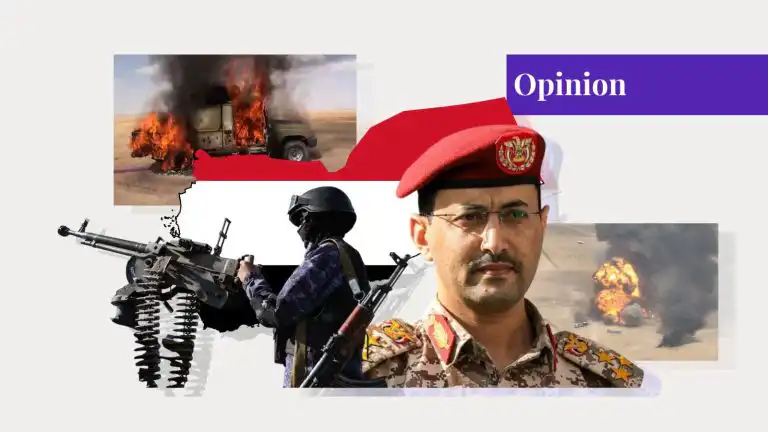
History demonstrates that when a sovereign nation becomes a pawn in a strategic contest, the consequences rarely remain confined to its borders. They reverberate across regions, undermining the stability of the wider international system. Yemen has emerged as a critical test of the modern global order, exposing a fundamental reality. The security of international commerce cannot be divorced from political stability along the maritime corridors linking the Red Sea to global markets.
Naval Deterrence and the Global Economic Impact of Red Sea Disruptions
The Bab el-Mandeb Strait underscores this vulnerability. According to UNCTAD, in 2023, it accounted for 8.7 percent of global seaborne trade by volume. Yet the Red Sea crisis is still treated largely as a naval security problem rather than a political failure. Deterrence may contain immediate threats, but lasting maritime security requires resolving the underlying conflicts ashore.
The danger intensifies when attacks on Saudi Arabia’s oil infrastructure recur. The Houthis recently claimed to have struck the Ras Tanura refinery, reporting a fire, although Saudi authorities did not immediately confirm the strike. With a reported processing capacity of approximately 550,000 barrels per day, the facility is strategically significant. Repeated attacks could disrupt not only refining but also storage, export terminals, and shipping operations, amplifying the economic fallout far beyond Saudi Arabia.
Even without major supply losses, persistent attacks can drive up oil prices, tanker insurance premiums, and freight costs. Brent crude reportedly reached $115.36 per barrel amid renewed supply concerns. If energy disruptions coincide with threats to Red Sea shipping, the resulting shock could fuel inflation, raise transport costs, and disrupt industrial production.
Energy-importing economies with limited fiscal and foreign-exchange reserves would be especially vulnerable. Further escalation could invite retaliation against additional infrastructure, deepen regional instability, and constrain diplomatic options. Energy security is therefore inseparable from political de-escalation.
Proxy Rivalries, Local Realities, and the Limits of Military Intervention
Yemen and Palestine expose the failures of an international order struggling to reconcile strategic competition with human security. When sovereign territories become arenas for proxy conflict, the costs extend far beyond the battlefield, devastating communities, displacing families and depriving generations of opportunity.
Local populations bear the human cost of strategic rivalries shaped by competing external interests. In pursuing geopolitical leverage, outside powers risk perpetuating the very instability they claim to contain, undermining reconciliation and recovery.
Breaking this cycle requires rejecting the notion that the region’s future should be determined by competing foreign capitals. The central question is not which external power prevails, but whether local populations can live without fear, govern without coercion, and shape their own futures.
Yemen’s catastrophe is rooted in decades of economic marginalization, institutional fragility, and unresolved grievances. The 2011 uprising opened a path towards political transition, culminating in the 2014 National Dialogue Conference. Yet its proposed framework failed to reconcile competing claims over power, resources, and security, leaving the transition vulnerable to collapse.
The transition unravelled when the Houthis seized Sana’a in September 2014, prompting a military intervention by a Saudi-led coalition in March 2015. This intervention internationalized the conflict, deepening existing divisions as domestic rivalries and competing regional interests reinforced one another.
Reducing the conflict to a rivalry between Riyadh and Tehran overlooks the deeper fractures within Yemen. External powers must be held accountable for the consequences of their interventions, while domestic factions remain responsible for their own conduct. Impartiality demands both accountability and restraint, neither absolving local actors nor allowing foreign governments to dictate Yemen’s political future.
Peace must reflect realities on the ground. The Houthis control Sana’a and much of northwestern Yemen, while the internationally recognized government faces competing centers of authority. Diplomacy must accommodate this fragmented landscape without allowing armed factions to monopolize Yemen’s political future.
A lasting settlement requires inclusive negotiations addressing local autonomy, equitable revenue-sharing, accountable governance, and security-sector reform. Civilian protection, humanitarian access, and essential services must remain beyond political coercion at the negotiating table. A ceasefire can halt fighting, but only credible political arrangements can prevent renewed conflict.
The Path Toward Inclusive Political Settlement
Pakistan’s unanimous parliamentary resolution of 10 April 2015 illustrated strategic autonomy. It called for neutrality in Yemen and an active diplomatic role while affirming support for Saudi Arabia against threats to its territorial integrity and the holy sites. The resolution sought to balance bilateral commitments with independent national judgment. Islamabad now faces a similar challenge in upholding its obligations under the MJDA while safeguarding national interests and avoiding open-ended involvement in regional warfare.
Solidarity with an ally does not require participation in every military campaign. Strategic autonomy means preserving diplomatic flexibility, protecting national interests, and avoiding unnecessary domestic risks. For Pakistan and other energy-importing economies, regional escalation can raise fuel costs, intensify inflation, and strain foreign-exchange reserves. Diplomatic restraint is not passivity, but a means of safeguarding national security and economic resilience.
Durable stability depends on a renewed social contract between citizens, communities, and institutions. Without accountable governance and meaningful compromise, tactical victories risk sowing the seeds of renewed conflict. International engagement must be measured not merely by threats contained or shipping lanes secured, but by a nation’s ability to rebuild institutions, reconcile divisions, and sustain peace independently.
Yemen’s tragedy and the growing threat to regional energy infrastructure expose the wider costs of strategic competition at the expense of human security. Deterrence can contain immediate threats, but it cannot replace political resolution. A credible international order requires diplomacy, civilian protection, and respect for sovereign self-determination.
Ultimately, securing peace demands looking beyond the geopolitical chessboard, where sovereign nations are reduced to pawns in contests for power and influence. It requires a renewed commitment to an international order that upholds human dignity, respects sovereignty, and prioritizes lasting stability over geopolitical rivalry. Only then can diplomacy move beyond managing conflict to building a more just and durable peace.
If you want to submit your articles and/or research papers, please visit the Submissions page.
To stay updated with the latest jobs, CSS news, internships, scholarships, and current affairs articles, join our Community Forum!
Find our FREE quizzes and MCQs here!
The views and opinions expressed in this article/paper are the author’s own and do not necessarily reflect the editorial position of Paradigm Shift.
Mir Adnan Aziz is a columnist whose writing explores the forces that shape power, belief, and society.