

The Treaty Governing Antarctica
Antarctica, the southernmost and driest continent of the world, is now set to open predictions for a new war that almost no one has thought of before. It is rich in biodiversity that adapts to extreme climates only and is rich in vast untapped resources. The territory of Antarctica is bound by the Antarctic Treaty signed in 1961 by almost twelve countries that claim their control over Antarctica.
Countries sent polar explorers to make territorial claims on Antarctica and the surrounding areas after the continent was found in the 19th century. Nature’s challenges made Antarctica impossible for permanent human communities to survive. The start of the Cold War made diplomats worry that Antarctica could become an international conflict target, so they worked on a shared treaty to manage the continent.
Soon after nations agreed to work together in science, US President Dwight D. Eisenhower hosted an Antarctic Conference that included representatives from 12 countries in scientific research programs. The representatives needed prolonged discussions to reach a final agreement and sign the document in 1959. It would come into force in 1961. The 12 initial signatories were Argentina, Australia, Belgium, Chile, France, Japan, New Zealand, Norway, South Africa, the UK, the US, and the Soviet Union.
Antarctica itself has no government or military of its own. Claiming control does not mean that they have a significant presence over there. It’s just that they have built their own research stations in that region to imply their presence in the region. Also, the Atlantic Treaty prevents these countries from exercising military control over the region. Apart from not exercising military activities, no nation can do mining or resource extraction from the region. The only thing this treaty allows is to perform scientific research and, hence, promote international cooperation.
The Impact of Climate Change on Antarctica
The continent is very hard to comprehend because it is the coldest region on this planet that remains buried under huge heaps of snow. Moreover, the region receives very little rainfall per annum. The little of the rain that falls quickly turns into snow. Antarctica is now becoming a region of contested governance, as is evident from all the recent moves made by China. It has set up around three bases in the region, Qinling being the newest one, as a move to mark another Antarctic footprint.
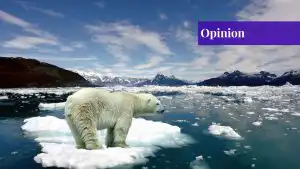
However, the final frontier of Earth is now sending us signals of risk as it has received the lowest snowfall as of 2024. According to a report by the NASA Earth Observatory, Antarctica reached its lowest sea ice extent in February 2024, which was estimated to be 30 percent below the 1981–2010 end-of-summer average. Researchers worry about basic ice melt patterns in Antarctica because sea ice loss affects both ocean and air temperature stability. The mix of warm ocean water from other planetary regions with water at the surface causes problems for sea ice growth. The rising temperature in the water now presents an obstacle to ice development.
Geopolitical Competition & the Future of Antarctica
Due to the rapid melting of ice, Antarctica would soon become more accessible and easy to explore further and deeper. Antarctica is rich in oil and other natural resources. Oil reserves are almost depleting elsewhere, and soon the world will face a massive oil shortage. Hence, the economic pressures would drive nations to consider resource exploitation. The thinning of ice in Antarctica would make the mining and drilling of oil and other resources much easier.
Therefore, climate change would allow potential violations of Atlantic Treaty principles, probably leading to global war over resources and territory. The Atlantic Treaty system that keeps the region protected would no longer be able to maintain its hold because it is not hidden from the world how far states can go to exploit regions in the name of resource extraction. The increased presence of major powers (China, Russia, and the USA) in research and logistics, along with the territorial claims from countries like Argentina, Chile, and Australia, would more or less expose militarization risks disguised as scientific activities.
It is high time for the world to view Antarctica as a global issue since climate change would heavily impact the activities of the entire world. The Antarctic Treaty should be updated to address issues like climate change and should implement stricter regulations on scientific activities on the continent. This should serve as a wake-up call for the world that despite overwhelming ice and snow, nations still built scientific stations in hard-to-reach locations of Antarctica.
The decreasing ice cover from climate change would let nations access Antarctica more easily as they move to exploit natural resources. The melting ice in Antarctica will create intense international resource competition that will harm global cooperation and threaten the shared legacy of preserving Antarctica.
If you want to submit your articles and/or research papers, please check the Submissions page.
The views and opinions expressed in this article/paper are the author’s own and do not necessarily reflect the editorial position of Paradigm Shift.

Raana Zahid is currently pursuing her bachelor's in peace and conflict studies from National Defence University, Islamabad.