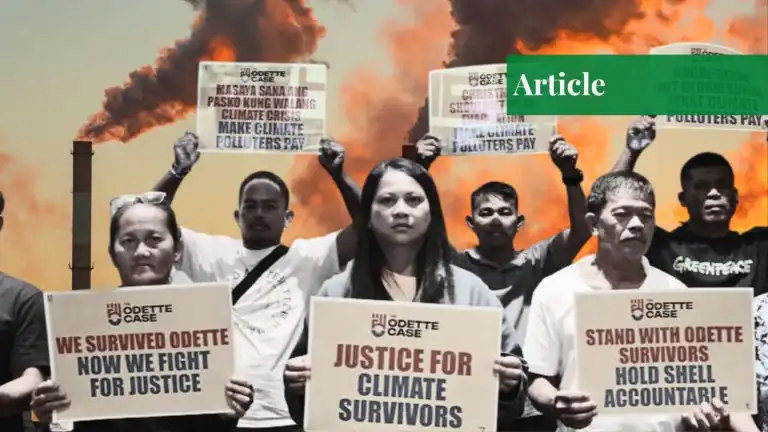
The slow, yet ever-important growth in climate litigation is becoming the torchbearer for implementing climate change policies and bringing about real change. Decades ago, pollution was not as massive a concern as it is now.
The discharge of gases and waste was considered to be legitimate, as resources back then were not considered to be scarce or depleted, thus water and air were used as ‘sinks’ to dump their waste. There were no safety regulations about waste management or sustainable water practices at the time of the Industrial Revolution but incidents like the Great Smog of London in 1952 which claimed thousands of lives due to extreme air pollution, the Donora smog in the US and the Minamata Mercury Poisoning in Japan were a grave reminder of the reckless and haphazard industrial expansion and negligence which led to the loss in environmental and human life. These devastating consequences, along with other notable incidents, highlighted the urgent need for compliance mechanisms to hold polluters accountable. As a direct response to the urgency of the matter, the emergence and adoption of the Polluter Pays Principle (PPP) have come to the agenda of many countries, including the major emitters.

Historically, the concept of the Polluter Pays Principle has been ingrained in both Western and Eastern traditions. As found in a passage from The Dialogues of Plato: The Laws, states: “If anyone intentionally spoils the waters of another; let him not only pay for the damages but also purify the stream or cistern which contains the water.” Indian philosopher Kautiliya, who dates back to 300 BC, also reaffirmed that financial penalties should be enforced on those who cause harm to the environment.
The liability of a state under international law for environmental damage and compensation has been briefly mentioned in Article 139 of the United Nations Convention on the Law of the Sea (UNCLOS), which states that damage caused by the failure of an international organisation to carry out its responsibilities under this Act shall entail liability. The main aim of putting this sort of liability on the states is that it acts as an incentive and promotes adherence to environmental obligations, with hopes that it would restore the degraded and polluted environment. In Principle 16 of the Rio Declaration (1992), the Polluter Pays Principle has been mentioned to reduce the burden on taxpayers for the cleaning up of waste disposal, as over the past 40 years, industries have been engaging in activities that create harmful emissions and become a cause for the degradation of the environment. Furthermore, it stipulates that polluters should bear the cost of the pollution while ensuring that public interest is protected, and maintaining fairness in international trade and investment.
The Polluter Pays Principle for the very first time was held by the Indian Supreme Court in the case of the Indian Council for Enviro-Legal vs. Union of India (3 SCC 212 1996), where Public Interest Litigation was filed for the pollution caused to the environment by private industries. It was stated that the industrial plants had not even procured the clearance or consent to treat the chemicals that consisted of highly toxic contents and gases. The toxins had seeped into the core of the Earth and had consequently contaminated the water table for humans, agriculture, and animals alike. These issues raised a question of whether or not the industries responsible for the contamination should be held liable or not. The Supreme Court of India held that it was the duty of the court to counterbalance the unjust enrichment. Moreover, the court, for the first time, relied on the Polluter Pays Principle, where the cost was recovered from all the big industrial businessmen for polluting the environment and endangering the lives of the villagers without proper treatment of the hazardous chemicals. The court had also ordered that such waste emission industries should be shut down, and they should contribute to the restoration of the environment that was damaged by them.
In May 2025, in the case of Luciano Lliuya v. RWE AG, the Higher Regional Court of Hamm in Germany also upheld this principle, stating that majorgreenhouse gas emitter can be held accountable for the impacts of their emissions under the German Civil Law. In this case, a farmer residing in Huarez, Peru, alleged that RWE, Germany’s largest electricity producer, was responsible for the increased flood risk from the melting mountain glaciers near his hometown. However, it was also reiterated by the court that this accountability does not open the doors to lawsuits against every individual emitter. An individual’s personal emissions are so minor that they do not give rise to liability.
As of present, more than 3000 cases have been filed in 60 countries regarding climate litigation. The number of cases being filed has seen a rapid surge in the past three years. The maturing of climate litigation, if strategically harnessed, could be a legal and policy goldmine for Pakistan, but unfortunately, this area of law is still widely unexplored in Pakistan. Its comprehensive inclusion in Pakistan would require increased judicial activism, as demonstrated in the landmark judgment of Sheila Zia v. WAPDA (1994 SC 693), capacity-building sessions with imminent and fresh lawyers, and cohesive institutional coordination.
The recent inclusion of Environment Law as a subject in the widely opted for University of Punjab LLB Program is a promising step to mainstream environmental awareness, consciousness, and to familiarise aspiring future lawyers with the rising climate litigation.
The surge in climate litigation is a welcome change, as progressing in this direction would ensure that environmental justice might be delayed, but not denied. Climate litigation is not only a pathway to seek amends for the errors of the past, but also safeguard our present and future. It must be kept in mind that climate change is not caused equally, nor is it felt equally, but the justice it demands should be.
If you want to submit your articles and/or research papers, please visit the Submissions page.
To stay updated with the latest jobs, CSS news, internships, scholarships, and current affairs articles, join our Community Forum!
The views and opinions expressed in this article/paper are the author’s own and do not necessarily reflect the editorial position of Paradigm Shift.

The writer is a final year law student at Pakistan College of Law. She can be reached at rameenhabib23@gmail.com.