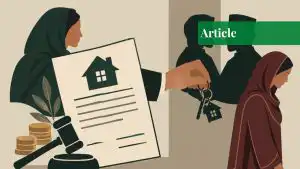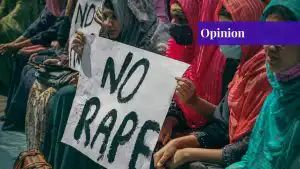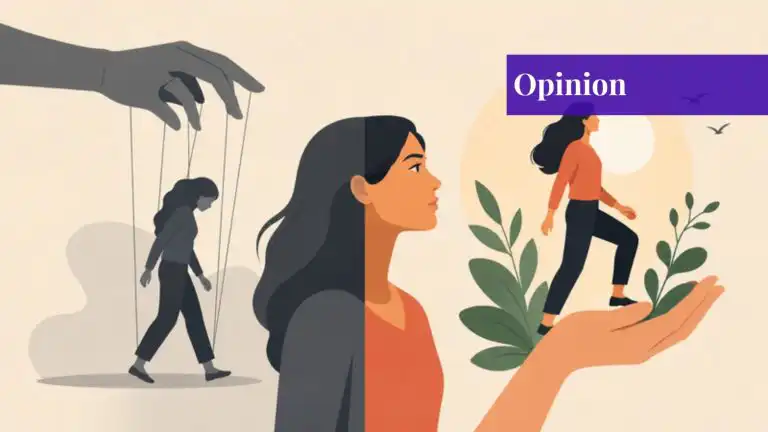
The problem, nowadays, is not merely that many women are denied independence. The deeper problem is that men, families, and society are often not mature enough to respect the few women who do become independent. A society that does not know how to coexist with independent women will continue to preserve misogyny, whether women are earning or not.
So, what is independence? If a woman is earning and still unable to live the life she wants, what makes a woman independent? Everyone is entitled to their own opinions and thoughts. I think it is free will and the exercise of consent that make a woman independent. For example, if a woman wants to stay in her house as a house wife and raise kids while she wants her husband to fulfil her needs as that’s his duty as a husband, and if she is given all of that without being pressurized to work and earn for family to do “50/50” that’s empowerment, as her consent to stay at home and raise kids is respected without trapping her in guilt trip and she is well provided for, for all her needs. Contrary to that, a woman who is working and still expected to do everything at home, from raising kids to doing laundry to cooking food and fulfilling her husband’s needs without her consent, is not empowered. Independence, in its truest sense, is not merely the ability to earn. It is the ability to make choices about one’s life, body, marriage, work, motherhood, education, and emotional needs without coercion, guilt, fear, or social punishment.
In the present times, all these concepts and phenomena have stopped working distinctly in distinct black and white areas and are working in a mess of grey areas. And it is exactly this grey area that abusers are using for their benefit. Unfortunately, now we don’t have just illegal or legal relationships between two genders, but we now have consensual acts, rape and marital rape; now we don’t have misogyny and harassment but decorated misogyny and calculated harassment; now we don’t have a housewife or a working woman, but now we have a stay-at-home mom, an independent woman or a shackled-earning woman. Before turning to statistics, one only needs to observe everyday households: who adjusts their career for children, who carries the emotional burden of marriage, who sacrifices sleep, health, and ambition, and who is blamed when the relationship collapses? Look around and see how many women are actually happy with their husbands and are truly living their marriage. Look around and see how many women are raped in their marriages. Look around and see how many parents know, understand, and acknowledge terms like marital rape and would support their daughters if she complains about it.
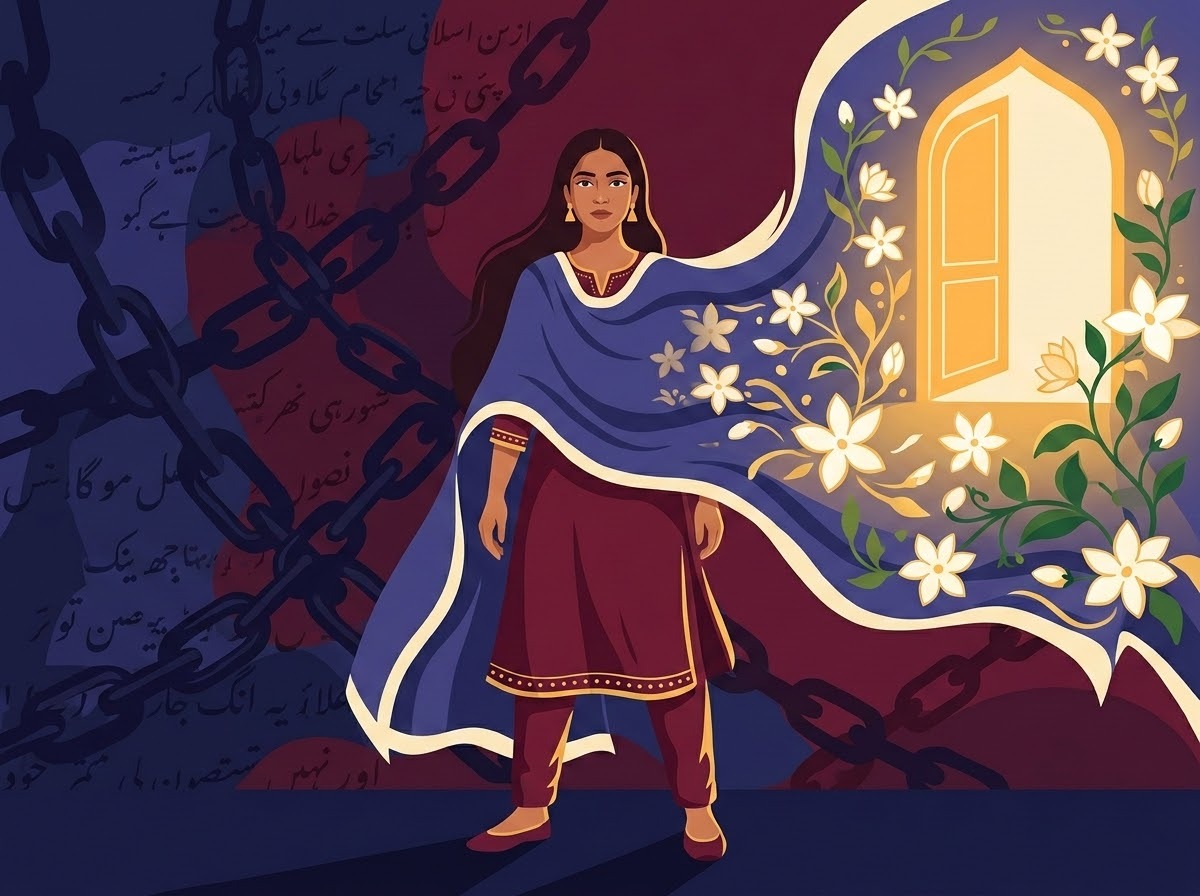
Unfortunately, the men in our society still consider women their property and not as individual beings. They are still expected to perform like robots and expected to stay happy while doing so. Why? Because “achi larkian aise nahi karti” and no one knows who decided these characteristics of an “achi larki.” And you know what the worst part is? The worst part is that all of this is being practiced in the name of a religion that itself has empowered women the most.
To understand women’s empowerment within an Islamic framework, two concepts are particularly relevant: Qawwam and Kuf’/Kafa’ah. Qawwam, in its original context, is understood as responsibility, protection, and financial maintenance, not ownership or control. A man’s role as qawwam does not give him the right to dominate a woman; rather, it makes him accountable for her dignity, safety, and well-being. In the simplest terms, Qawwam is a provider. In Islam, the father, brother, son, and husband are Qawwam.
A Qawwam is bound by the Almighty to provide food, clothing, shelter, and her needs that include material as well as non-material things. This also includes provisions to be made for her education, career, and marriage. In Islam, a woman is supposed to be the Queen of the house and not someone who has to beg for basics. A woman is not supposed to beg for food, clothes, empathy, warmth, and connection. A woman is not supposed to work for her children’s food, clothes and other basic needs. Even when a woman breastfeeds her child, she can demand monetary compensation for it. It is the duty of a father to get her daughter a good education and then get her married to the man she consents to, or stay single if she wants to stay single. It is the duty of her husband to take care of her dignity, food, clothes, and shelter as per her requirements and standards. If at any point a conflict arises and they find it hard to live with each other, Allah has given the way out as Divorce or Khula with dignity.
The human body belongs to Allah; that is why suicide is haram. If one cannot harm one’s own body, how can we harm someone else’s body, let alone a woman whom you are supposed to protect and would be held accountable for? A woman cannot be called independent if her consent is ignored within marriage. Marriage does not erase personhood. It does not convert a woman’s body, labor, emotions, or silence into permanent permission.
The other concept of Kuf’ or compatibility reminds us that marriage is not merely a social arrangement. It requires suitability, consent, respect, and shared values. Yet in many societies, when a woman considers compatibility, financial stability, family background, attraction, or religious character, she is judged for exercising the very discernment that marriage requires. When a woman and a man get married, they are supposed to look for compatibility, a parameter outlined by the Holy Quran itself. And now, when we read this ayah together with what the Holy Prophet, peace and blessings be upon him, said, we come to know about 4 parameters that we can consider to look for in compatibility. These are beauty, wealth, family name, and deen, out of which the Holy Prophet preferred deen. It is important to note that the guideline given by the Quran to get married is compatibility, and what we are supposed to do is to look for compatibility in these four domains. Now, if we talk about the present era and come across someone choosing their life partner on the basis of beauty, wealth, family name and deen, that person is judged, especially if it’s a girl.
The millennial women are not just fighting this generational gap, but also preventing the inherited gender-biased baggage from being passed down to their younger siblings and children. They have normalized conversations about mental health, postpartum depression, emotional abuse, and personal boundaries. They chose honesty over silence and self-respect over social approval. They called oppression by its name, refused to fit into narrow definitions of womanhood, and preserved their individuality. They have the guts to call a spade a spade, and know their worth is not determined by an ignorant mind. The impact of this resistance is already visible in Gen Z and Gen Alpha.
In essence, true empowerment cannot be measured only by income, education, marriage, or motherhood. It is measured by whether a woman’s consent is respected, her dignity is protected, her aspirations are acknowledged, and her humanity is recognized. Empowerment begins at home, not in slogans. Until families learn to practice the respect they claim to believe in, women will continue to remain independent in theory but shackled in reality.
If you want to submit your articles and/or research papers, please visit the Submissions page.
To stay updated with the latest jobs, CSS news, internships, scholarships, and current affairs articles, join our Community Forum!
The views and opinions expressed in this article/paper are the author’s own and do not necessarily reflect the editorial position of Paradigm Shift.
Ammara Arif Baloch is a civil servant holding a Master’s
degree in Economics and a B.Ed. She has a keen interest in public policy, education,
socioeconomic development and women’s empowerment. She qualified for the CSS 2023,
Special CSS and PMS KP examinations. Before joining civil services, she spent nearly
five years teaching in private schools where she participated in professional
development programs conducted by Oxford University Press.