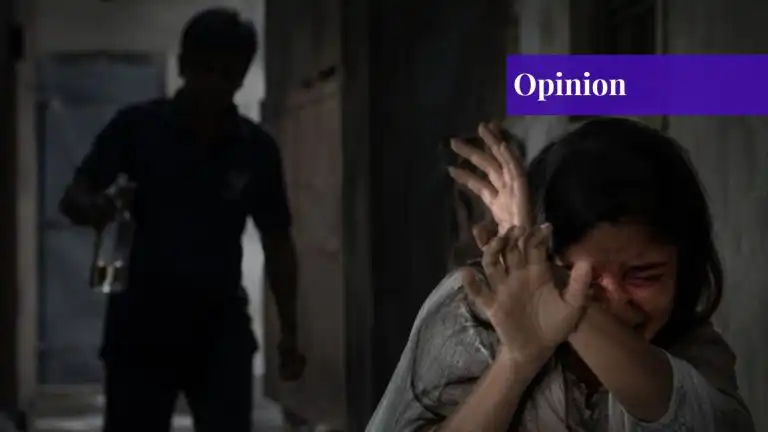
“You can’t give up hope. When you give up hope, you’re dead,”
– Serwari, an acid violence survivor interviewed by EFU Life.
Acid attacks last only moments. However, the damage they cause can last a lifetime.
In India and Pakistan, despite differences in legal frameworks and government policies, the basic social structures that enable these types of crimes have remained astonishingly alike.
Ashish Shukla, Chief Executive Officer (CEO) & Co-Founder of Chhanv Foundation, India, states that the most frequent trigger of acid attacks today is rejection and is typically linked to ego and household conflict. He notes that the causes of these incidents go far beyond individual anger and are instead rooted in how many South Asian men are socialized to view aggressive behaviour as acceptable. In these cultures, rejection is never viewed as a refusal. Instead, it is always seen as humiliating. Therefore, violence is viewed as a way to regain a perceived loss of control.
While India has been able to make great strides legally since 2000 regarding the regulation of acid sales and protective laws for survivors of acid violence, Shukla believes that law changes will not solve the fundamental problem. Through the work of Chhanv Foundation, survivors receive medical treatment, legal aid, psychological counselling, rehabilitation services, and support in becoming financially independent. However, Shukla indicates that the most consistent barrier to successful recovery for survivors is the socialization of society. Women continue to be dehumanized and viewed as objects to be owned and controlled.
The story of India’s acid violence and its response is one of limited success in addressing a deep-seated social issue. The story of Pakistan’s response to acid violence is very similar.
Sabra Sultana is a team member at the Depilex Smile Again Foundation. She speaks not just as a trained professional working with survivors but also as a survivor herself. Acid violence, Sabra says, is not just a physical injury. It is a destruction of identity, a transformation of social existence, and a separation from those around us.
She describes her personal experience with incredible detail. At the age of 15 in 1992, she was married and just months later suffered an acid attack by her husband when she was 2 months pregnant. People witnessed the attack from rooftops. They did nothing to stop the attack. And why would they? According to Sabra, it was “a domestic affair.” And that silence, she claims, is a part of the crime itself.
Her recovery process, like many others, was not straightforward. Rebuilding her life required surgery, emotional collapse, and trying to live in a body that society views with judgment. Yet she also talks of being resilient due to help from friends and especially her mother, who stood by her during all the times society turned away.
Today, Sabra works with Depilex Smile Again, providing reconstructive surgery, psychological counselling, vocational training, and job placement for survivors. As someone who experienced this type of trauma firsthand, she chose to use her experiences to help build lives back together for other women.
However, she is clear-eyed about the roadblocks to justice faced by survivors in Pakistan’s judicial system. Legal proceedings involving survivors are often fragmented among various court hearings and lawyers, creating continuity issues. Many families force survivors to remain silent to protect their “honour.” Some survivors are coerced into private settlements due to fear of social or economic repercussions. Even accessing timely medical care may be delayed until legal formalities are completed. These obstacles combine to create a justice system that delays justice and dilutes it.
As noted above, Bangladesh provides a comparative example. With hundreds of reported acid attacks each year in the early 2000s, new regulations were established governing the sale of acid. New punitive measures were enacted via specific laws designed to protect survivors. In a short time, reported acid attacks decreased by more than 70-80%. While Bangladesh represents one of the few documented cases in South Asia where legal restrictions effectively decreased the incidence of acid attacks, advocates caution that cultural factors that drive acid violence persist beneath the surface.
As previously stated, reported incidence levels vary across countries, and experts suggest that underreporting persists throughout India and Pakistan due to stigma surrounding acid attacks, pressures placed upon family members to maintain secrecy regarding assaults committed within family relationships, and the frequency of private settlements between parties involved in an assault.
Therefore, it is apparent that what is unfolding across national borders is not a collection of discrete national crises resulting from a variety of unrelated events or behaviours; rather, it is a social structure shared across regions where rejection is normalized politically and socially, and women’s autonomy is still considered negotiable.
Therefore, the impact of acid violence extends beyond medical or legal realms. It extends into the realm of social realities. Survivors often find themselves negotiating daily life in environments that fail to recognize them except in reference to what was done to them. Additionally, while the actual violence ends at the moment of injury, it does not end in terms of gaze, language, or exclusion.
Both Ashish Shukla’s assessment of the sociological conditioning that creates and sustains acid violence and Sabra Sultana’s experience of surviving acid violence indicate that the ultimate obstacle lies not in preventing further attacks from occurring, but rather in eradicating the social reasoning that allows them to occur.
Thus, measuring justice based on legislative accomplishment or conviction rates only tells half the story. Justice must measure itself on whether dignity has been restored, whether stigma has diminished, and whether the opportunity to lead a typical life has been regained.
If you want to submit your articles and/or research papers, please visit the Submissions page.
To stay updated with the latest jobs, CSS news, internships, scholarships, and current affairs articles, join our Community Forum!
The views and opinions expressed in this article/paper are the author’s own and do not necessarily reflect the editorial position of Paradigm Shift.

Areeba Hammad is a NUST student and emerging writer whose work focuses on gender, society, and contemporary issues within South Asia. She is particularly interested in feature writing and socially driven narratives centered on youth and marginalized voices.