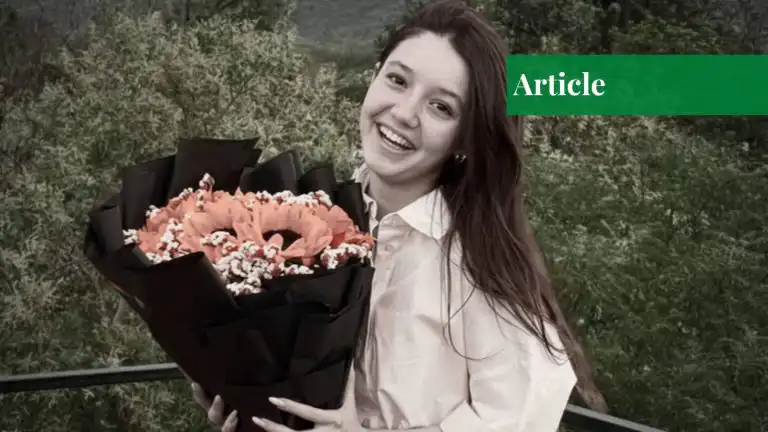
She had just turned 17. The video celebrating her birthday was still active on TikTok, where the scene included pink balloons, a cream cake, and a girl smiling at the camera with the backdrop of the Margalla Hills behind her, when Sana Yousaf was shot twice in the chest at her home in Islamabad’s G-13 sector.
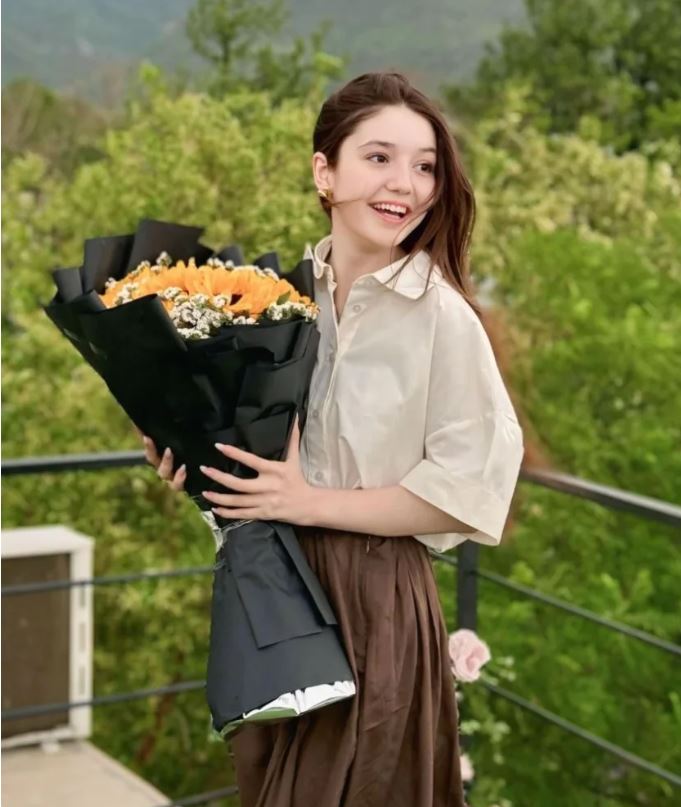
This occurred on June 2, 2025. Her killer, a man named Umar Hayat (a 22-year-old), came from Faisalabad for her birthday celebrations. He killed her after entering her home when she refused to open the door. Sana had over a million followers on different social media platforms. She utilized her popularity to raise awareness about Chitrali culture and promote female education.
Sana wanted to be a doctor, but she was killed instead, which sparked nationwide outrage with protests at the National Press Club, trending hashtags on Pakistani Twitter, and a Senate committee calling her parents to explain what went wrong. What went wrong, according to some people, was not just a madman’s delusion but a failed system that had let her down even before he showed up at her doorstep.
Almost a year later, the question this article aims to answer is rather straightforward: Has anything really changed?
Fame’s Double Life
Ask anyone who’s been through it, and they will confirm that getting famous on social media in Pakistan is something that happens instantly and something that comes at a cost that you hadn’t even considered.
Ali Gul Pir, an established musician and creator, vividly recalls the moment when everything changed for him. He released his first hit song, and the next thing he knew, he was on a public bus where strangers recognized him. “It was overnight,” he said. “I became very conscious of the fact that almost everywhere I went, people knew me or knew my work.”
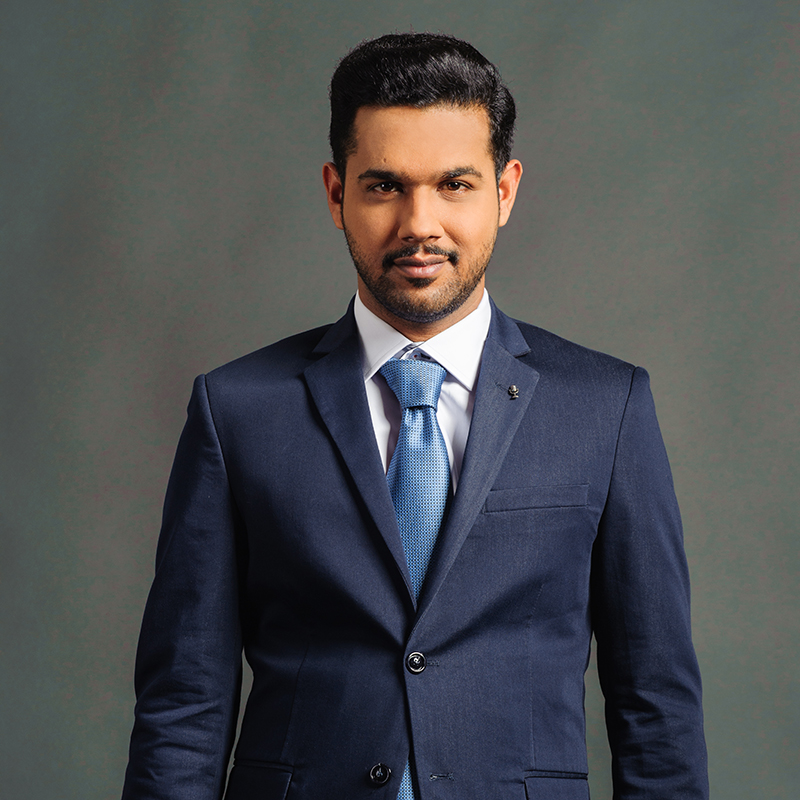
With this sudden fame came the restructuring of his life. He realized that his life in the public sphere would never be the same. Public life and private life had to be maintained as entirely separate entities. “You kind of learn to divide yourself into two,” he explains.
It also meant that private life could not be the same anymore. In a country where fame is synonymous with scrutiny, his wife, who was a doctor by profession, also became a part of his life in the public eye. Rumors spread about Ali that he was associated with the Illuminati, that he had been paid to attack the reputation of ethnic groups. “You read about these things, and it does affect your mental health. You trust fewer people. You don’t let yourself just be.”
For Arsalan Ihsan, a professional model and social media influencer who came into the business at a more advanced age than others, having an established identity helped. Having gone to Oxford, specializing in math, and having worked at multinational firms, Arsalan felt, as he puts it, “a lot of security.”
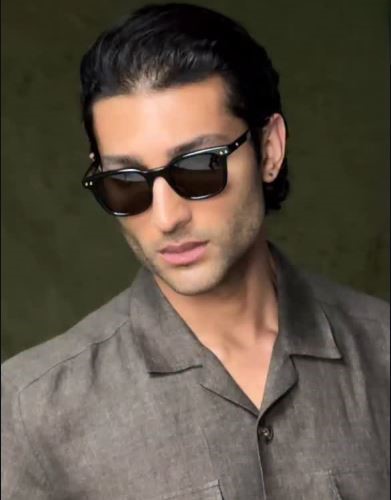
If anyone at a wedding ever made any derogatory remarks regarding his profession, they wouldn’t have been able to get to him. However, Arsalan also admits that his peaceful state of mind owes itself to his privilege as well. “Maybe my experience has been rather smooth,” he says. “I’m not as big a deal, really, like Mahira Khan.”
Another voice among our young interviewees is Aleena Zaman, an online content creator and LUMS student hailing from Gilgit-Baltistan. Aleena, too, paints a different picture. With 24,000 followers on Instagram, enough to be recognized publicly but not quite enough for the industry to have rewarded her for all the things it has taken from her, she says she gets “uncomfortable messages almost every single day.”
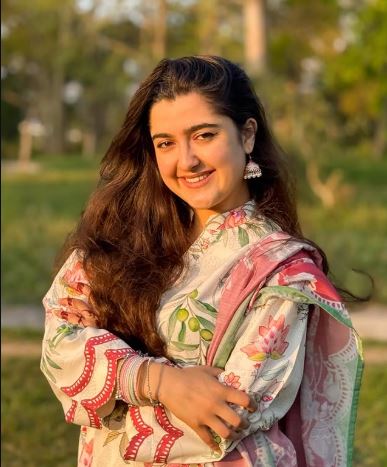
These range from threatening and abusive remarks. Aleena’s reaction, similar to the rest of the women who are active online in Pakistan, is to ignore these messages and let go of them. “My primary way of managing this is to ignore the messages entirely,” she says. “I focus on maintaining my mental peace.”
She has stopped going anywhere alone since she was once identified at a public place and felt uncomfortable about it. She uses a private social media account exclusively for her family. She does not share her live location. These are not methods used by someone who feels safe. These are methods used by someone who has come to realize she cannot rely on safety anymore.
The False Familiar
It is not only the high frequency of such incidents but the type of relationship between influencers and their admirers that differentiates the risk landscape for the Pakistani creative class. Unlike a Bollywood star, who can rely on bodyguards and agents, the very essence of the Instagram influencer is their proximity. They seem relatable. They look understandable. However, for some people, unstable, obsessive, or merely brought up in the context of male privilege being unchallenged, there is an entirely different dimension to such feelings.
Ali Gul Pir recalled one particularly harrowing experience of receiving threats from a college junior he did not know. The person began to make threatening posts on Facebook before moving on to message his wife directly. The police investigation revealed that both the father of the aggressor and his son were diagnosed with schizophrenia, and the man had convinced himself that the artist had made his life miserable, stealing the girl who had once casually posed for a photo with him. “You do not know how people perceive you when you are famous,” he notes, “how extreme they can get with their thoughts.”
As Arsalan observes, the problem is structural in its nature. For him, Pakistan is a country where the rule of law has been inconsistent and where the acts of vigilantism have been glorified by the violence they commit. Pakistan has become dangerous for the artists because their works are present in people’s homes every day in the evenings. “You don’t know that at night, someone is fixating on your photographs,” he says carefully, “and when the morning comes, says ‘you misled me.'” It is not merely theoretical. He refers to the killing in G-13 directly; a girl was murdered because someone perceived that a rejection had caused enough damage that it warranted the ultimate punishment.
The gender-specific nature of this threat is evident. The two male interviewees have no qualms about stating it. “For women, it’s unwarranted,” Ali Gul Pir says. “They can be doing nothing, just working and posting their stuff, and they’ll be harassed, or they’ll get a stalker.”
Female creators, on the other hand, hold a separate and more dangerous space because the audiences assume an illusory relationship with them, one based on the assumption that the more one watches another individual, the more one knows about them and hence owes something to them. “Pakistan is much, much more toxic and more unsafe for a female influencer,” he says. “You’ve seen many cases where someone has tried to abduct them or shoot them.”
The Promise of Platform Safety and the Difference Between Actions and Words
The response from the companies was not long in coming; almost immediately after the death of Sana Yousaf, TikTok promised that it would be taking down any videos, comments, and even hashtags related to misogyny on its platform. The same statement about helping women against online harassment was released by Meta as well.
Aleena Zaman says that TikTok “lacks accountability and proper measures” when you actually file a complaint. She has complained about certain harassing accounts and also comments. Most of these accounts still have not been taken down. “It feels as though the current reporting mechanisms are not rigorous enough to provide real protection for female influencers in Pakistan,” she says.
Instagram is slightly more efficient than TikTok, but still, the onus falls upon the influencer herself to protect her representation on social media platforms, she adds. It has required her to do some work to represent herself correctly on social media, including AI-generated images of her. “We still have to do a lot of the heavy lifting ourselves,” she says.
Her view on the accountability of these platforms is rather straightforward; they should be held accountable since they profit from their creators.” There needs to be a level of accountability and responsibility for the safety of creators as well as users,” she argues. The removal of videos after any harm has been done is what she refers to as reactive in nature. The problem requires preemptive measures, measures that prevent an issue from escalating.
On the level of legislation, Pakistani senators have introduced a social media ban for users aged below 16 within months of the death of Sana. This measure, according to the LUMS student, misses the point altogether. “Rather than banning social media, start educating people on how to use it in a beneficial and safe way,” she says. “A ban might be a temporary solution, but it misses the main issue of digital literacy and the lack of systemic protections.”
In the same vein, Arsalan has a similar objection. However, his emphasis lies not in the wording of the legislation itself, but rather in its implementation. He talks about countries where the consequences for both virtual and real-world misconduct are the same, that is, they exist and are enforced without fail.
According to Arsalan, Pakistan still has not proven itself in this regard. “If we can somehow show this,” he argues, “then not only the creator community but all communities will benefit equally.”
One Year Later: The Truth of the Matter
So has anything changed?
It would seem so. In their answers, the creative voices agree on some key points: communication has become more common, and awareness has risen. However, what hasn’t changed is the very same combination of circumstances that permitted the murder of Sana Yousaf to take place: entitlement, the inadequate implementation of cyberbullying laws, reactive platforms, and society blaming the victim in the comments.
“I don’t think much has fundamentally changed over the past year,” Aleena Zaman claims. “Female influencers still go through an incredible amount of scrutiny and harassment, and I feel there is a very long way to go before we reach a standard of true safety.”
The concerned authorities, according to her, have failed to establish appropriate norms and guidelines. For her and many others, safety is not something the state guarantees. Instead, it is something that one creates for oneself by setting limits and managing what is revealed and what is kept private.
The recommendation by Ali Gul Pir to young content creators encapsulates it with brutal honesty when he says, “Keep the person and the public figure totally apart.” Avoid showing your residence; avoid letting your schedule repeat in such a way that a stranger could predict it.
“The Alishba [referring to the interviewer, Alishba Qamar Malik] who makes her lifestyle content and the Alishba who comes home from work, they have to be two completely different people to your audience,” he says. Not because your audience is dangerous, but because you never know who among them is.
Sana Yousaf knew her murderer. He was not some unknown predator online. This person was one she had conversed with, one who knew her number, one who had wanted to meet her on her birthday. Yet even so, she could not have anticipated his response when she turned him down.
This is the situation that no platform policy and no Senate hearing has come close to addressing. Until that happens, creators from Pakistan, and particularly Pakistani women, will go on building their own walls, reducing their own risks, and paying their own prices for visibility, all while their male counterparts can largely avoid doing so.
If you want to submit your articles and/or research papers, please visit the Submissions page.
To stay updated with the latest jobs, CSS news, internships, scholarships, and current affairs articles, join our Community Forum!
The views and opinions expressed in this article/paper are the author’s own and do not necessarily reflect the editorial position of Paradigm Shift.
Sana Mustafa is a second-year mass communication student at the National University of Sciences and Technology (NUST), Islamabad.

Alishba Qamar Malik is a Pakistani mass communication student at the National University of Sciences and Technology (NUST), Islamabad.