In 2025, China doesn’t need aircraft carriers to control the global energy transition. It needs smelters, patents, and the digital architecture of a billion solar panels.
The Thesis
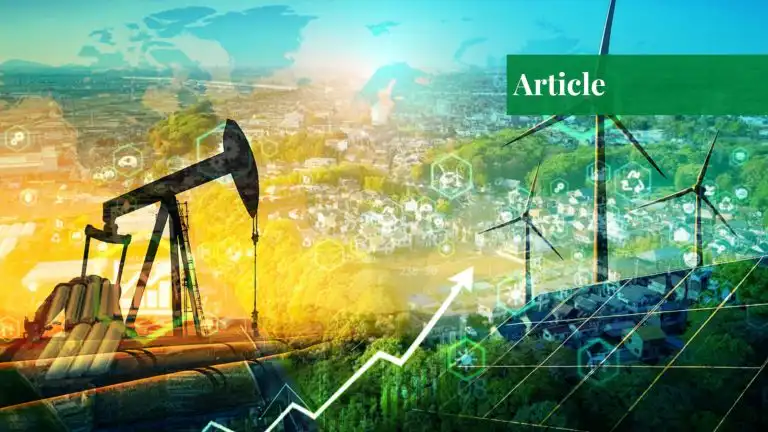
Forget everything you know about energy geopolitics. The 20th century was defined by “who controlled the oil well.” The 21st century belongs to those who install the operating system. In the fossil fuel era, power flowed from geological accidents—oil buried beneath Saudi dunes, ancient forests compressed into Siberian tundra. These were extractive monopolies: valuable because they were scarce, and scarce because nature made them so. Control the wellhead, control the world.
The energy transition has inverted this logic entirely. Solar irradiation and wind patterns are ubiquitously available to anyone with land and ambition. The new scarcity isn’t natural; it’s manufactured. China doesn’t dominate solar because it has better sunshine. It dominates because it has built the infrastructure to turn silicon into power at a scale that makes competition economically irrational.
This is the rise of the electro-state: a nation whose power derives not from what it extracts from the ground, but from what it fabricates at scale. The Electro-state doesn’t seek resource colonies; it seeks supply chain gravity, the inescapable pull that makes other nations dependent on its industrial ecosystem.
The Three Hidden Battlegrounds Nobody’s Talking About
While analysts obsess over lithium mines and battery factories, the real rivalry unfolds in shadow arenas that don’t fit conventional geopolitical frameworks.
The Waste Arbitrage: The Coming Solar Panel Catastrophe
Here’s a dirty secret of the clean energy revolution: Solar panels are about to become the next plastic crisis. By 2050, the world will face 88 million tons of solar waste. Currently, recycling a single panel costs $20-30; dumping it costs $1-2. The math is brutal, and the environmental irony is exquisite: the symbols of sustainability becoming toxic landfills.
But this isn’t just an environmental problem. It’s a strategic choke point. China, having installed the majority of global solar capacity, is now facing the first wave of decommissioning. Its response to mandatory recycling laws, state-funded recovery infrastructure, and technology to extract silver and silicon at scale is creating a secondary monopoly. While the West debates whether to subsidize panel manufacturing, China is building the end-of-life infrastructure that will soon be indispensable.
The electro-state understands that waste management is the new frontier of resource security. Tomorrow’s solar waste contains higher concentrations of valuable materials than today’s virgin ore. By controlling the recycling technology, China ensures that even panels manufactured elsewhere eventually flow back into its industrial ecosystem. It’s not just vertical integration; it’s circular integration.
The Hydrogen Diplomacy Complex: Middle Eastern Rivalry 2.0
The Middle East is undergoing a transformation stranger than fiction: petrostates are becoming electro-states before the oil runs out. But this isn’t a unified pivot; it’s a fratricidal race between Saudi Arabia and the UAE that could reshape regional power dynamics.
Saudi Arabia’s NEOM project aims to produce 200 kilotonnes of green hydrogen annually, five times the capacity of China’s current largest facility. The UAE has responded with its own 100 GW renewable target by 2030. This isn’t cooperation; it’s renewable energy as a regime survival strategy.
The twist? Both are using green hydrogen not primarily for domestic decarbonization but as geopolitical arbitrage instruments. Europe’s desperate search for alternatives to Russian gas has created a market where hydrogen becomes a political commodity valuable not just for its energy content but for its diplomatic leverage. The EU’s SouthH2 corridor, connecting North African hydrogen to European industry, is essentially a 21st-century pipeline diplomacy that bypasses Russian territory while creating new dependencies.
But the real innovation is hydrogen as a tax-haven technology. Green hydrogen production requires vast renewable energy capacity in jurisdictions with cheap land and permissive regulations. This is creating a new category of energy transition tax arbitrage where Middle Eastern sovereign wealth funds use hydrogen projects to capture green subsidies from Western governments while maintaining the opaque financial structures that made them famous in the oil era.
The Cartel That Cannot Exist: The OMEC Paradox
Indonesia has proposed an Organization of Metal-Exporting Countries (OMEC), an OPEC for nickel, cobalt, and manganese. The lithium triangle (Argentina, Bolivia, and Chile) has discussed a similar cartel. Russia and South Africa signed a 2013 memorandum on platinum group metals that could form the nucleus of another.
These efforts will fail. But their failure is more interesting than their success would be. Unlike oil, critical minerals face substitution elasticity. When OPEC raised prices in 1973, the world had no alternative to petroleum. When nickel prices spike, battery manufacturers simply pivot to lithium-iron-phosphate chemistry, which requires no nickel at all. The share of LFP batteries in EVs jumped from 7% in 2019 to 40% in 2022 precisely because nickel became politically complicated.
This creates what we might call the “Cartel Paradox of Clean Energy.” The more successfully resource-rich countries coordinate to raise prices, the faster they accelerate the technological innovation that renders their resources obsolete. The electro-state’s true power isn’t controlling mines; it’s controlling the innovation pathways that make mines irrelevant.
But there’s a darker corollary. If producer cartels are structurally doomed, buyer cartels are politically toxic. The EU’s proposed Critical Raw Materials Club and the G7’s production alliances are essentially attempts to form consumer-side cartels. These risks trigger a “resource nationalism” backlash in the Global South, where countries like the DRC and Zambia, tired of being treated as geological convenience stores, nationalize assets or pivot to Chinese partnerships that promise (however emptily) technology transfer.
The result is a bifurcated world where supply chains fragment into competing blocs, each with incompatible standards, certification schemes, and ESG requirements. This isn’t globalization; it’s green feudalism, where access to clean technology depends on political alignment rather than market efficiency.
The Shadow War: When Energy Infrastructure Becomes Cyber Territory
The most underreported dimension of energy transition rivalry is infrastructure as an attack surface. Russia’s Sandworm unit has already targeted Danish energy companies, Polish heat and power plants, and Norwegian hydroelectric dams. In April 2025, hackers opened a dam valve at full capacity, draining a reservoir not for immediate economic gain but to sow strategic uncertainty.
This is hybrid warfare in the electro-state era: attacks that don’t target oil tankers or pipelines but grid management systems, renewable generation controls, and battery storage networks. The more decentralized and digitalized the energy system becomes, the more vulnerable it is to asymmetric disruption.
Here’s the unique twist: renewable energy infrastructure is more vulnerable than fossil fuel infrastructure. A refinery is a hardened, centralized target with decades of security evolution. A solar farm is a distributed network of inverters, sensors, and grid connections, each a potential entry point. The energy transition, for all its climate benefits, has expanded the attack surface of national critical infrastructure by orders of magnitude.
The electro-states are responding with cyber-physical mercantilism: embedding surveillance capabilities in exported grid technologies, requiring backdoors in critical infrastructure software, and using energy technology exports as intelligence collection platforms. When China installs a smart grid in a developing nation, it’s not just selling hardware; it’s establishing persistent access to that nation’s energy nervous system.
The Inversion: When the Periphery Becomes the Center
Traditional geopolitics treats the Global South as a resource periphery, the place where raw materials come from to be processed and value-added in the core. The energy transition is creating a structural inversion that could be more revolutionary than decolonization itself.
Consider this: the DRC holds 70% of global cobalt reserves. Indonesia dominates nickel. Chile and Australia control lithium. These aren’t just geological accidents anymore; they’re bargaining chips in a new industrial diplomacy. The “Wakanda Rule,” refine what you mine and keeps the change, is emerging as a development strategy.
But here’s the cruel irony: processing requires electro-state capabilities that the Global South lacks. Building a refinery isn’t just capital-intensive; it’s knowledge-intensive in ways that create new dependencies. When the DRC tries to move up the value chain, it finds that China has already captured the processing technology patents, the equipment supply chains, and the offtake agreements that make independent industrialization nearly impossible.
This creates a neocolonial trap dressed in green clothing. The energy transition promises to democratize energy access, but the infrastructure of transition is more concentrated than oil ever was. At least oil had multiple producers, multiple trading routes, and multiple refining centers. Clean energy has single points of failure that make the old “Seven Sisters” look like a competitive market.
The Global South’s response is strategic ambiguity, playing US, Chinese, and European investors against each other while demanding technology transfer as the price of access. But this requires diplomatic sophistication that few nations possess. The result is a bazaar of competing green alliances: the US-backed “Minerals Security Partnership” vs. China’s “green minerals alliance” vs. the EU’s “strategic partnerships” vs. Indonesia’s proposed OMEC. Each promises development. Each delivers dependency in a different currency.
The Synthesis: Energy Transition as Operating System Competition
Pull back, and the pattern becomes clear. The great powers aren’t just competing over resources or markets. They’re competing over which version of the future gets installed.
America’s model is financialized and fragmented: subsidies through the IRA (now uncertain under the second Trump administration), private equity-driven project development, and “friend-shoring” alliances that prioritize geopolitical alignment over economic efficiency. It’s an operating system designed by Wall Street, optimized for quarterly returns and investor protection, not rapid deployment.
China’s model is state-coordinated and vertically integrated: from polysilicon to panels to installation to recycling, with state banks providing patient capital and industrial policy mandating technology transfer. It’s an operating system designed by engineers, messy and inefficient at the micro level but unstoppable at scale.
Europe’s model is regulatory and normative: using carbon border adjustments, green taxonomy rules, and ESG standards to create market access barriers that favor its own (still nascent) clean tech industry. It’s an operating system designed by lawyers, elegant, principled, and “increasingly irrelevant” to the actual deployment race.
The rivalry isn’t about who has the best technology. It’s about whose infrastructure standards become the global default. This is why China fights so hard in international standard-setting bodies. It’s why the US bans Chinese EVs regardless of their quality. It’s why the EU’s carbon border tax is seen as green protectionism by developing nations.
The winner won’t be the country with the cleanest energy. It will be the country whose electrical architecture underpins everyone else’s.
The Conclusion: Rivalry as Evolutionary Pressure
Here’s the uncomfortable truth: this rivalry might be the only thing saving us.
The energy transition requires deploying technologies at a speed no previous industrial revolution has achieved. Market forces alone won’t do it; climate externalities are too poorly priced, capital too risk-averse, and incumbents too entrenched. Geopolitical competition provides the political will that market signals cannot.
China’s dominance has driven solar costs down 90% in a decade. The US-China battery competition is pushing energy density improvements that would have taken decades under pure market conditions. The “green arms race” is accelerating innovation through existential threat.
But the risks are equally profound. Fragmented supply chains mean duplicated infrastructure, wasted capital, and delayed deployment in the poorest nations. Weaponized interdependencies create energy transition fragility, the possibility that a trade war or cyberattack could stall decarbonization for years. And the focus on great-power rivalry risks writing off the Global South as collateral damage in a contest between electro-states.
The final irony? The energy transition was supposed to democratize energy, sun, and wind for all, ending the petro-tyrannies that distorted global politics for a century. Instead, it’s creating new concentrations of power that might be more durable than the old ones. At least oil reserves are depleting. Electro-state advantages, manufacturing ecosystems, technical knowledge, and infrastructure lock-in compound over time.
We’re not transitioning from fossil fuels to freedom. We’re transitioning from oil dependency to algorithm dependency, from petrostates to electro-states, from one geopolitical operating system to another.
The question isn’t whether the transition will happen. It’s who gets to administer the root access to the world’s clean energy infrastructure. And that rivalry has only just begun.
If you want to submit your articles and/or research papers, please visit the Submissions page.
To stay updated with the latest jobs, CSS news, internships, scholarships, and current affairs articles, join our Community Forum!
The views and opinions expressed in this article/paper are the author’s own and do not necessarily reflect the editorial position of Paradigm Shift.

Gender Specialist with a dedicated focus on climate resilience and social policy. I am currently serving as Assistant Director at the Prospective Policy Research Institute of Islamabad (PRII). I integrate gender analysis into national research and policy frameworks. My work is driven by the conviction that equitable and inclusive development is the cornerstone of a sustainable future for Pakistan.