
Low Self-esteem or Threatened Egotism
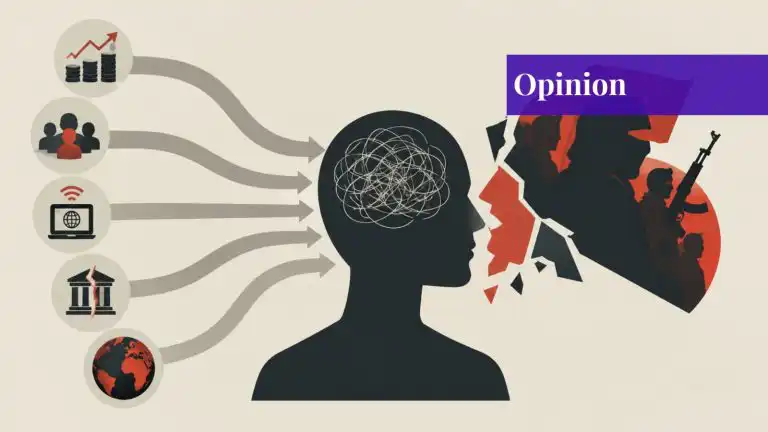
A longstanding misconception about extremism is that it stems from low self-esteem. This concept, however, is a flawed one, as it makes societies see political violence as a psychological problem, not the very forces that make it possible. It allows them to look upon the terrorist as a hurt child who turned into a monster, and a good therapist and some self-help books can cure him. However, a closer look debunks this theory since the issue is much more complicated and difficult to comprehend.
When researchers actually evaluate this “low self-esteem” theory, it continually fails. Roy Baumeister and his colleagues had been looking for a direct link between poor self-image and aggression more than 30 years ago. However, they couldn’t locate one. Rather, their results indicated an unexpected finding: people who do not feel good about themselves are more likely to react aggressively when they are insulted. Self-hatred is not the reason that this reaction happens, but actually a feeling of an attack on self-esteem, known as “threatened egotism.” Hence, violence usually emanates from those who think they are entitled to better treatment but are treated with disrespect.
This is not merely an academic debate. It is a question of life and death for many. In February 2026, the Afghan and Pakistani security forces fired across the border, killing many people and adding to tensions between the two countries. These tensions had existed for years before, especially since 2021, when the Taliban once again came to power, and they created an environment suitable for the Tehrik-i-Taliban Pakistan (TTP).
They do not say, “I am worthless,” but actually the quite the opposite. They claim a Pashtun homeland belonging to their people. It is not the feeling of disaffection that inspires such groups, but a powerful mix of grievance, feeling of entitlement, and wounded pride conveyed through the narratives of justice. Similar dynamics can be observed from the hills of former FATA to the Sahel and among lone-wolf attackers in Western societies.
Rejecting Oversimplification
The issue is far from simple, and any account that suggests otherwise is misleading. Structural theorists have repeatedly cautioned against placing the focus of the cause of terrorism entirely on psychological factors, instead pointing to numerous factors, including prolonged dispossession, continuous drone strikes, occupation of territories, and weak governments.
A rejection of oversimplified psychological explanations is warranted because there are political contexts to consider in relation to the causes of terrorism. But it is also not enough to have only structural explanations, since there are many people who live in poverty and are marginalized without committing acts of violence. Instead, it would be more appropriate to propose that individuals’ motivations are triggers to violent action and that structural conditions provide the environment in which violence can take place. That environment is endemic poverty and a state that is too weak, or too violently oppressive, to give people any legitimate ways to be heard.
The Significance Quest
How, then, does a psychological wound become a deadly weapon? The most convincing explanation comes from Arie Kruglanski’s “significance quest” theory. He contends that militants are rarely driven by feelings of insignificance alone. They are driven by the promise that violence will make them matter. A related manifestation of this dynamic is Nietzsche’s concept of ressentiment, the slow-acting poison experienced by those who cannot fight back, transforming their weakness into moral virtue and their opponents’ strength into an unforgivable wrong.
A century ago in Vienna, Alfred Adler called it overcompensation, an inferiority complex reinforced and transformed into a sense of superiority. After 25 years of interviewing survivors of Rwanda and other genocides, Evelin Lindner came to the same conclusion. As Lindner argues, humiliation is the “nuclear bomb” of human emotions. This is dangerous since it hides itself under the guise of justice.
If this assessment is correct, much of today’s counterterrorism efforts are actually inappropriate. People who are suppressed through border walls and drone strikes can become even more embittered and will be recruited as the next group of militants to further the humiliation narrative. The more difficult but ultimately effective task is to provide marginalized individuals with avenues to achieve significance without having to pick up arms.
Rather than ignoring, it is about giving them a voice, a chance for economic opportunity, and a reckoning with the historical grievances experienced by them. The governments routinely opt for the use of brute force rather than the tedious task of dealing with exclusion, humiliation, and political disenfranchisement. One provides short-lived security while the other provides permanent security.
Until the wounded pride continues to be mistaken, violence will keep multiplying in Kabul and elsewhere. Policymakers need to dispel the myth that extremists are weak people due to low self-esteem. The greater threat is posed by people and groups who are firmly convinced of their own righteousness, who are more or less angry, and who are intent on forcing the world to recognize the importance they see for themselves. In the absence of state action to address that reality, states will remain focused on treating the symptoms of extremism and contribute to the creation of the conditions that fuel extremism.
If you want to submit your articles and/or research papers, please visit the Submissions page.
To stay updated with the latest jobs, CSS news, internships, scholarships, and current affairs articles, join our Community Forum!
Find our FREE quizzes and MCQs here!
The views and opinions expressed in this article/paper are the author’s own and do not necessarily reflect the editorial position of Paradigm Shift.

Barira Mumtaz is a policy researcher specializing in international relations, regional security, and strategic studies, with a particular focus on Central Asian geopolitics and economic connectivity frameworks at IRS Islamabad. She is also pursuing an MS in Strategic Studies at NUST's Centre for International Peace & Stability (CIPS), Islamabad, and holds an MA in Political Science from the University of Sargodha.