“The conventional army loses if it does not win. The guerrilla wins if he does not lose.”
– Henry Kissinger
After 15 months of carnage, the Palestinian enclave of Gaza might experience relative peace following a ceasefire. As the Gaza war ends, asking who won or lost is prudent. After all, in a muddled conflict like the Israel-Hamas war, both sides know the importance of narrative building and will quickly jump to announce “victory.” Notwithstanding the declarations of the warring parties, I will attempt to address this question objectively. The first thing to do is to define the term victory. A rather simplistic but mostly accurate definition is that a side is considered victorious if it achieves most of its war aims, especially the stated war aims.
Hamas/Palestine’s war aims in this war were:
- Strike Israel with an unprecedented sharp strike and shatter the myth of its invincibility.
- Brace for the inevitable Israeli invasion of the Gaza Strip and keep the resistance intact in Gaza till the ceasefire.
- Prevent a demographic shift in Gaza and preclude any possibility of future Israeli settlement there.
- Expose Israel as the true successor of genocidal Nazis in front of the whole world to win the war of public opinion.
- Hold a significant number of hostages to be exchanged for Palestinian prisoners at the time of the ceasefire.
The Israeli war aims were:
- Destroy Hamas’s military capability (like Israel did to Fatah in Lebanon in 1982).
- Ensure that Hamas’s political control of Gaza is damaged beyond repair.
- Win the public opinion war through control over the Western mega media outlets.
- Enforce a depopulation of Gaza (at least in parts of Northern Gaza) and make way for future settlements there.
- Push a significant segment of Gaza’s population (if not all of it) into Egypt as refugees.
Even the most biased of observers, including the news agency Times of Israel, would agree that Israel has achieved none of those abovementioned. Hence, according to our simple definition of victory, the Da’ud of Palestine (though bruised and battered) has emerged victorious over the Goliath of Israel.
It appears that Lenin was right in saying, “In the final analysis, victory in any war is determined by the willingness of the masses to shed blood on the battlefield.” Whereas Palestine is left with the task of rebuilding Gaza and the thousands of torn-apart families affected by Israel’s attempted genocide, Israel is left to grapple with the hard question confronting every defeated Goliath: “How did it happen despite our huge material and strategic superiority?”
“Success is won, not by personnel and materiel in prime condition, but by the debris of an organization worn by the strain of campaign and shaken by the shock of battle. The objective is attained, in war, under conditions which often impose extreme disadvantages.”
– 1942 US Naval War College
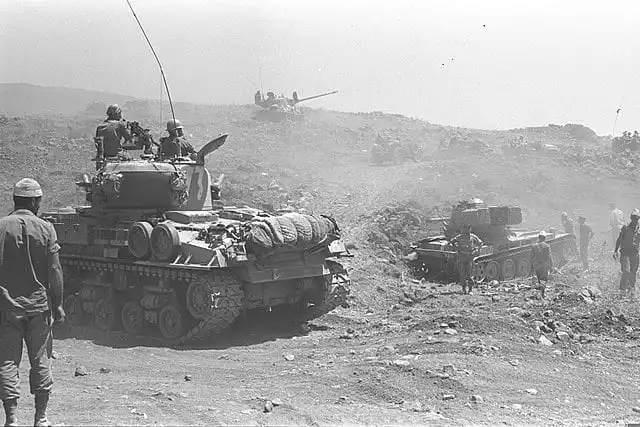
Whereas Palestine’s Al-Qassam Brigades maintained both their recruitment and their combat abilities right to the end of hostilities, Israel’s much-vaunted military machine was showing visible cracks after 15 months of attrition. Israel’s military experienced overextension, battle fatigue, and a number of casualties not seen in the last 50 years (and never seen against solely Palestinian forces). It is clear that the Israeli military, unlike Palestine’s Al-Qassam Brigades, couldn’t attain its objectives under the “strain of campaign and the shock of battle.” The reason is simple: this unconventional Gaza war isn’t suited to the highly mechanized conventional Israeli military. No swift campaigns like the 1956 or 1967 ones in Sinai are possible.
Israel could only win by slugging it out amidst the rubble and tunnels of Gaza. However, against an enemy that doesn’t have well-established 2nd, 3rd, and 4th tier leadership, Israel’s military sledgehammer can succeed by leveraging its vastly superior resources and the unlimited largesse from the most powerful country in the world. It managed to do exactly that against the (secular) Fatah in Beirut in 1982. It thought it could do it again in Gaza in 2025. However, the Islamist Hamas is a much more resilient enemy that has survived all attempts at decapitation by Israeli assassinations/killings of its leaders by leveraging its deep roots in the population of Palestine coupled with an organizational structure whose seamless transitions of responsibility to new leaders has ensured that the Al-Qassam Brigades remain as well-led as they were on 7 October 2023 despite losing most of their commanders since then.
Hamas/Palestine has finally developed the capability to wage perpetual warfare against a materially superior enemy like Vietnam and Algeria in the 20th century. The fact that it has done this without recourse to some factors considered essential to the development of such capability (suitable terrain, a safe haven outside the occupied territory, and reliable logistics funded and maintained by a friendly outside power) elaborates the unfathomable strength of the will and faith firing up the hearts of the Palestinian nation. Consequently, Israel appears as flummoxed as the French in Algeria or the Americans in Vietnam. Israel’s dilemma can be summed up by the following two quotes uttered in the mid-1960s:
“And how long do you Americans want to fight, Mr. Salisbury? … One year? Two years? Three years? Five years? Ten years? Twenty years? We shall be glad to accommodate you.”
“My solution … would be to tell [the North Vietnamese] frankly that they’ve got to draw in their horns and stop their aggression, or we’re going to bomb them back into the Stone Age.”
The first quote was uttered by the future Prime Minister of Vietnam, Mr. Pham Van Dong, to Harrison Salisbury of the New York Times. In contrast, the second belongs to the famed American General Curtis LeMay, who served as Chief of Staff of the United States Air Force from 1961 to 1965. However, these quotes might have belonged to Mr. Mohammad Sinwar of Palestine and Yoav Gallant of Israel.
As is usually seen in unconventional wars, failure of the occupying power on the battlefield is always accompanied by defeat in the war of narratives as well. A frustrated occupying power almost always resorts to indiscriminate violence against hapless civilians. This not only ensures fresh recruitment for the guerillas but also supplies the whole world with harrowing tales of atrocities. After numerous such atrocities, if the occupying power fails to break the back of guerillas, it turns their cause into a cause of heroes and martyrs in the eyes of most of the global public – such is human nature. Machiavelli, the sage of cynics, was only too aware of this point: “An enemy should be destroyed or bought -and never made a martyr.” Israel failed to destroy or buy the Palestinians. As a result, even its “deep pockets” have failed to save it from becoming the most cursed country in the world, from the jungles of South America to the campuses of Ivy League Universities.
The Ivy League Campuses are especially very important for Israel because it is from there that the leadership of America is spawned. Sure, many of the youth cursing Israel now might fall to the realities of practical life and the allure of boons promised by the Israeli lobby in the US later. However, realpolitik will be present in their minds. One must remember that the unlimited US support for Israel didn’t begin out of compassion for the victims of Nazi genocide. It is a common misconception that has been debunked completely by scholarly studies. American Professor Peter Novick wrote in his famous book “The Holocaust in American Life”: “It was when the Holocaust was freshest in the mind of American leaders – the first twenty-five years after the end of the war – that the United States was least supportive of Israel. . . . It was not when Israel was perceived as weak and vulnerable, but after it demonstrated its strength, in the Six Day War [of 1967], that American aid to Israel changed from a trickle to a flood.”
As Palestine continues to increase its potential and magnitude of resistance with each passing year, even the most Machiavellian of US executives will be forced to consider the costs of supporting an unruly “ally” that seems to be fighting an unwinnable and unpopular war and manages to embroil the US in strategically detrimental conflicts while providing nothing to it in return.
If you want to submit your articles and/or research papers, please check the Submissions page.
The views and opinions expressed in this article/paper are the author’s own and do not necessarily reflect the editorial position of Paradigm Shift.

Dr Hassaan Bokhari is a graduate of Rawalpindi Medical College, Rawalpindi. In 2018-19, he cleared the CSS exam and was 34th in Pakistan. However, he declined to join the civil service in order to pursue his passion for the study and analysis of history more freely. Presently, he is running a YouTube channel "Tareekh aur Tajziya (History and Analysis)" which focuses on the objective analysis of history and current affairs. Dr. Hassaan Bokhari has authored a book titled "Forks in the Road" about the 1971 fratricide and has also headed the India Desk at South Asia Times Islamabad. He aims to play a part in the process of enabling the nation to understand its history in a perspective marked by objectivity, honesty, and confidence.