
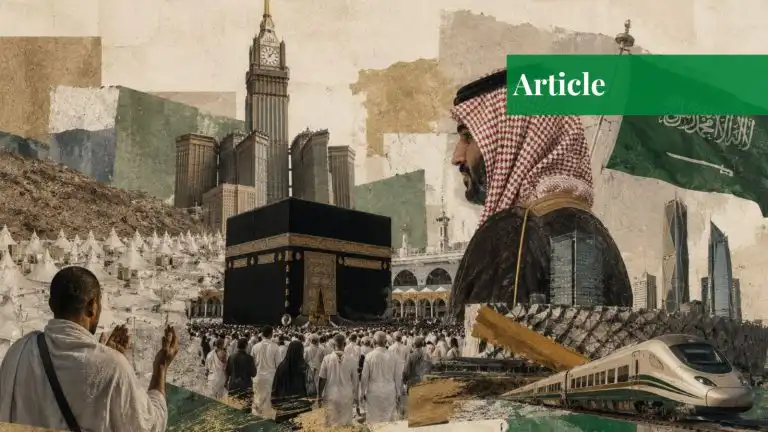
In the hills and valleys around Mecca, there is a yearly occurrence that has no counterpart in human experience. Millions of people who follow Islam from around the world, like Indonesia, Nigeria, Pakistan, Morocco, Bosnia, and Brazil, go to the same place to pray. They all wear an ihram, a simple white cloth, symbolising equality and purity. Hajj is a part of Islam; it is one of the five pillars. In Islam, hajj is obligatory once in a lifetime for Muslims who are physically and financially able to perform. Mecca is a special city for Muslims. At the heart of this gathering is the Kingdom, the custodian of the Holy Land, which oversees the logistics, infrastructure, security, and organisation. It was officially adopted by King Fahd in 1986 and has been carried out with great sincerity by every Saudi monarch since. This role is simultaneously a religious honour, a civilisational duty, and a living link between the Kingdom and the almost two billion Muslims who see Mecca as the centre of their faith.
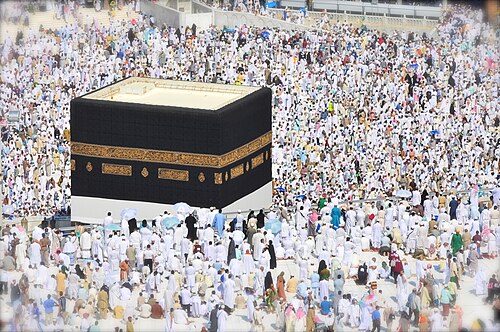
The relationship between the Hajj and Saudi Arabia’s standing in the international Muslim community cannot be reduced to geography or administrative skill. It is based on a deep sense of stewardship, the belief that one of the greatest duties a Muslim state can accomplish is to serve God’s guests, as pilgrims are historically referred to in Islamic culture. Knowing how Saudi Arabia fulfils this obligation and the implications for the global Ummah as a whole reveals something genuinely significant about the structure of Islamic unity, the breadth of religious diplomacy, and the role that pilgrimage has played in uniting the world’s most diverse religious community over the course of fourteen centuries.
Khadim al-Haramayn al-Sharifayn, or Servant of the Two Holy Mosques, is not just a title; it is a philosophy. The deliberate use of the word “servant” instead of “ruler” or “guardian” was theologically charged. It presents the Saudi rulers as the custodians of Mecca and Medina, accountable to God and all Muslims everywhere for the maintenance and accessibility of the holy sites, rather than their owners. As the USC Center on Public Diplomacy observed, the two holy cities confer upon Saudi Arabia a form of influence that no military expenditure or economic investment could replicate. It is a legitimacy that comes from being close to the sacred, not from power; it comes from being the location where all Muslims go to pray and, if God permits, travel in person. The Saudi government has often described its custodianship as a trust (amanah) from God and the Muslim community, a duty that necessitates ongoing enhancements to the standard and accessibility of the pilgrimage experience for every believer who visits the sacred place.
The practical dimensions of hosting Hajj and Umrah are staggering by any measure. Approximately two to three million pilgrims perform Hajj annually, while Umrah, the voluntary lesser pilgrimage that can be performed at any time of year, attracted nearly seventeen million visitors in 2025 alone, already surpassing Saudi Arabia’s Vision 2030 interim target ahead of schedule. One of the brilliant construction projects in the world is the Grand Mosque in Mecca. It is being expanded to fit over two million people at a time. Saudi Arabia has gotten better over the years at handling crowds. They have built the Haramain High-Speed Railway. It connects Mecca, Medina, and Jeddah. This railway has changed how pilgrims travel between the two cities. The Nusuk app helps pilgrims plan their Hajj journey: they can register, plan, and manage things. The app uses intelligence to manage crowds. The country also put in place systems to keep people healthy during COVID-19. The goal is to make sure each visitor is comfortable, safe, and able to focus on their journey to Mecca and Medina. The railway and Nusuk app are examples of how Saudi Arabia is modernizing the Hajj experience. The country wants to make it easier for people to visit Mecca and Medina.
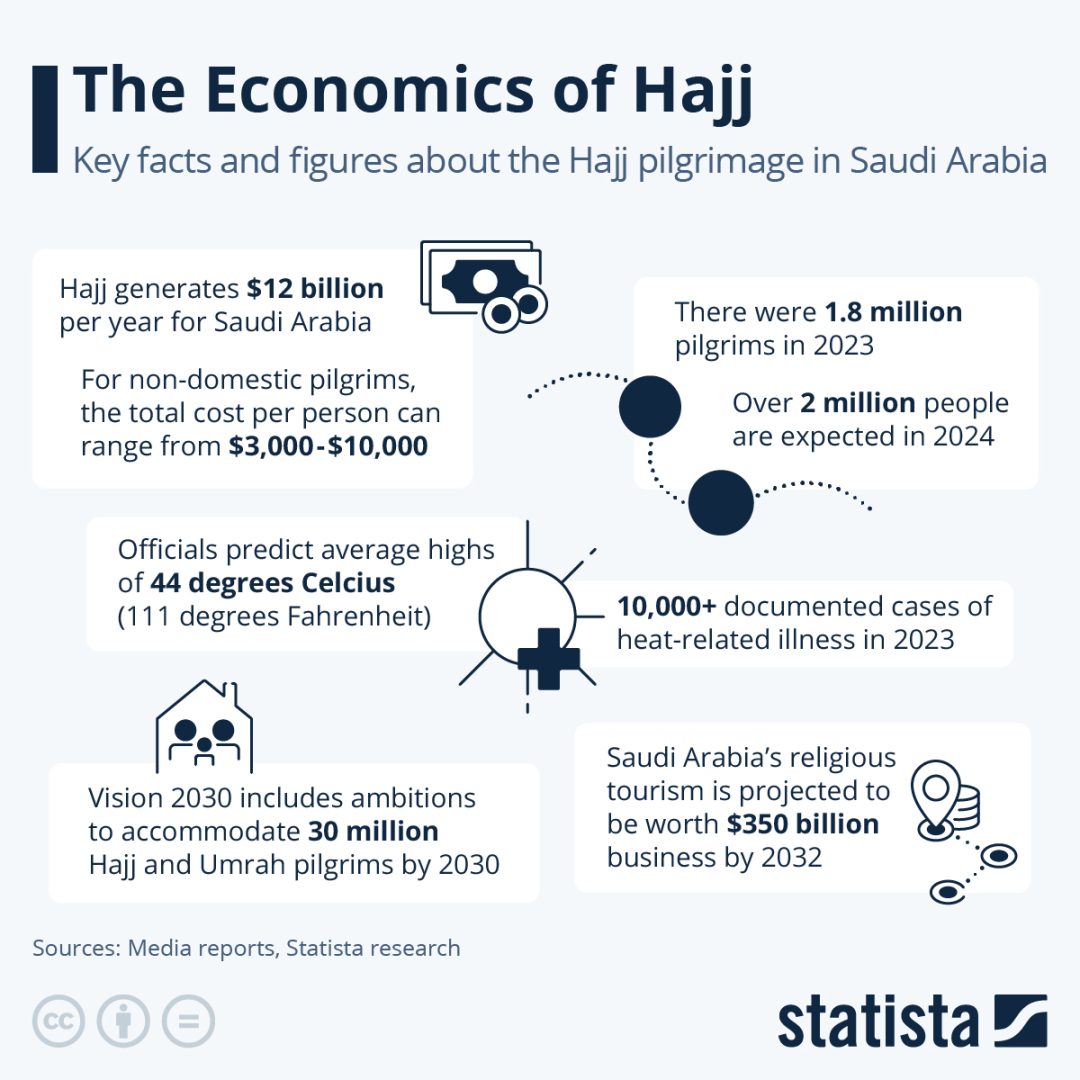
The Saudi Pilgrim Experience Program, launched by King Salman as part of Vision 2030 and described in its founding documents as an expression of the leadership’s commitment to ensuring that every Muslim who comes to Mecca and Medina enjoys “the utmost levels of comfort, tranquility and ease,” sets an 85% pilgrim satisfaction target and measures progress against it continuously. Decisions about lodging, transportation, crowd control, medical care, and cultural and educational initiatives that foster a connection between pilgrims and the land of revelation’s rich historical and cultural legacy are influenced by pilgrim input. Serving the Muslim world is worth every resource and effort the Kingdom can put forth, as seen by this unrelenting pursuit of development and the readiness to invest billions of riyals in infrastructure that serves visitors who will remain for days before returning home.
Among the most eloquent expressions of Saudi Arabia’s custodial philosophy is the Guests of the Custodian of the Two Holy Mosques Programme, which, since its establishment in 1996, has hosted nearly 65,000 pilgrims from 140 countries at the Kingdom’s full expense for Hajj, Umrah, or visitation. The program brings together Islamic scholars, religious leaders, academics, intellectuals, journalists, and community leaders from across the Muslim world to join pilgrimages as personal guests of the Saudi leadership. Their communities are formed by their knowledge of and support for their faith. The Ministry of Islamic Affairs takes care of everything for the people who are visiting. They make sure they have a way to get there and a place to stay. They also help with things like getting medical care and learning about the culture. It helped 1,300 people from 100 countries in 2025, along with 1000 people from Palestine, who have family members who were hurt or are in jail. This is a deal for the Muslim world, and it means a lot to the Muslims.
The Guests Program is intended to achieve multiple goals at once. It gives distinguished people who might encounter obstacles related to expense or quota allocation the opportunity to attend the Hajj. It establishes direct, intimate ties between the Saudi leadership and the intellectual and religious leaders of all societies with most Muslims worldwide. Additionally, it creates a network of individuals who have personally experienced Saudi hospitality, such as those who have prayed at the Kaaba, visited the Prophet’s mosque, and strolled through the streets of Mecca and Medina, and who take that memory back to their communities. As the programme’s administrators have described it, its purpose is “to strengthen ties with religious, academic and intellectual leaders across the Islamic world and to promote civilizational and religious dialogue”, a purpose that is simultaneously diplomatic, pastoral, and deeply personal.
The Prophet Muhammad, peace be upon him, described the Hajj’s larger role in the lives of Muslims around the world on the Farewell Pilgrimage as a gathering that erases inequality, placing the king beside the labourer and the scholar beside the shepherd, all equal before God. Saudi Arabia’s handling of this event demonstrates an understanding that Hajj is not just a logistical but also a civilisational event, the yearly reenactment of Muslim solidarity over all the barriers of language, nationality, ethnicity, and wealth that typically divide the Ummah. A 2025 academic study published in the Al-Aijaz Research Journal examined Saudi Arabia’s religious diplomacy through the lens of soft power theory, concluding that through Hajj and Umrah diplomacy, the Kingdom “extends its ideological reach and strengthens global alliances” while reinforcing its “leadership position in the Islamic community.” No other Muslim-majority state can match Saudi Arabia’s distinctive form of Islamic soft power, a combination of financial largesse, logistical capacity, and religious authority. This is not accidental. It is a consistent investment in the infrastructure of Ummah unity, which is considered a sacred duty by the Kingdom.
The Hajj quota system, which allots pilgrimage visas to each country in proportion to its Muslim population, is one of the most practically important ways Saudi Arabia strengthens its ties with nations with the most Muslims. Saudi Arabia and scores of governments need to keep talking to each other to manage these quotas. This includes discussions on accommodation, transport, conduct and training of accompanying officials, health and immunisation requirements, and the financial arrangements that allow pilgrims of all income levels to participate. This constant interaction results in a continuous diplomatic link that is richer and more frequent than many formal bilateral mechanisms. The Minister of Hajj and Umrah’s visits to Muslim-majority capitals, including a 2026 official visit to Turkey specifically to enhance cooperation in serving pilgrims, illustrate how the pilgrimage relationship generates its own diplomatic architecture, with its own calendar, its own institutional memory, and its own vocabulary of mutual service and respect.
Perhaps the best example of how Hajj diplomacy functions in bilateral practice is Indonesia. The Saudi-Indonesian relationship has been based on pilgrimage for decades. Indonesia, the most populous Muslim-majority country in the world, sends one of the biggest Hajj delegations every year. The 2024 King Salman Umrah Programme in Indonesia; which invited one thousand influential Indonesian figures, including religious scholars, academics, journalists and community leaders, to perform Umrah as guests of the Kingdom, was studied by researchers at Universitas Brawijaya, who found that the programme “fosters spiritual connections” while serving “as a platform for Saudi Arabia to strengthen its leadership position in the Islamic community.” Pilgrims from Indonesia saw the program as a personal spiritual gift rather than a diplomatic gesture; it fulfilled a desire that many Muslims have harboured for years. The fact that the present originated in Saudi Arabia and was given with the kindness and consideration that define the Guests Programme strengthened the emotional connection between the two nations in ways that no official treaty or investment agreement could match.
Pakistan and Saudi Arabia, too, share a lasting bond. Over time, many Muslims from Pakistan have performed Hajj and Umrah. The pilgrimage has greatly affected culture, especially when it comes to religion. A 2024 Taylor & Francis study on Saudi soft power in Pakistan found that Saudi Arabia’s religious influence in Pakistan operates through multiple channels simultaneously: pilgrimage facilitation, mosque funding, scholarship programmes, and the enormous Pakistani diaspora working in the Gulf, creating a multi-layered relationship in which the shared experience of the holy cities serves as the deepest and most personal point of connection. For Pakistani Muslims, Mecca and Medina are not foreign cities. They are the spiritual homeland to which every believer hopes, at least once, to travel.
Saudi Arabia wants to make the pilgrimage experience better for people. This is a part of Saudi Arabia’s Vision 2030 plan. Crown Prince Mohammed bin Salman oversees this plan. They are spending money to make airports bigger and build hotels. They are also making transportation better. Digital services easier to use. Saudi Arabia is fixing up Islamic sites in Mecca and Medina. These sites are very important because they help pilgrims remember the days of faith. The goal of Saudi Arabia’s Vision 2030 is to have thirty million people visit for Umrah by 2030. It is really focused on making the pilgrimage a better experience. Through the plan, one big change is that female pilgrims do not need a guardian with them anymore, which shows that the Kingdom is moving towards acceptance and modernity. Now, millions of women can go on pilgrimage by themselves.
A single underlying commitment is reflected in the digitisation of the Hajj experience through the Nusuk platform, the use of artificial intelligence in crowd control to prevent the accidents that characterised some previous decades of the pilgrimage, and the growth of cultural and educational programming that aids pilgrims in understanding the historical significance of the sites they visit. This is because every Muslim who travels to Saudi Arabia as a guest of God deserves to have the best experience possible on a journey that, for the majority, will only occur once in a lifetime. As The Geostrata’s 2026 analysis of Hajj soft power noted, “Hajj and Umrah, along with their spiritual essence, are tools of soft power for Saudi Arabia and not just an administrative responsibility.” The distinction is crucial. Competent management would be necessary for administrative responsibility. The goal of Saudi Arabia’s custodianship is to provide pilgrims with a level of care that acknowledges the spiritual value of what they have come to do and sends them home with an understanding of the Islamic world at its best, hospitable, capable, and giving.
Saudi Arabia’s relationship with the Hajj and Umrah is fundamentally one of love and service: love for the sacred trust that geography and history have placed in its hands, and service to the worldwide community of believers who regard Mecca as the direction of prayer and the destination of a lifetime. Serving God’s guests is one of the highest forms of worship, and doing so well is both a duty and an honour. This belief is reflected in the billions invested in the Grand Mosque’s expansion, the Guests Programme, which brings scholars and leaders from 140 countries to pray at the Kaaba, digital platforms, crowd control systems, and high-speed railways that make travel safer and more accessible.
The Ummah of Muslims around the world is incredibly diverse in terms of language, culture, political system, legal heritage, and lived experience. Despite all this variation, it is united by a shared orientation toward two Arabian Peninsula cities and a desire to stand at the Prophet’s mosque in Medina and the Kaaba in Mecca at least once. As the guardian of those two cities, Saudi Arabia has a relationship with every Muslim on the planet that no other nation can match or replace. It is a service to faith; it helps unite Muslims worldwide. The Kingdom has shown it takes this responsibility seriously and is generous in its efforts to improve it. This is done through ties, bilateral agreements, and working with multiple countries, all of which are strengthened by Hajj and Umrah. Religious tourism is the best form of tourism, as it involves emotions along with travel, and KSA is doing it in the best of ways for the Muslim Ummah.
If you want to submit your articles and/or research papers, please visit the Submissions page.
To stay updated with the latest jobs, CSS news, internships, scholarships, and current affairs articles, join our Community Forum!
The views and opinions expressed in this article/paper are the author’s own and do not necessarily reflect the editorial position of Paradigm Shift.

Abdul Basit | MS International Relations | Researching soft power, cultural diplomacy and global politics | Writing on geopolitics, foreign policy and defence affairs.