“Democracy is not a destination—it is a journey”
Barack Obama
A new democratic era began in Pakistan in 2008 after a series of military regimes. The period between 2008 and 2013 was highly significant for the development of parliamentary democracy in the country. The February 2008 general elections played a vital role in the political scenario of the country. Just after the assassination of Benazir Bhutto, the election results favored her party. This victory marked the end of military hegemony, at least in politics, and the beginning of the civilian era. The military had been playing its role in the parliamentary form of government that was now supposed to work independently. However, it was not an easy task ahead, with problems like economic unrest and insurgency.
Return to Civilian Rule: The PPP Government (2008–2013)
- The 2008 General elections
Jimmy Carter once noted, “Democracy is valuable precisely because it is tested in adversity.” For a healthy democratic future of Pakistan, the general elections of 2008 were extremely important for the country. The move from military rule to democracy was neither easy nor trouble-free, and there were also many controversies concerning the victory of the PPP. Although Zardari was not experienced in the field of politics due to his inexperience and was surrounded by accusations of corruption, the fact that he was the husband of the assassinated leader, Benazir Bhutto, brought him much political weight. Thus, the PPP got a majority in the National Assembly in the 2008 election.
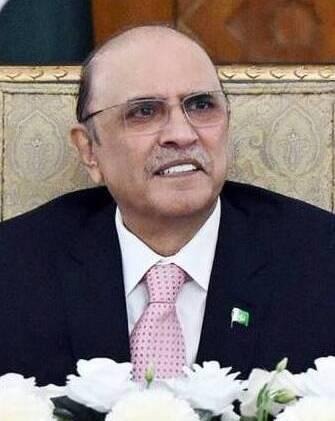
The election turned out to be quite peaceful compared to previous elections, and the PPP’s win was seen as a triumph for democratic values despite all these problems. The PPP’s alliance with PML-N and some smaller parties had a broad political representation even though it was quite fragile and not always united. The 2008 elections were also proof of how the judicial system affects the process of democratization. Judicial activism that had developed during the rule of Musharraf was sustained in the era of the PPP. This period saw the rise of judicial activism, which helped to shape the parliamentary democracy of Pakistan.
- Challenges Inherited from Musharraf
The coalition government under the PPP faced trouble right from the beginning after taking power. It was confronted with problems such as inflation and economic downturns. The economic crisis that hit the world economy in 2008 also complicated the issue of debt management and countries’ trade. One more hindrance faced in this regard was the issue of domestic security in the country. As a result of the presence of al-Qaeda, the Pakistani Taliban, and other terrorist groups in certain regions of the country, Pakistan has become a battleground for militancy.
Besides causing instability in the country, terrorism threatened economic progress due to the increasing threat posed by the latter. The problem was that while under the control of civilians, the military was still involved in the decision-making and policymaking. Nevertheless, corruption continued to be an issue, and the population felt dissatisfied with the inability of the government to solve the issues at hand. For the PPP-led coalition, it was hard to maintain unity within the ruling alliance even when they had a clear mandate.
Constitutional Reforms: Restoring Parliamentary Democracy
- The Eighteenth Amendment (2010)
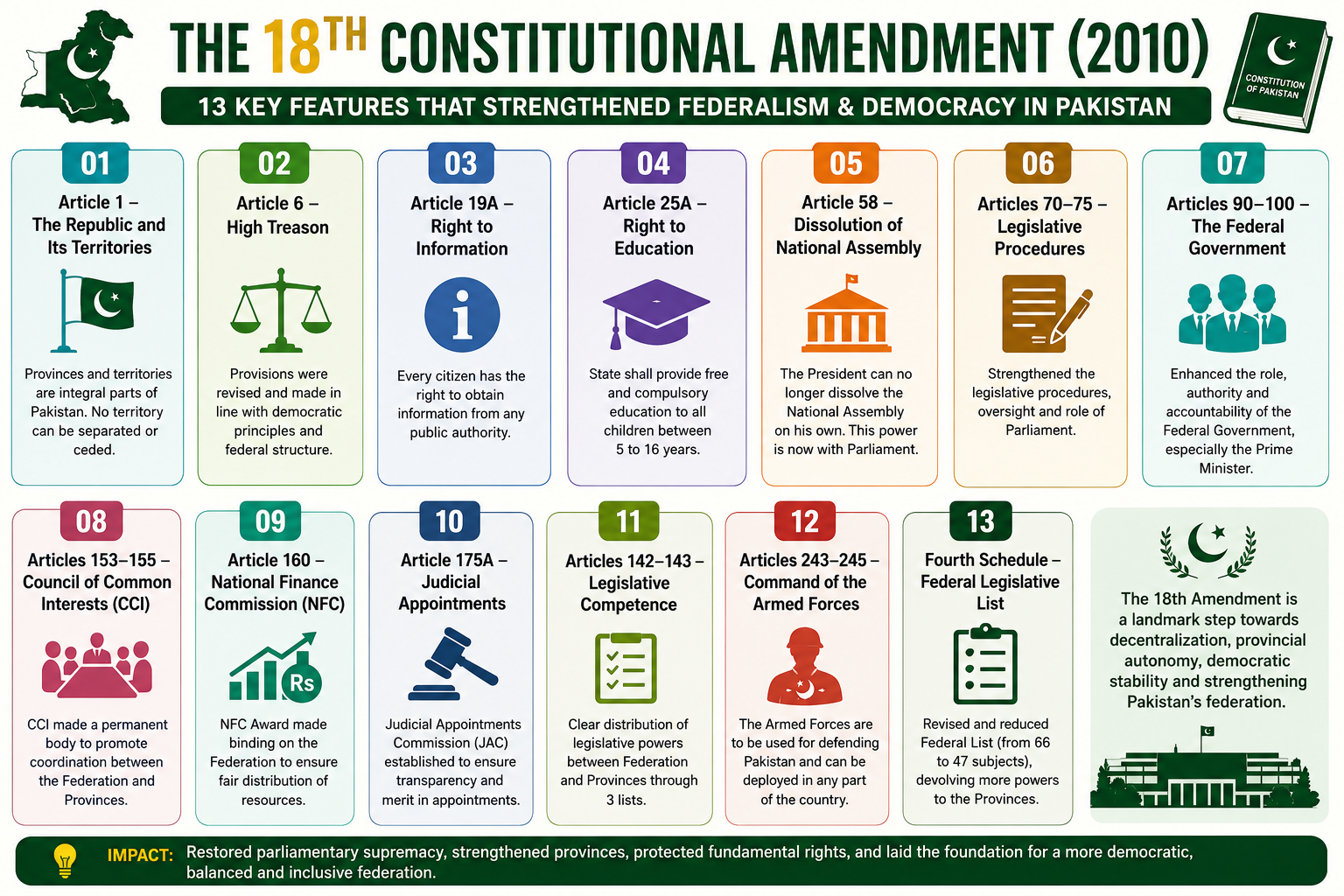
One of the significant events that occurred during this time was the passage of the 18th Amendment to the Constitution of Pakistan in 2010. The main purpose behind this amendment was to reduce the powers of the president and strengthen the legislative branch. It also led to the devolution of powers to the provincial government as an attempt to improve governance. Further, the amendment drew attention to the existing issue of military domination in political affairs. The military still remained an important factor in terms of national security policy, including its foreign policy vis-à-vis Afghanistan and India, despite the fact that it was no longer in the business of politics. It shows that the issue of balancing civil administration and military strength is difficult because the amendment did not eliminate the political domination of the military.
- 19th Constitutional Amendment (2011)
The process of judicial appointments as per the 18th Amendment has been significantly enhanced through the adoption of the 19th Amendment to the Constitution of Pakistan in 2011. In order to increase transparency and efficiency in judicial appointments, a number of amendments have been made to earlier provisions. The process of the Parliamentary Committee’s functioning was revised, along with providing explanations for rejected nominees, increasing the representation of senior judges in the Judicial Commission, and making its suggestions legally binding.
- 20th Constitutional Amendment (2012)
In this respect, the 2012 enactment of the 20th Amendment, through which the Election Commission of Pakistan (ECP) was bolstered, and the process of institutionalizing caretaker governments has made an important impact on the democratic setup in Pakistan. Following the decision of the Supreme Court that multiple by-elections were not legal because there was no legal ECP, the 20th Amendment was drafted. It introduced two important articles – 224A and 218(2)(b) – so as to ensure that both the Prime Minister and Leader of the Opposition agreed on the formation of caretaker governments.
Political Crises and Instability
However, by 2010, the PPP government faced various political and governance challenges that threatened its ability to rule effectively. One such challenge that the PPP government faced was the relationship between the government and the military. The relationship between the PPP government and the military had deteriorated in 2010 due to the tensions that arose in relation to counterterrorism operations and the strategic alliance with the US.
The military was autonomous in terms of foreign policy, intelligence, and security affairs despite the influence of civilian agencies. The autonomy of the military put more pressure on the PPP government. This became clear after the American raid in Abbottabad in May 2011, where the al-Qaeda leader, Osama Bin Laden, was killed. The US raid without informing or taking the Pakistani government into the loop strained the relationship between the two countries and made apparent the discrepancies in the counterterrorism policies of Pakistan.
Rise of Opposition
The downfall of the PPP government could be seen during the latter part of the tenure of the government. Political parties like the PML-N and the PTI gained power because of the inability of the PPP government to address people’s needs and issues of the country. The PML-N, led by Nawaz Sharif, took advantage of the weak point of the PPP government. PML-N had already become popular among the citizens of Punjab Province. In addition, PTI also became politically strong. The PTI gained political strength due to its appeal among the younger generations of Pakistan and its message against corruption. People tired of corrupt politics found a great deal of appeal in the message of Khan of forming “a new Pakistan.”
Economic Crisis
One of the significant issues the PPP government had to face during its rule was the persistent energy crisis. Frequent power failures were experienced in Pakistan, which affected normal living as well as production and industrial growth. The frustration amongst people was due to the consistent power crises faced by the citizens. Corruption remained another major challenge throughout the tenure of the PPP government. The credibility of the PPP government was questioned owing to accusations of corruption amongst the party members who belonged to the ruling class or officials of the government.
The 2013 Elections
“The ballot is stronger than the bullet.”
Abraham Lincoln
The parliamentary democracy in Pakistan faced a landmark moment through the 2013 general elections. These elections mark an important period in the history of Pakistan in the sense that a democratic government completed its full five years and peacefully transferred power to another elected government. The PML-N won these elections, and Sharif took the oath of office of prime minister for the third time. While the Nawaz Sharif government was busy with infrastructural development and economic reforms, there remained problems of militancy, inflation, and governance during this time.
PML-N Tenure (2013-2017)
- Economic Reforms
Nawaz Sharif’s third term as the Prime Minister of Pakistan was dedicated to reforms in the economic sector, especially in the areas of energy and infrastructure. Big projects like the CPEC, which were aimed at improving the economy of the country and enhancing the ties with China, were the central theme of the Sharif government. Although there were certain successes in the field of tax reform, and the fiscal deficit was reduced, problems persisted nonetheless.
- The Panama Papers
A political crisis was created at the national level in 2016 following the leak of the Panama Papers, which revealed the offshore companies and properties belonging to the family of Nawaz Sharif. Due to corruption and illegal accumulation of wealth, the opposition parties, led by PTI and Imran Khan, demanded the resignation of Nawaz Sharif. There was an important trial due to the Supreme Court of Pakistan conducting the investigations in this matter. In July 2017, the Supreme Court disqualified Nawaz Sharif from holding any public office on the grounds of tax evasion and the wealth of the family.
The Rise of PTI
Leveraging the mounting dissatisfaction with the traditional political parties, especially PPP and PML-N, Khan and PTI have emerged as an important political force in the 2010s. There has been considerable support from people, especially from young people, for Khan’s populism and rhetoric of fighting against corruption and promised reforms.
PTI has formed a coalition government with other small political parties, following its victory in the 2018 general elections by securing the largest number of seats in the National Assembly.
Khan’s victory and success in forming the new government have meant that there is a shift in the political scenario of Pakistan, since this victory has been seen as a vote against the establishment. The need for greater political accountability and change in the political system of Pakistan has come to the fore because of Khan’s rise to power.
Conclusion
“Democracy needs institutions, not just elections”
Fareed Zakaria
The period from 2008 to 2018 has proven to be the most crucial decade for the democracy of Pakistan, where successes are accompanied by challenges. It can be stated that it was a decade of significant political shifts when democratic practices and institutions were reinforced, and civilian rule became fully established. In any case, the decade of 2008 to 2018 cannot be called perfect, but at the same time, it has made a crucial contribution to creating a basis for further development of democratic regimes in Pakistan.
If you want to submit your articles and/or research papers, please visit the Submissions page.
To stay updated with the latest jobs, CSS news, internships, scholarships, and current affairs articles, join our Community Forum!
The views and opinions expressed in this article/paper are the author’s own and do not necessarily reflect the editorial position of Paradigm Shift.

Syed Hammad Ali is pursuing a BS in International Relations programme from the International Islamic University, Islamabad, and has a keen interest in research works, policy analysis, defence and strategic studies, and conflict resolution.